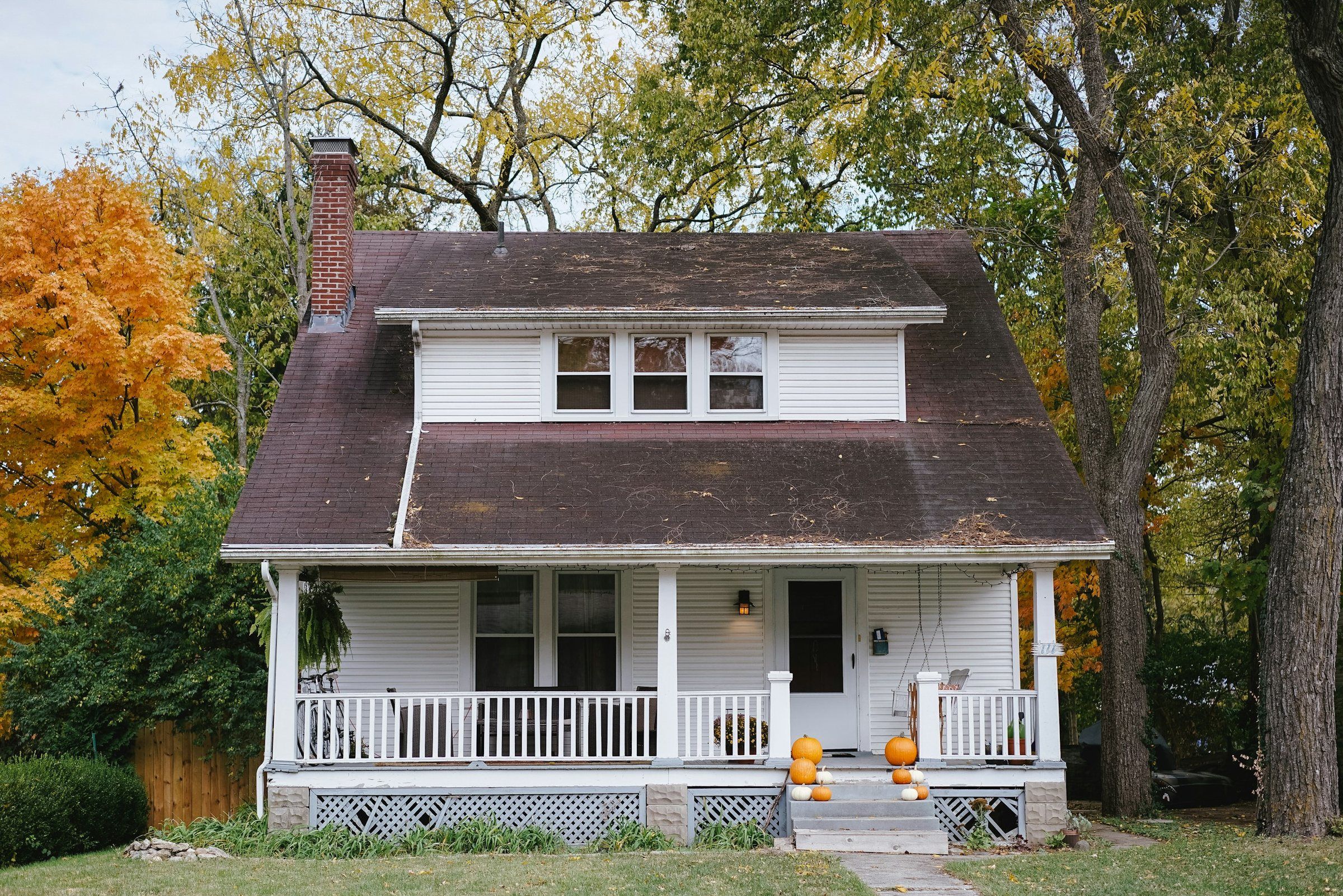
Roofing for Older Houses, Storefronts and Farms in Bloomer, WI
In Bloomer the job depends on the building: a two-layer tear-off on an older house, a flat roof behind a storefront parapet, or steel on a machine shed. We come up Highway 53 from Chippewa Falls for all three.
Get a Bloomer Roof Estimate
Tell us what's going on with your roof and we'll call you back.
- Free roof estimates in Bloomer
- Older houses, storefronts & farm buildings
- Written prices before any work starts
Bloomer Roofing Depends on the Building: Old House, Storefront or Farm
Bloomer is a city of 3,683 people, by the 2020 census, in the northwest part of Chippewa County. It sits along Highway 53 and Highway 40, with Highway 64 close by. Settlement here goes back to 1855, near Duncan Creek, and Lake Como still sits in the middle of town. Outside the area, Bloomer is best known for calling itself the rope jump capital of the world.
A place settled in the 1850s has roofs of every age and three quite different kinds of building under them. The mistake is to treat them as one job. So this page is sorted by building, not by service.
Bloomer is about a dozen miles north-northwest of us in a straight line. We are a roofing company based in Chippewa Falls, and Highway 53 connects the two directly.
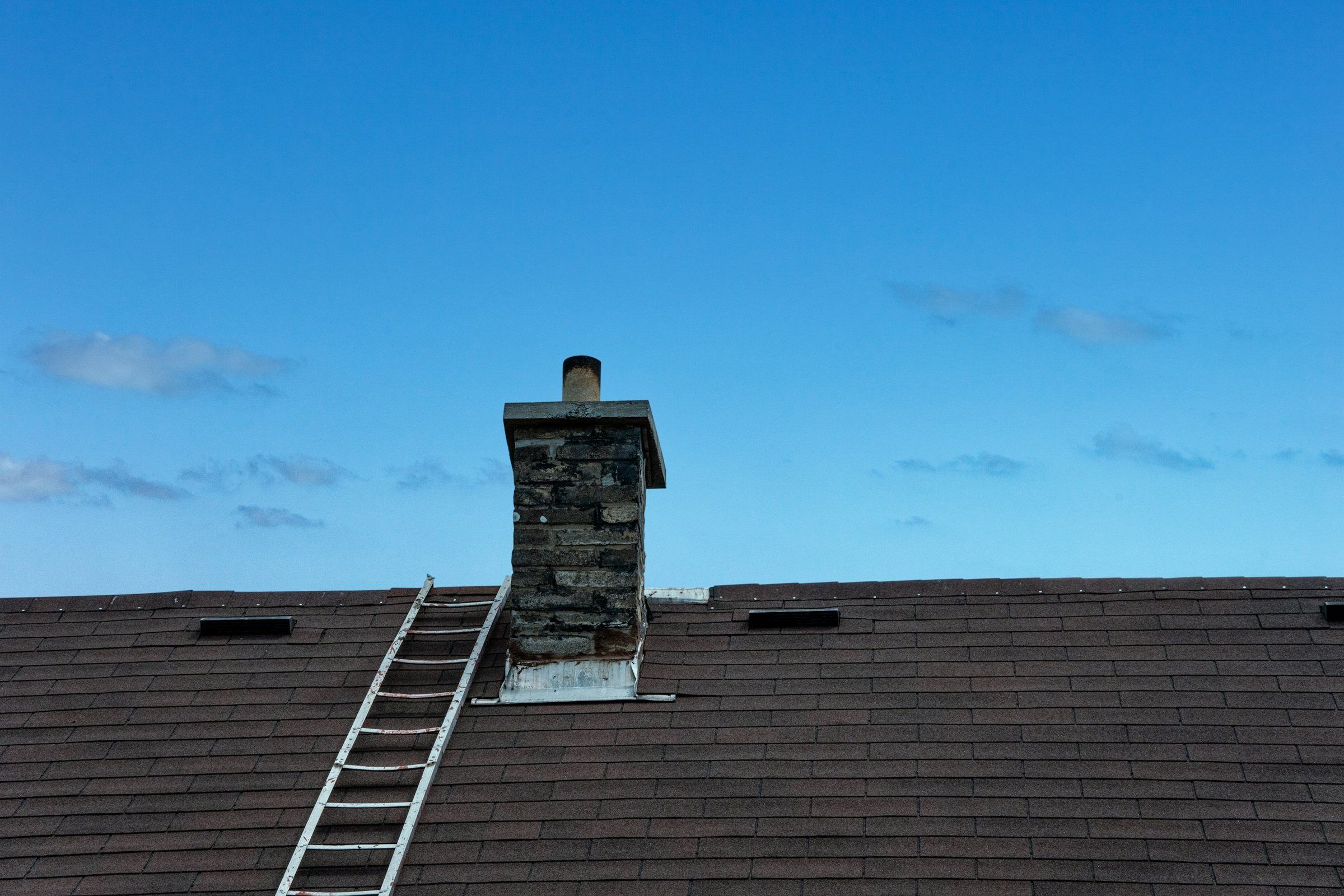
Two Layers Over Board Decking: Re-Roofing Bloomer's Older Houses
The oldest houses in town tend to have steep roofs, brick chimneys, dormers and porches added along the way. They are also the houses most likely to be carrying two layers of shingles over plank boards.
That settles one question before we arrive. Wisconsin's Uniform Dwelling Code (SPS 321.28) bars new roofing over two or more existing layers, so the job is a tear-off down to the wood.
What a tear-off finds on a plank deck
Boards, not sheets, often with gaps between them. Most are sound. The soft ones are near the eaves, around the chimney and in the valleys, where water has been getting in for years. Nobody can count them until the old roofing is off, so set money aside for decking and expect us to show you each bad board before it is replaced.
Where these roofs leak
At the junctions, not in the open field: chimney flashing set into tired mortar, valleys, and the spot where a porch roof meets a wall. A new roof that reuses the old flashing will leak in the same places. Our page on tear-off roof replacement lists what should be new on any estimate.
Ranches and later houses
Later neighborhoods are simpler: lower slopes, fewer penetrations, plywood or OSB decks. Their weak point is the eave. A low roof holds snow, and the ice that forms at the edge finds its way under shingles that have no membrane beneath them.
Bloomer Storefronts and Farm Buildings: Flat Membranes and Steel Panels
Two kinds of building that have nothing in common with a shingled house except weather.
Bloomer storefront roofs behind the parapets
Commercial buildings along the main streets have flat or low-slope roofs you cannot see from the sidewalk. They leak at seams, at the flashing where the membrane turns up the parapet, and around drains. Water travels inside the insulation, so the stain in the shop is rarely under the hole.
The membranes are EPDM rubber, TPO or modified bitumen, and each is patched with its own materials. We start with a walk of the roof and a written assessment. See commercial and flat roofing for how a recover differs from a full tear-off.
Steel on machine sheds and barns
The working farms around Bloomer have machine sheds, barns and pole buildings under ribbed steel, screwed through the face into wood purlins. The screws and their rubber washers are the part that wears. A drip line along a purlin after a hard rain usually means fasteners, not panels.
Seeing the house and the outbuildings on one visit lets you decide what gets done this year and what can wait.
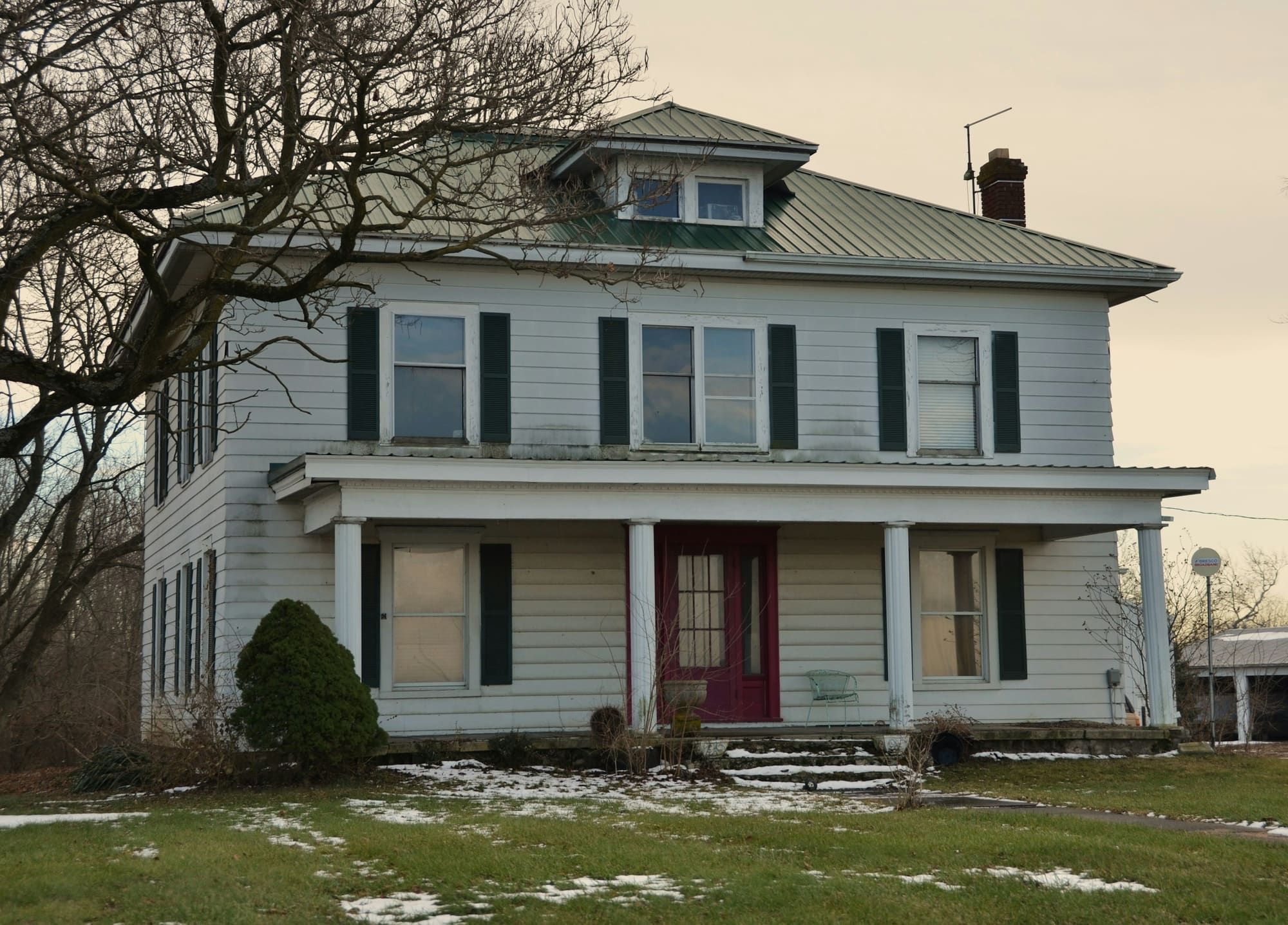
Bloomer Winters: Drifts at the Parapet, Packed Valleys on Old Houses
Bloomer shares the Chippewa Valley's long winter. All of Chippewa County is in the 40 pounds per square foot zone on the roof snow load map in Wisconsin's Uniform Dwelling Code. Normal snowfall at the Eau Claire station, the nearest long-term record, is 55.4 inches a year according to the Wisconsin State Climatology Office.
In town, that shows up as ice dams on low eaves and snow packed into the valleys of steep old roofs. On a flat storefront roof it is drifts against the parapet and a frozen drain. On farms, it is drifts on the downwind side of long shed roofs and snow sliding off steel in heavy sheets.
Open farmland also gives summer storms a clear run. A machine shed standing alone in a field takes the full force of a straight-line wind, and loose trim or a row of backed-out screws is where a panel starts to peel.
Bloomer Roofing Permits: City Limits Decide Who You Ask
Inside the city, permits are handled by the City of Bloomer. Its permits and licenses page lists a land use permit application but does not say whether a like-for-like re-roof needs one. Outside the city limits, the surrounding town or Chippewa County is the authority instead.
Because the answer is not published, we ask before scheduling the job, and we tell you what we were told. Nothing gets started on an assumption.
Farms off Highway 40 and Highway 64 are within range as well. If you are not sure, call and ask.
Bloomer Roofing Questions: Third Layers, Board Decks, Storefront Flat Roofs
My older Bloomer house has two layers of shingles. Can a third go on?
No. Wisconsin's Uniform Dwelling Code does not allow a new roof covering over a roof that already has two or more layers. Everything has to come off down to the deck. On an older house that is a good thing, because it is the only way to see the condition of the boards underneath and replace the ones that have gone soft.
What is under the shingles on an older house in Bloomer?
Often solid board decking rather than plywood, sometimes with gaps between the boards, and sometimes with an earlier layer of roofing still in place. Board decks can be perfectly sound. They can also have rot near the eaves, around chimneys and in valleys. We price decking by the amount actually needed and show you the bad boards before we put new ones down.
Do I need a permit to re-roof a house in Bloomer?
The City of Bloomer does not publish a specific re-roofing rule on its permits page, so we will not state one. Requirements are set by the city inside the city limits and by the town or the county outside them. We check what applies to your address before the job is scheduled, and any permit fee appears on the written estimate.
Do you work on flat roofs over Bloomer storefronts and shops?
Yes. Flat and low-slope roofs on commercial buildings are a different system from shingles, usually EPDM rubber, TPO or modified bitumen. We patch seams, punctures and flashing, and we quote recovers and full tear-offs. We start with a walk of the roof and a written assessment of its condition.
Can you roof a farmhouse and the outbuildings on the same visit?
We can look at all of them on the same visit and price them together or separately. It is common for the house to get shingles or standing seam and the machine shed or barn to get exposed-fastener steel. Seeing everything at once lets you decide what to do this year and what can wait.
Do you come to Bloomer for a small job, or only for a whole roof?
Both. Bloomer is a straight run north on Highway 53 from Chippewa Falls, so a pipe boot, a section of flashing or a handful of missing shingles is worth the trip. We look at the roof first, then give you a written price. If the roof needs more than a patch, we tell you why and show you the photos.
When is the best time of year for a tear-off in the Bloomer area?
Late spring through fall is the main season, because shingles seal best in warm weather and dry days are easier to count on. Small jobs and steel can often be done in colder months when the roof is clear and safe. If water is coming in now, do not wait for a season. Call and we will work out a temporary or permanent fix.
House, Storefront or Farm Building in Bloomer? Get a Written Roof Estimate.
Call, text or send the form. Tell us which kind of building it is, and we will set up a time to look.