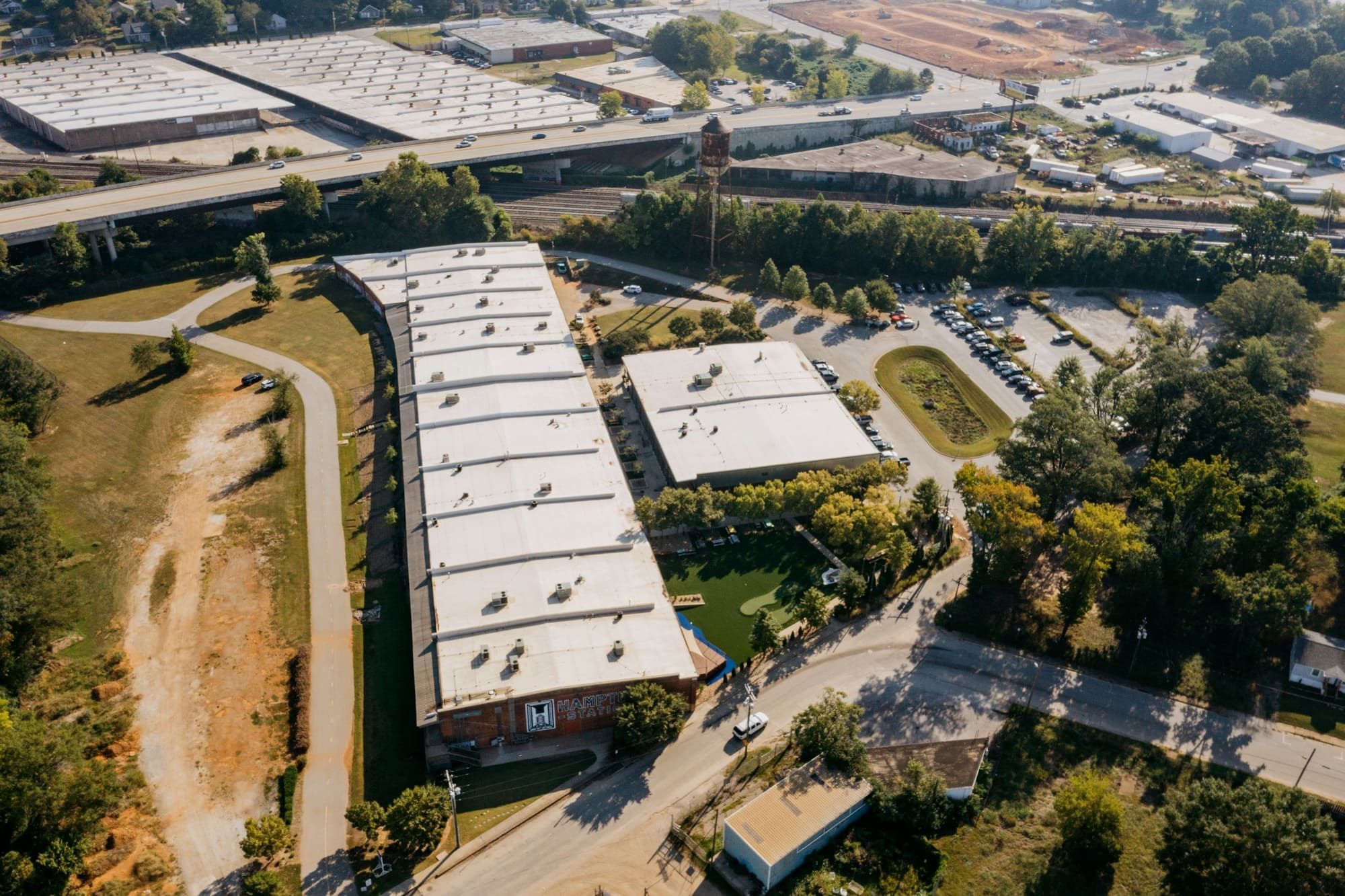
Commercial Roofing in Chippewa Falls, WI
TPO, EPDM rubber and modified bitumen roofs for businesses, shops and farm buildings in Chippewa Falls: flat roof repair, recovers and full replacement, with a written assessment first.
Request a Roof Assessment
Call or text us and we will set up a time to look at your roof. Estimates and inspections are free.
Open 8am–6pm. Prefer email? info@chippewafallsroofingco.com
- Free commercial roof assessments
- TPO, EPDM rubber & modified bitumen
- Repair, recover or full replacement
Flat Roofs Fail Quietly, Then All at Once
A pitched roof sheds water. A flat roof has to hold it out. Every seam, drain, curb and pipe on a low-slope roof is a place where the membrane was cut and sealed, and each one has to stay sealed through summers hot enough to soften asphalt and winters that put a foot of snow on top and freeze it.
When one of those details lets go, you often do not see it right away. Water gets into the insulation and travels. By the time a ceiling tile stains in the office, the wet area above it can be many times larger.
Commercial roofing in Chippewa Falls covers a wide range of buildings: storefronts and offices, shops and warehouses, churches, apartment buildings, and farm and ag buildings out in the county. This page explains the membrane systems we install, how we approach flat roof repair, when a recover is a sound option, and what a roof assessment tells you.
TPO, EPDM and Modified Bitumen Roofing Compared
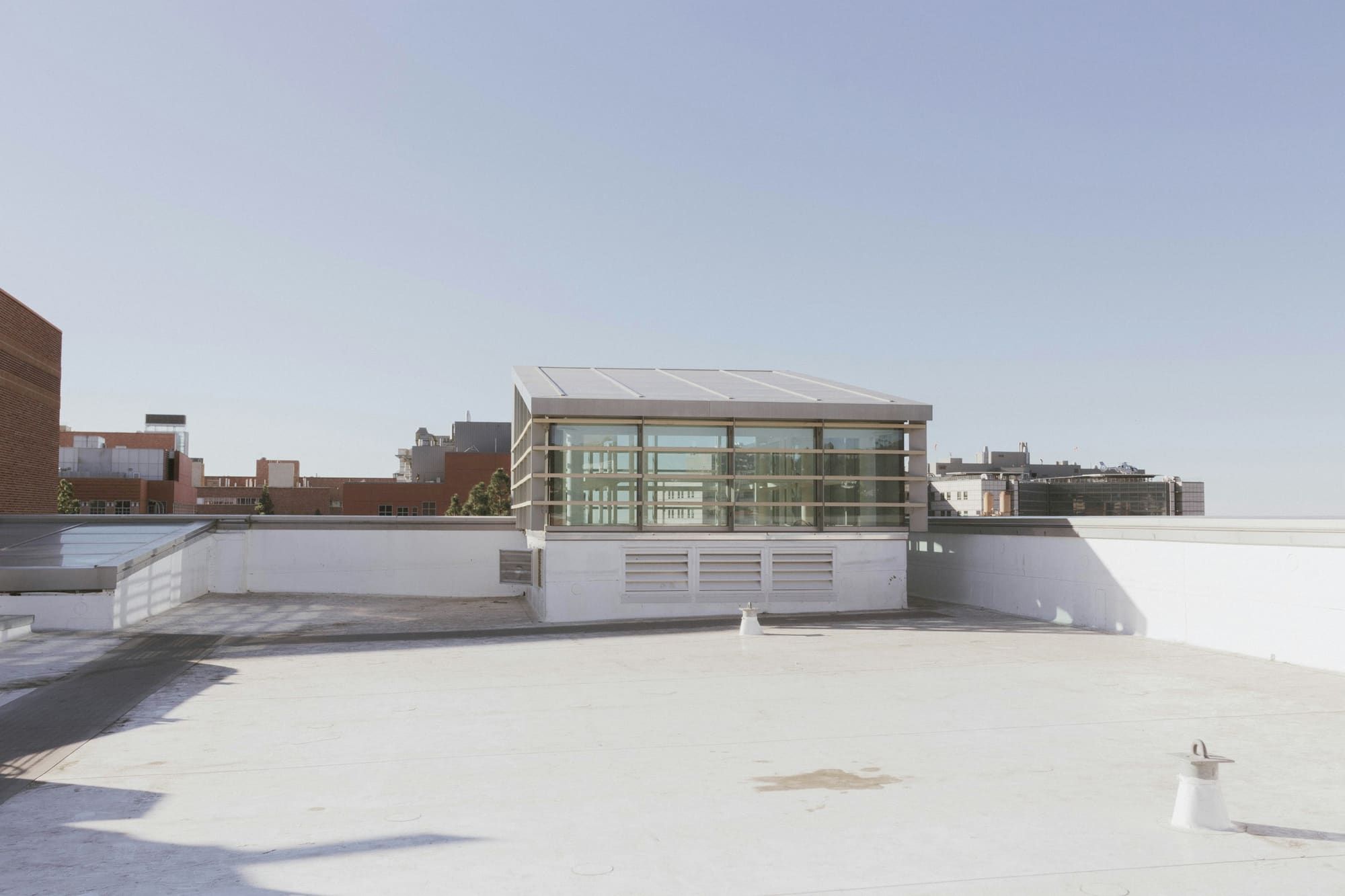
Three systems cover nearly every flat and low-slope roof in this area. Each has a place.
TPO roofing
A thermoplastic sheet, usually white, rolled out over insulation and either fastened or glued down. Seams are welded with hot air, which fuses the two sheets into one piece.
- Welded seams are the strongest part of the roof when done right.
- The reflective surface runs cooler in summer.
- Suits larger roofs and roofs crowded with equipment.
EPDM rubber roofing
A synthetic rubber membrane, most often black, that comes in large sheets. Seams are joined with seam tape and primer. It has been used on low-slope roofs for decades.
- Stays flexible in severe cold.
- Large sheets mean few seams on small roofs.
- Simple to patch, and economical.
Modified bitumen
Asphalt sheets reinforced and modified with polymers, installed in two or more plies. The top sheet usually has a granule surface, like a heavy rolled shingle.
- Multiple plies give redundancy and puncture resistance.
- Stands up to foot traffic.
- Good on smaller roofs, porches and tie-ins to shingle roofs.
The membrane is only the top layer. Insulation thickness, how the system is attached, edge metal and drainage are decided together, and they are spelled out in the proposal.
Flat Roof Repair in Chippewa Falls
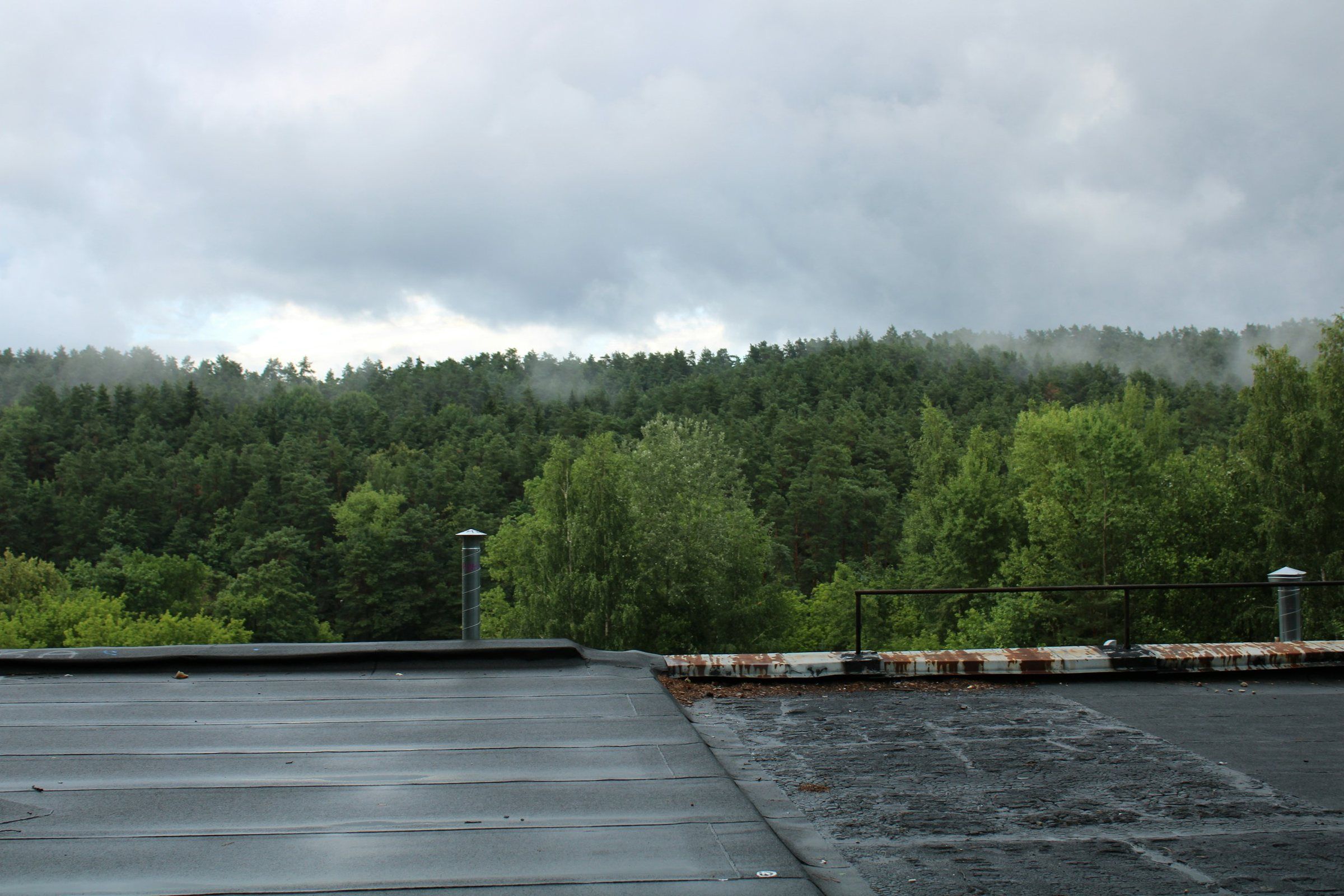
Most flat roof leaks are at details, not in the open field of the membrane. A flat roof repair starts with finding which one.
Where flat roofs leak
- Seams. Tape or adhesive seams that have opened with age and movement.
- Flashings. Where the membrane turns up a parapet wall or a curb and has pulled away or split at the corner.
- Penetrations. Pipes, conduits, vents and supports, each with a boot or a sealant pocket that dries out.
- Drains and scuppers. Clamping rings that have loosened, or debris that backs water up over the flashing height.
- Punctures. Dropped tools, dragged equipment and service work on rooftop units.
- Edge metal. Coping and gravel stop loosened by wind, which lets water in behind the membrane.
What winter adds
Freeze-thaw is hard on flat roofs. Water that sits in a low spot or a slightly open seam freezes, expands and opens it further. Ice around a drain holds meltwater on the roof for days. Snow drifts against parapets and rooftop units and loads those areas more heavily than the rest.
Repair, done properly
A lasting repair uses materials compatible with the existing membrane: a welded TPO patch, a primed and taped EPDM patch, a torch- or cold-applied bitumen patch. Roof cement smeared over a single-ply seam will fail and makes the proper repair harder. Where insulation is wet, it comes out and is replaced under the patch. Leaks on pitched roofs are covered on our roof repair page.
Roof Recover vs. Full Replacement
When a flat roof is past patching, there are two ways to renew it.
A recover leaves the existing roof in place and installs a new membrane over it, usually with a thin separation or insulation board between the two. It avoids tear-off labor and disposal, keeps the building covered throughout, and costs less.
A full replacement removes everything down to the deck. The deck is inspected and repaired, new insulation goes down, often tapered to correct drainage, and the new membrane goes over that.
A recover is only a sound choice if what is underneath is sound:
- The existing insulation has to be dry. Covering wet insulation traps the water, and it will rot a wood deck or rust a steel one from above.
- The deck has to be solid enough to hold new fasteners.
- There generally has to be only one roof system on the building already. Building codes limit how many can be stacked.
- Drainage has to work, or be corrected as part of the job.
We check for wet insulation with test cuts before recommending either route, and the proposal says what we found. Sometimes the answer is a mix: tear out the wet sections, recover the rest. For pitched roofs, the equivalent decision is covered under roof replacement.
What flat roofing costs
As a starting point only, this is the published national range for single-ply membrane roofing, converted to squares of 100 square feet.
$400 – $1,000per square · EPDM or TPO flat roofing
Single-ply membrane for flat and low-slope roofs. HomeGuide lists TPO at $4 to $10 per square foot installed and EPDM rubber at $3.50 to $10.
Ranges are national figures published by the cost guides HomeGuide and HomeAdvisor, converted to roofing squares (100 square feet of roof surface). They are typical ranges, not quotes. Your price depends on the roof itself, which is why we measure and inspect it before we quote.
Commercial roofs vary too much for a range to be more than orientation. Insulation thickness, attachment method, tear-off, the number of penetrations and access to the roof all matter.
Farm, Ag and Metal Building Roofs in Chippewa County
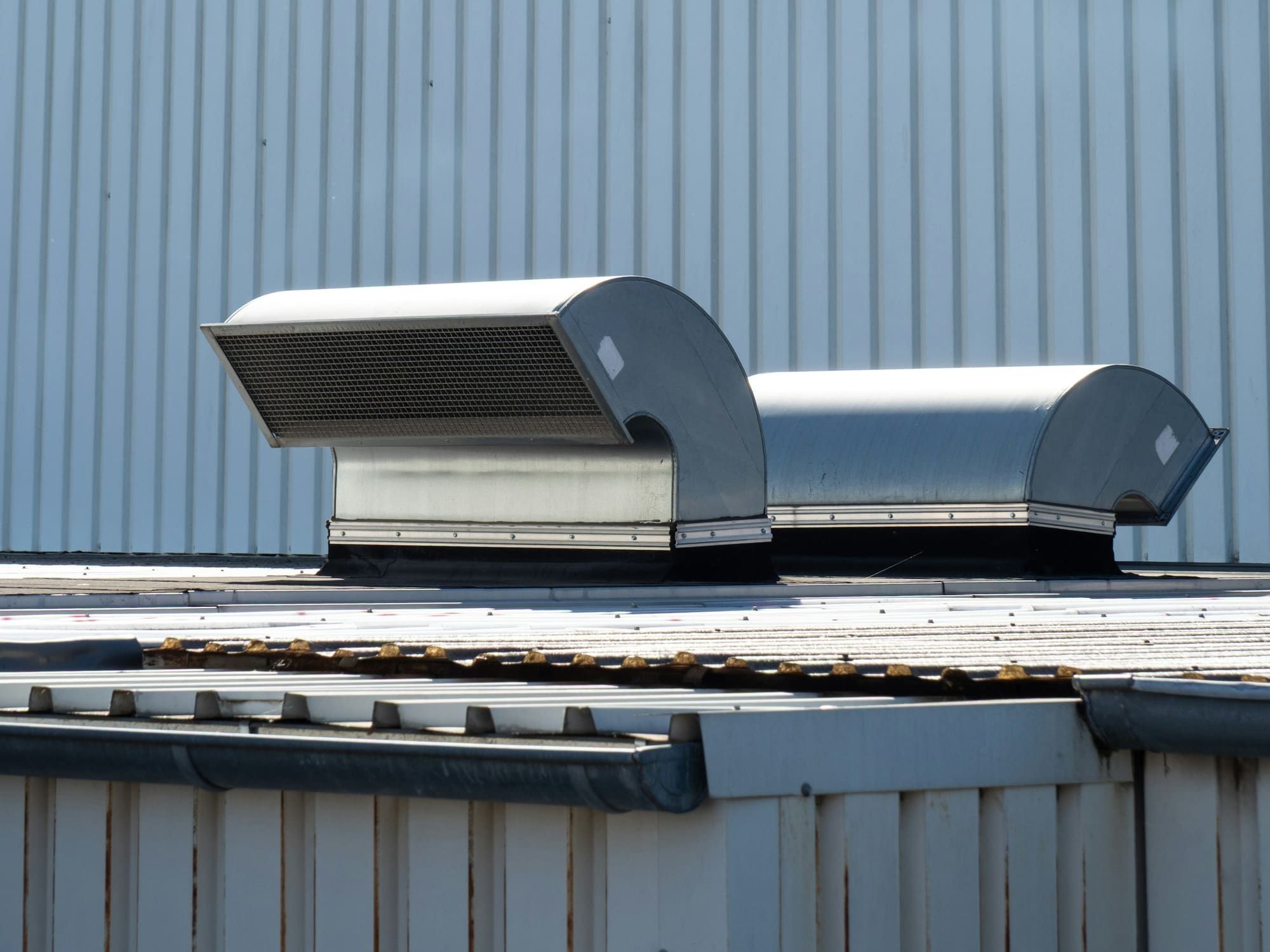
Not every commercial roof is flat. Around Bloomer, Cadott and Jim Falls, the working buildings are machine sheds, shops, livestock barns and storage buildings roofed in ribbed steel.
What we do on them:
- Fastener replacement. Screws that have backed out or lost their washers are the usual source of leaks on an older steel roof.
- Panel and trim repair. Wind-lifted ridge cap, damaged panels, and rusted sections replaced.
- Re-sheeting. New steel over existing purlins once the framing has been checked.
- Penetration flashing. Vents, stacks and exhaust fans sealed with boots made for ribbed panels.
- Low-slope tie-ins. Lean-tos and additions where a nearly flat roof meets a metal wall, a classic leak point that often needs membrane, not more steel.
Panel types, snow management and costs for steel are covered in detail on our metal roofing for pole barns and machine sheds page.
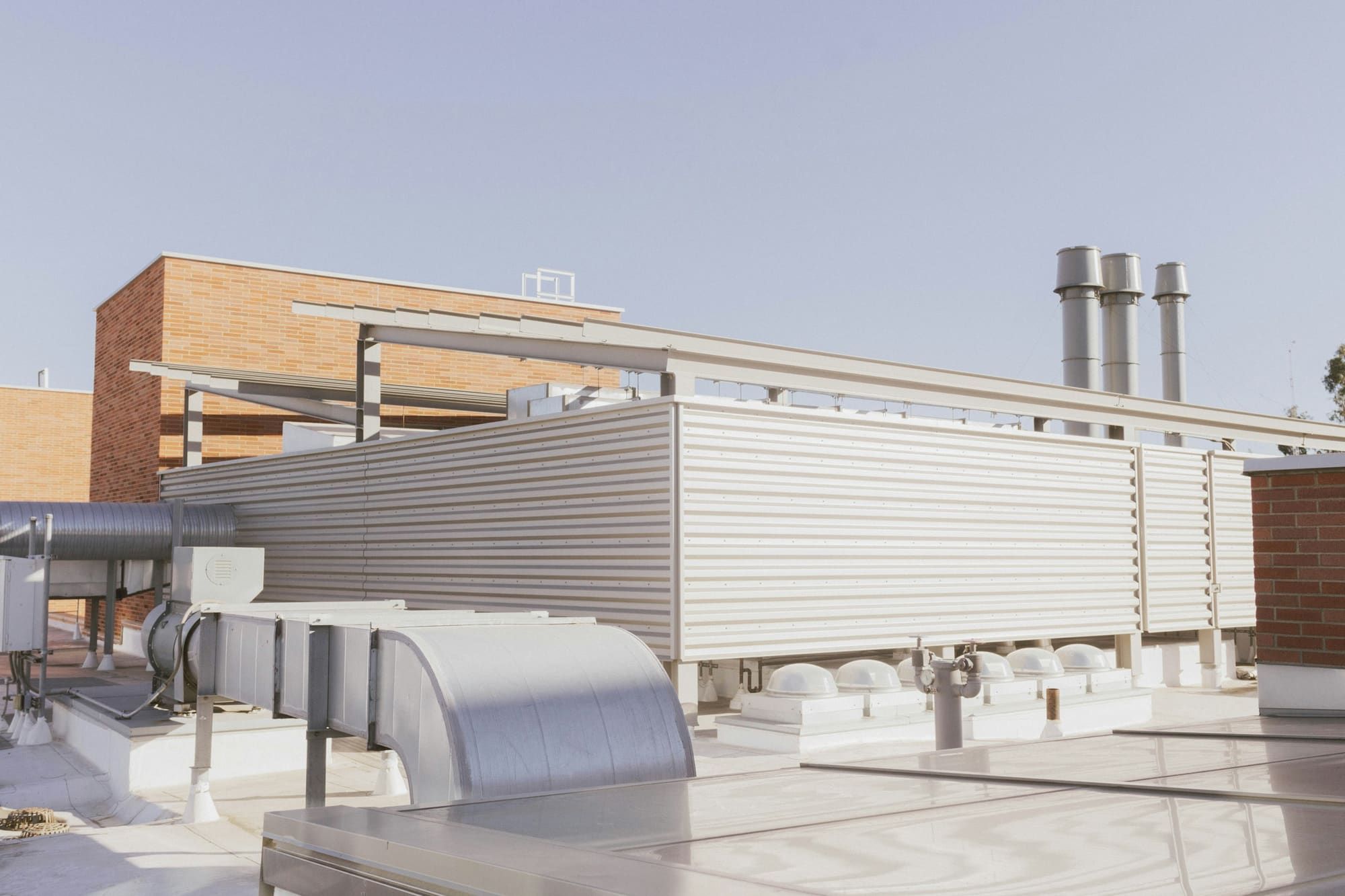
Free Commercial Roof Assessment
If you own or manage a building and do not know what shape the roof is in, that is the first thing to fix. An assessment costs nothing and gives you something to plan around.
We walk the whole roof and look at:
- The membrane type, its attachment and its general condition.
- Every seam line, flashing, curb and penetration.
- Drains, scuppers and signs of ponding.
- Edge metal and parapet caps.
- Soft areas underfoot that suggest wet insulation.
- The underside of the deck, where it can be seen from inside.
You get photos and a written summary that sorts findings into what needs attention now, what to budget for, and what is fine. If the roof has years left with a few repairs, that is what the report will say.
Two kinds of building are planned differently: apartment and multifamily roofing, where tenants stay in place and buildings are phased, and church roofing, where a committee needs a written scope it can compare.
Request a commercial roof assessment, or call and tell us about the building.
How a Commercial Roofing Project Works
-
Assess
We walk the roof, photograph its condition, check drainage and take test cuts where needed to see whether the insulation is dry.
-
Written proposal
Repair, recover and replacement options where each is viable, with the system, insulation, details and price for each. Staging and schedule are agreed before work starts.
-
Install and close out
Work proceeds in sections that are made watertight each day. Debris is removed, drains are cleared, and you get photos of the finished roof.
Commercial Roofing Questions, Answered
Which is better for a flat roof, TPO or EPDM?
Neither wins everywhere. TPO has heat-welded seams and a white, reflective surface, which suits larger roofs, buildings with a lot of rooftop equipment and anywhere grease or exhaust is not a factor. EPDM rubber is simple, flexible in deep cold and easy to repair, which makes it a good fit for smaller roofs and tight budgets. We recommend one or the other after seeing the deck, the insulation, the drainage and what is mounted on the roof.
How long does a commercial roof replacement take?
It depends on the size of the roof, whether the old system is coming off, how many curbs, drains and penetrations need flashing, and the weather. A small storefront roof can be a few days of work. A large building is done in sections over a longer period. Your written proposal gives an expected schedule for your building.
Can you work while my business stays open?
In most cases, yes. Flat roofs are replaced a section at a time, and each section is made watertight before the crew leaves for the day. We plan material staging, dumpster placement and noisy tear-off around your entrances, parking and deliveries, and agree on that plan with you before the job starts.
Why does water pond on my flat roof?
A flat roof is supposed to have a slight slope toward its drains or edges. Ponding means that slope is missing or interrupted: insulation that has compressed or become waterlogged, a deck that has deflected, or a drain that is clogged or set too high. Standing water adds weight, speeds up wear and finds any weak seam. Tapered insulation or added drains can correct it during a reroof.
Can a flat roof be repaired or replaced in winter?
Emergency repairs, yes, on a clear dry day. Full installations are harder. Adhesives and primers have minimum application temperatures set by their manufacturers, and snow and ice have to be removed before any membrane goes down. Mechanically attached systems and heat-welded seams are more forgiving in the cold than fully adhered ones. We will tell you what is realistic for the season.
How often should a commercial roof be inspected?
The National Roofing Contractors Association recommends twice a year, preferably in spring and fall, plus a look after any severe storm. In this climate the spring visit catches what winter did to seams and flashings, and the fall visit makes sure drains and scuppers are clear before the snow arrives. Small problems found early are inexpensive. The same problems found by a tenant are not.
Do you repair flat roofs on houses and garages too?
Yes. Low-slope sections over porches, additions, dormers and attached garages use the same membranes as commercial buildings, and they are a common source of leaks on otherwise sound houses. We repair and replace those as well.
Have a steel roof on a shop or shed? See metal roofing in Chippewa Falls.
Commercial Roofing Around Chippewa Falls
We work on commercial, agricultural and low-slope roofs in Chippewa Falls and the surrounding communities.
That means Chippewa Falls, Lake Hallie, Lake Wissota, Bloomer, Cadott and Jim Falls, and the farms, lake roads and smaller communities of rural Chippewa County in between. If you are not sure whether you are in range, call or text and ask.
Related Roofing Services
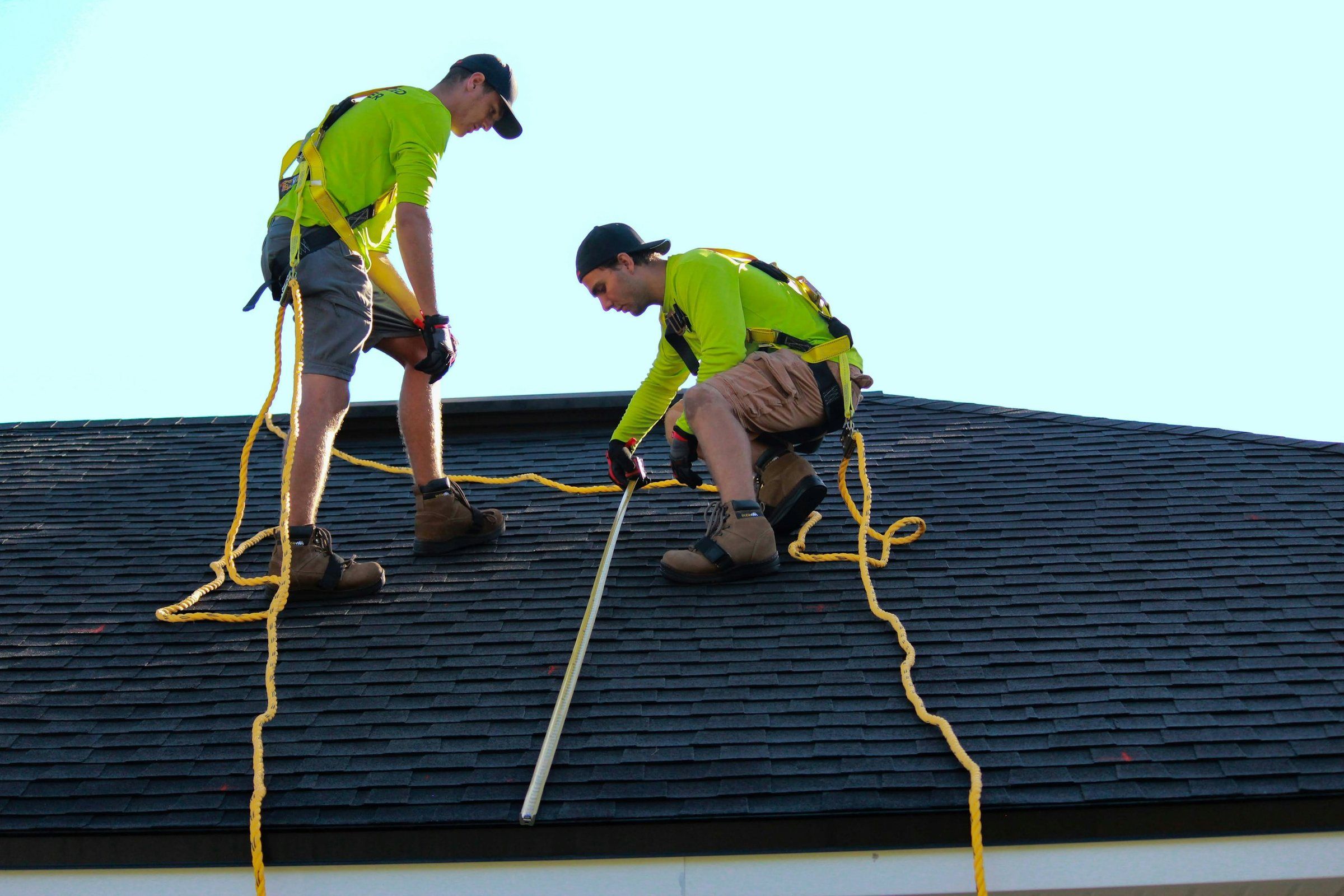
Roof Replacement
Full tear-off down to the deck, new decking where it is needed, ice and water shield at the eaves, and attic venting that matches the roof.
Explore roof replacement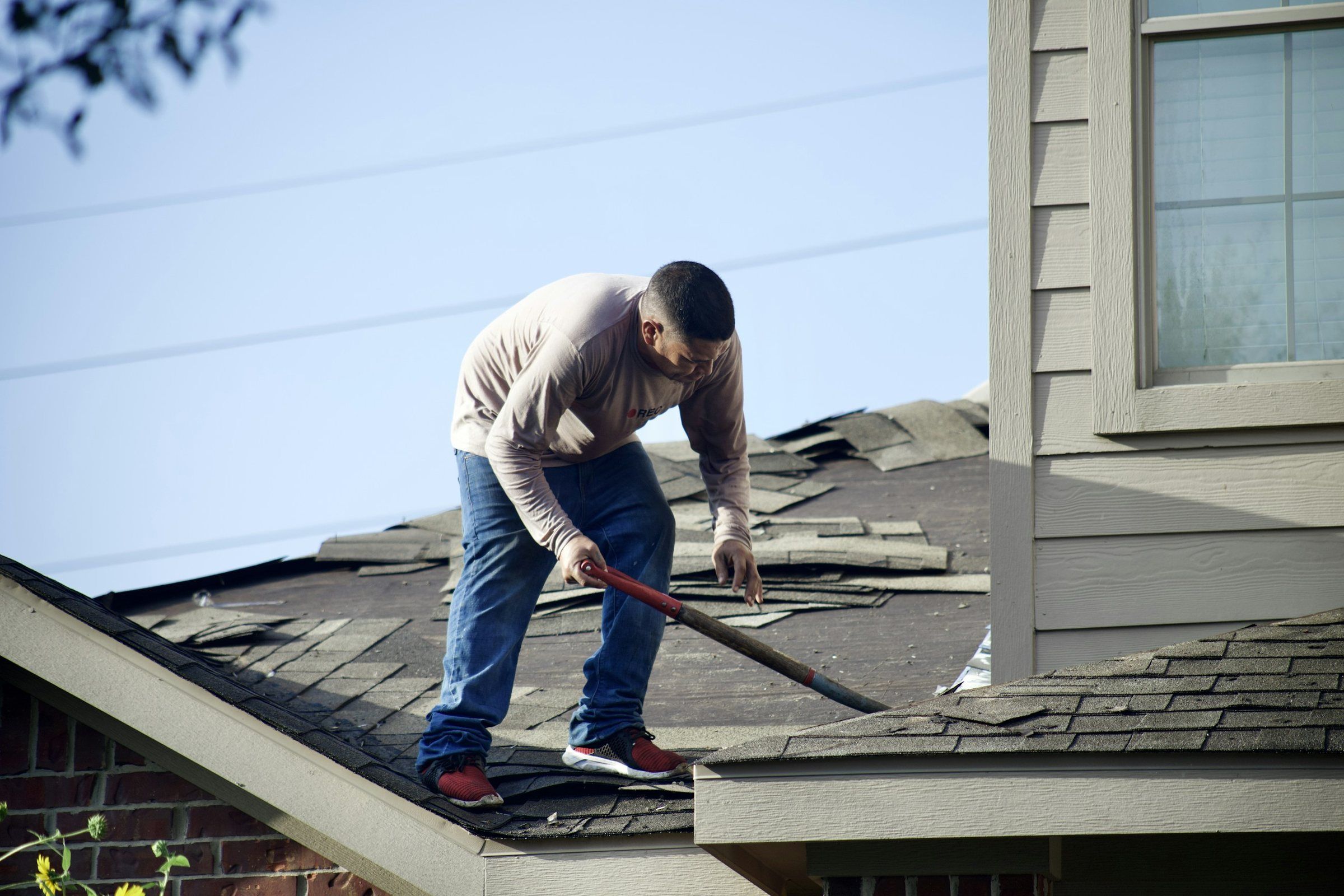
Roof Repair
Leaks traced to the source and fixed: pipe boots, chimney and wall flashing, valleys, ice dam damage and missing shingles.
Explore roof repair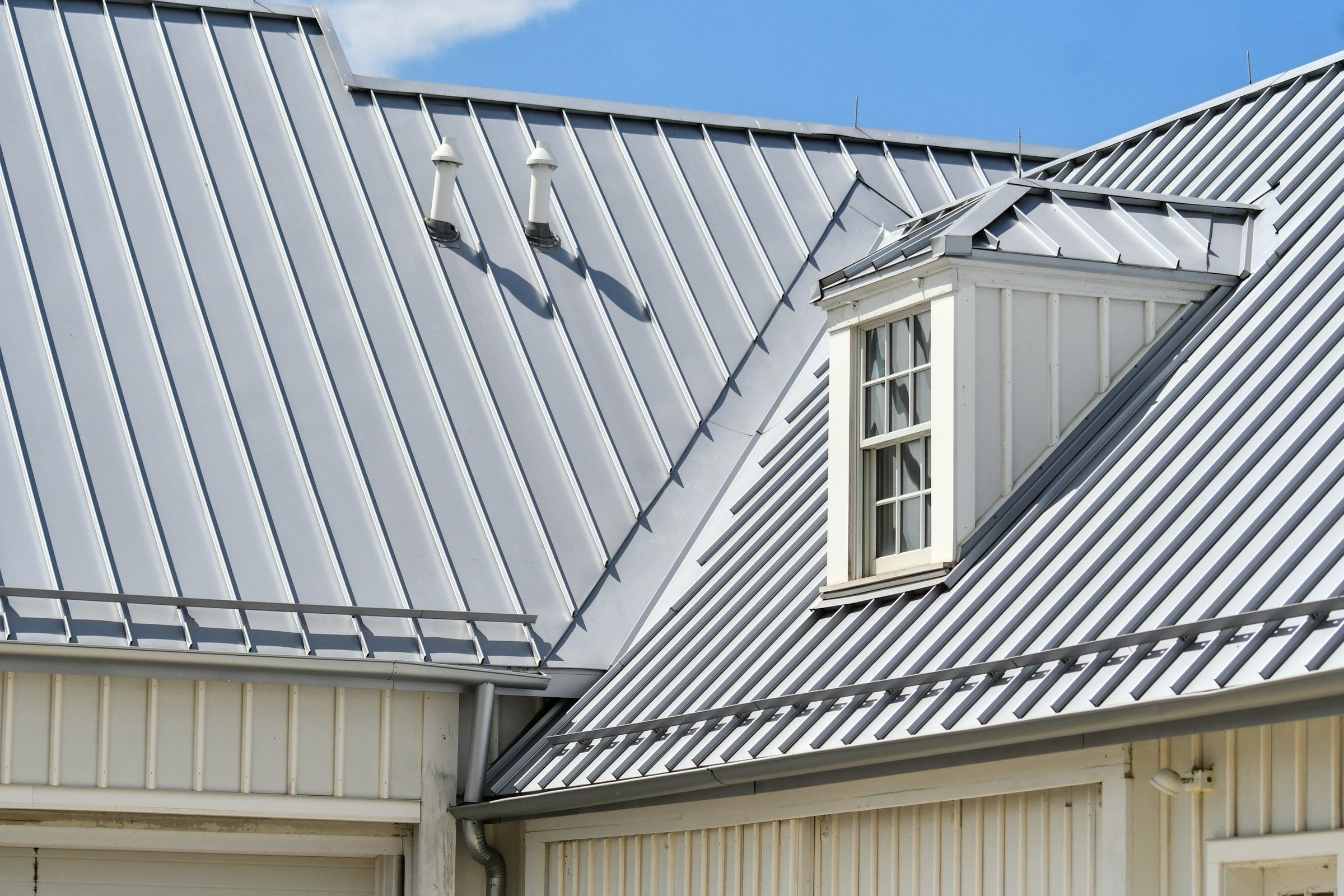
Metal Roofing
Standing seam and exposed-fastener steel for homes, garages, pole barns and machine sheds, detailed for snow and ice.
Explore metal roofingGet a Clear Picture of Your Building's Roof
We will walk the roof, document its condition with photos and give you written options: repair, recover or replace.