Flat Roof Repair in Chippewa Falls, WI
Leaks on EPDM rubber, TPO, modified bitumen and built-up roofs traced to the seam, flashing or drain that failed, then repaired with materials that match the membrane.
Request a Flat Roof Repair
Tell us what's going on with your roof and we'll call you back.
- Free flat roof leak assessments
- EPDM rubber, TPO & modified bitumen
- Storefronts, shops, porches & additions
Flat Roof Leak Repair Starts With Finding the Leak
On a low-slope roof the drip inside is a poor guide. Water gets through the membrane at one point, soaks into the insulation board, runs along the deck to a joint or a fastener hole and comes through the ceiling there. On a steel deck it can follow a flute for many feet before it drops.
So a flat roof repair in Chippewa Falls starts on top of the building, not under the stain.
- When it leaks. During rain, a day after rain, or only in a thaw. A leak that waits for a thaw points at drains and at ice. One that shows in wind-driven rain points at wall flashings and edge metal.
- Every seam and flashing, by hand. We walk the seams and probe them, pull on each wall and curb flashing, and check pipe boots, pitch pockets and the edge metal.
- Drains and scuppers. Cleared, then checked for a loose clamping ring, a cracked bowl or a split where the membrane turns into the opening.
- Soft spots underfoot. Wet insulation is spongy. Walking the roof in a grid maps how far the water has spread.
- A test cut where it matters. A small core through the roof shows how many layers are there, whether the insulation is wet and what shape the deck is in. It is patched before we leave.
You get photos of what we found before any price is discussed. If the entry point is not clear after one visit, we say so and water-test one section at a time. We do not sell a repair aimed at a guess.
Common Flat Roof Repairs: Seams, Flashings, Drains and Punctures
The open field of a membrane rarely fails first. Flat roofs leak at their details, and the repairs below cover nearly all of them.
Open seams
Glued and taped seams on older rubber roofs let go with age, and a lap that has lifted a quarter inch takes in water every time the roof is wet. Each one is cleaned, primed and covered with a new strip. Pressing it back down with sealant does not last.
Wall and curb flashings
Where the membrane turns up a parapet or a rooftop unit curb, it is under constant tension. It pulls away from the wall, splits at corners or slips out from under its termination bar. The repair is new flashing membrane, fastened at the top and sealed, and often a new metal counter flashing or coping joint above it.
Drains and scuppers
A loose clamping ring or a cracked drain bowl leaks straight into the building. A clogged one backs water up over flashing height. We reset or replace the ring, reflash the drain and clear the line.
Punctures and service damage
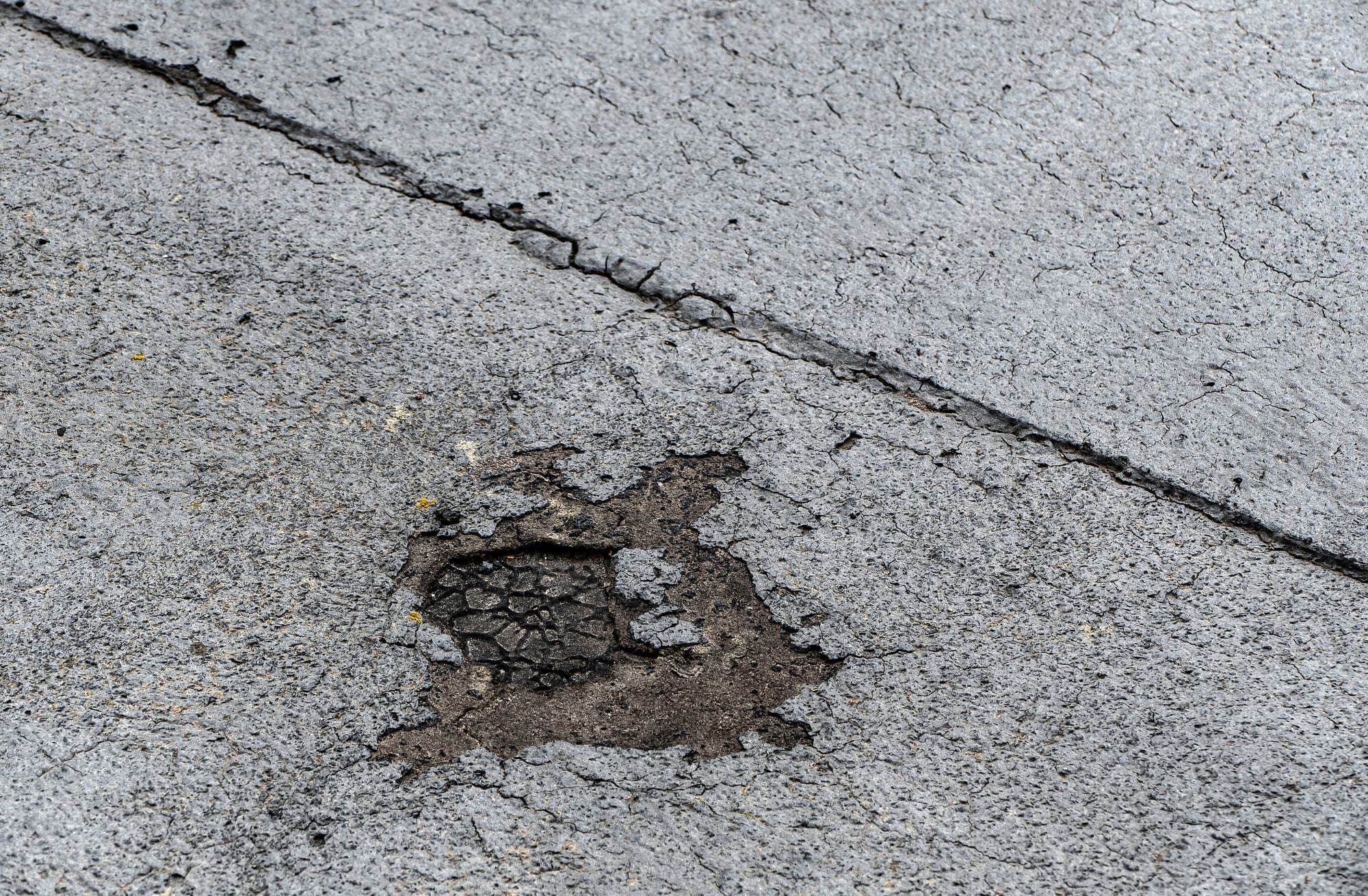
Dropped screws, dragged panels and foot traffic around mechanical units. Small holes get a patch with rounded corners, sized well past the damage. Repeated damage along one route to a rooftop unit is a reason to add walkway pads.
Blisters, ridges and splits
Mostly on modified bitumen and built-up roofs. A blister that is intact and out of the water's path is often best left alone. One that has cracked, or sits in a seam, is cut out and patched in plies.
Wet insulation under the leak
Insulation that has taken on water does not dry out under a membrane. Within the repair area it is cut out and replaced with dry board before the patch goes on. Otherwise the new patch sits on a sponge that freezes every winter.
Rubber Roof Repair and Other Membranes: What Bonds to What
Each roof is repaired with its own chemistry. Mixing them is the usual reason a flat roof patch fails, so the first thing we establish is what is up there.
EPDM rubber roof repair
The surface is scrubbed back to clean rubber, primed, and covered with an EPDM patch set on seam tape. Uncured flashing is used where the patch has to form around a corner or a pipe. Rubber is the easiest of the four to patch well, and it stays flexible in deep cold.
What fails on it: asphalt roof cement, which softens the rubber, and patches stuck to a dirty or chalky surface.
TPO roof repair
Patches are welded on with hot air, so the patch becomes part of the sheet. Aged TPO has to be cleaned back to fresh material first, and each weld is probed along its edge once it cools.
What fails on it: anything glued or caulked. Very old TPO may also no longer take a weld. We test that on the roof before promising a repair.
Modified bitumen repair
Loose granules are removed, the area is primed, and new cap sheet is heat-fused or set in cold adhesive with the laps running the way the water drains. It is the most forgiving surface to patch, and the one where a hardware-store repair has the best chance of holding for a while.
What fails on it: a patch laid over granules, or over a blister that was never opened.
Built-up roof repair
The gravel is scraped back to bare, dry felts, the split or blister is cut out, and the area is rebuilt in plies of modified bitumen that step out past the damage. On an old building it is not unusual to find a built-up roof still in place under a newer membrane, which is one reason we take a test cut.
What fails on it: cement troweled over wet gravel. It never reaches the felts.
Commercial Roof Repair in Chippewa Falls: Storefronts, Shops and Low-Slope Additions
Flat roofs here sit on three kinds of building, and each leaks in its own way.
Downtown brick storefronts
The Bridge Street Commercial Historic District, roughly Bridge Street from Columbia to Spring, has 33 contributing buildings from 1873 to 1943 in the Wisconsin Historical Society's National Register record. Roofs on buildings of that age typically pitch gently toward the back and drain through a rear scupper or an interior drain, behind brick parapets that were built long before single-ply membranes existed.
The usual leaks: flashing that has let go of old brick, coping joints on top of the parapet, and the seam where two buildings share a wall. Sometimes the water is coming through the masonry and not the roof at all. When it is, we tell you it is a mason's repair.
One-story shops, offices and warehouses
Wider roofs with rooftop units, steel decks and long seam runs. Leaks cluster around the curbs and along the paths service technicians walk. On a steel deck the drip can be a long way from the hole, which is why these roofs get the full walk and not a look above the stain.
Low-slope roofs on houses
Porch roofs, rear additions, shed dormers and the flat section over an attached garage are the same work at a smaller size. The weak point is the tie-in where the membrane runs up under the shingles of the main roof. On older homes near downtown it is common to find rolled roofing or shingles on a pitch too low for them. That gets a membrane, not another patch.
What Flat Roof Repair Costs in Chippewa Falls
Flat roof repairs are priced by the detail, not by the square foot. As a national reference only, the cost guide HomeAdvisor puts the average repair on a flat, foam or single-ply roof at about $400, and adds that those costs vary greatly. Treat that as a sense of scale for one simple repair, not a quote.
What moves the number on a given building:
- How many details are being rebuilt. One open seam is a short visit. Reflashing a parapet along a whole wall is not.
- The membrane. Welded TPO, taped EPDM and plied bitumen take different materials and time.
- Wet insulation. Every board that has to come out adds material, labor and disposal.
- Access. A ladder to a one-story roof is a different job from a three-story downtown building with no roof hatch.
- The season. Snow and ice have to be cleared before anything bonds.
The honest unknown is the insulation. We can map soft spots from above, but the true extent of wet board only shows once the membrane is opened. Your written price covers the scope we can see. If we open the roof and find more, we stop and show you before going further. On a roof that has leaked for more than a season, set some money aside for that.
On permits: the City of Chippewa Falls requires a building permit for roofing replacement unless the estimated value of the project is under $2,000, and commercial buildings come under the state commercial building code, not the dwelling code. A single repair often falls below the city's threshold. A large one may not, so we check with the city's inspection office before work starts.
Snow, Ice and Freeze-Thaw Leaks on Chippewa Valley Flat Roofs
A pitched roof sheds its snow. A flat roof keeps it. The nearby Eau Claire station averages 55.4 inches of snowfall a year in the Wisconsin State Climatology Office's 1991 to 2020 normals, and in March the normal high there is 41°F against a normal low of 21°F. That is a thaw by day and a freeze by night for weeks, with meltwater sitting on the membrane the whole time.
- Frozen drains and scuppers. Meltwater has nowhere to go, so it rises until it finds the lowest flashing. Leaks that appear on a sunny day in a thaw are usually this.
- Seams worked open. Water in a slightly lifted lap freezes, expands and opens it a little further each cycle.
- Drifts at parapets and units. FEMA's Snow Load Safety Guide notes that snow drifts deepest on lower roofs and against parapets and rooftop equipment. Those are exactly where the flashings are.
- Ice in the low spots. The same guide puts one inch of ice at a little under 5 pounds per square foot, and a foot of fresh snow at anywhere from 3 pounds per square foot when it is light and dry to 21 when it is wet.
- Shovel damage. Well-meant snow removal cuts membranes. FEMA's advice is plastic shovels and at least 2 inches of snow left on the roof.
The winter everyone here remembers is 2019. The National Weather Service logged 53.7 inches of snow at Eau Claire that February, the snowiest month in the station's record, and news reports from early March counted a gas station canopy and a towing company's roof among the collapses in Eau Claire.
Leaks are our trade. Loads are not. If a flat roof is sagging, doors under it have started to stick or new cracks have opened in a ceiling, get people out from under it and call a structural engineer or the building inspector. FEMA also notes that a building put up 40 or more years ago may not have been designed for drifting snow as codes treat it now.
A fall check of drains, scuppers and flashings, before the first snow stays, heads off most of this.
What to Do While a Flat Roof Is Leaking
- Catch it and protect what is below. Buckets, plastic sheeting over stock and equipment, and a wet ceiling tile taken down before it falls.
- Keep water away from electricity. If it is coming through a light fixture or onto a panel, switch that circuit off.
- Note the weather. Rain or thaw, how long after it started, and which way the wind was blowing. It shortens the search.
- Look at the drain only if you can do it safely. If there is a roof hatch and the roof is clear, a drain strainer buried in leaves is worth pulling clean. Do not go up on snow or ice, or anywhere near an unguarded edge.
- Skip the roof cement. On rubber or TPO it makes the real repair bigger.
- Take photos. Wisconsin's insurance commissioner advises photographing damage and keeping receipts for any temporary repairs, in case the cause turns out to be covered.
If water is running in, call instead of sending a form. We are open 8am–6pm. We do not promise an arrival time, because rain, ice and what is already on the schedule decide that, but we will tell you straight when we can be there and what to do until then.
When Flat Roof Repair No Longer Pays
We would rather repair a sound roof than sell a new one. But some roofs are past it, and money spent on patches there is money lost. The signs:
- Wet insulation under a large share of the roof, not just around one leak.
- Seams failing along their whole length, not at a few points.
- Membrane that has shrunk and is pulling its flashings off the walls on every side.
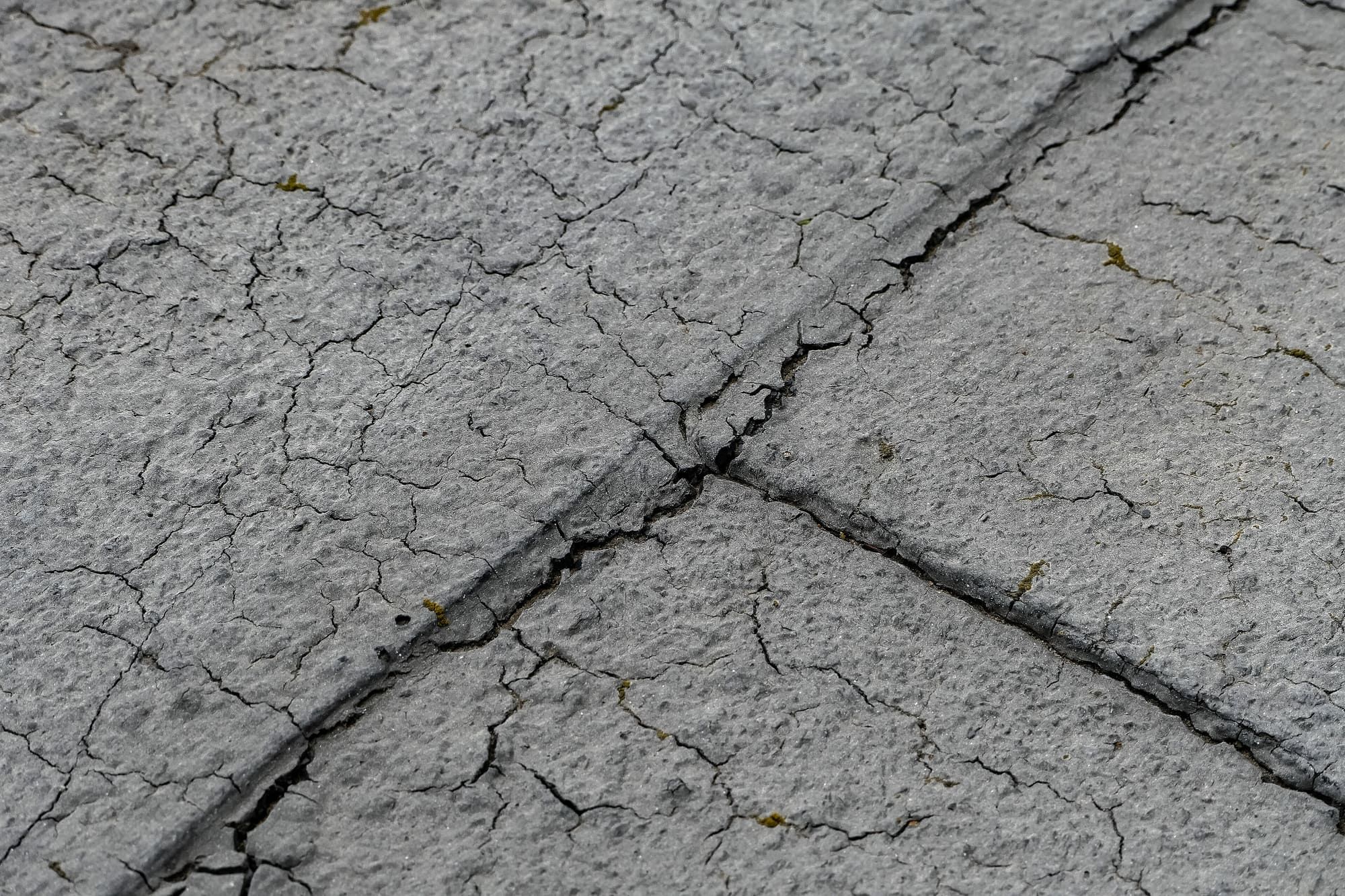
- Cracking across the whole surface, with the reinforcement showing through.
- Patches on top of patches, with the leaks still moving around.
When we see that, the written assessment says so, with photos, and lays out what comes next. Often there is a middle course: repair the two or three worst details now to get through a winter, and budget for the roof on your own schedule.
Recovers, full replacement and the membranes we install are explained on our main commercial and flat roofing in Chippewa Falls page. For shingle and steel roofs, start with our main page as a roofing company in Chippewa Falls.
Flat Roof Repair FAQ: Roof Cement, Winter Patches, Snow Shovelling, Coatings
Can I use roof cement or flashing tape from the hardware store on a flat roof leak?
On a modified bitumen or old tar-and-gravel roof, roof cement is at least compatible, though it cracks within a few freeze-thaw seasons. On EPDM rubber or TPO it is the wrong material. Asphalt products swell and soften EPDM, and nothing asphalt-based stays bonded to TPO. It also contaminates the surface, so the proper patch later has to be larger. If water is coming in now, a tarp weighted with sandbags or lumber is a better stopgap.
How do I know what kind of flat roof I have?
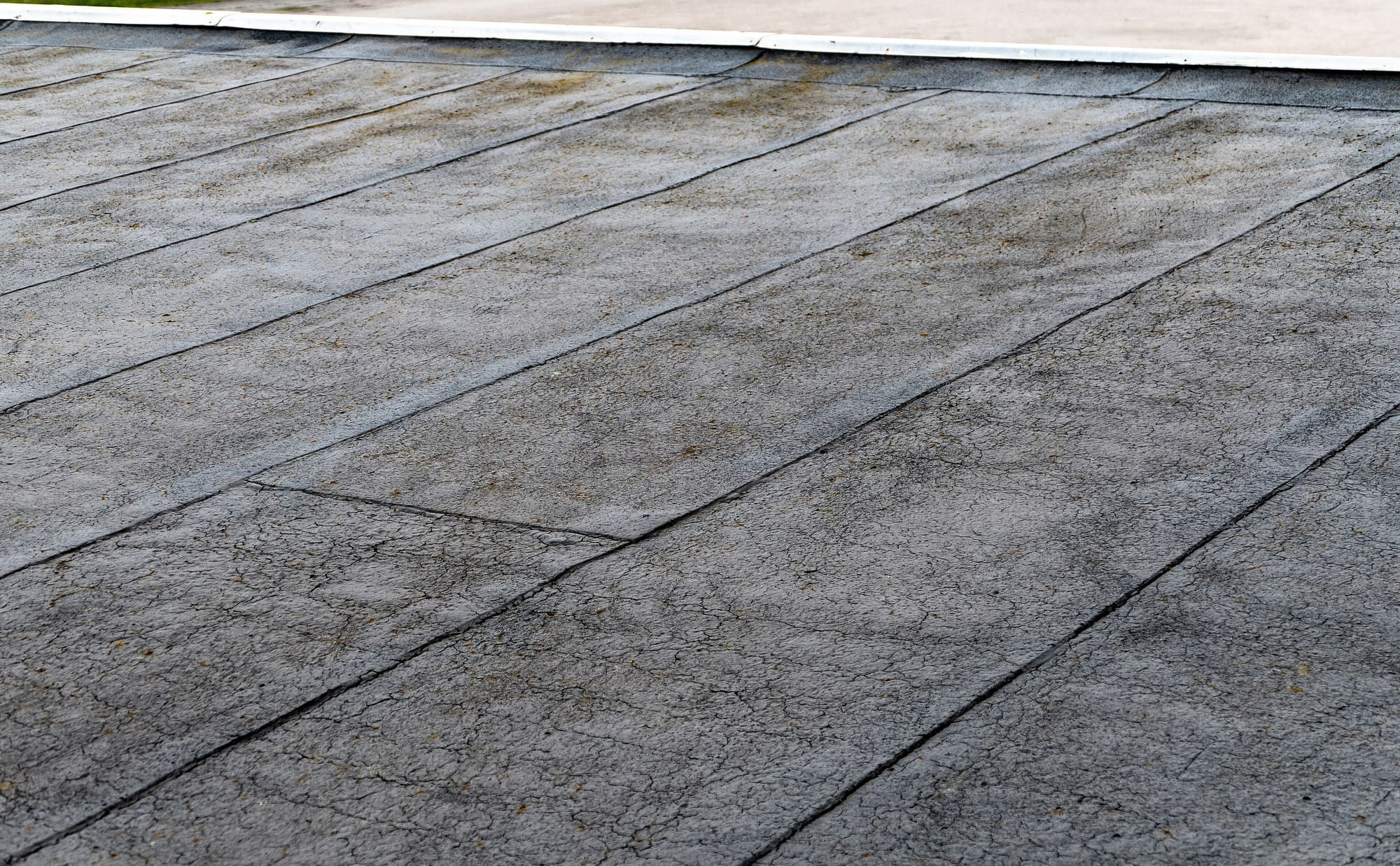
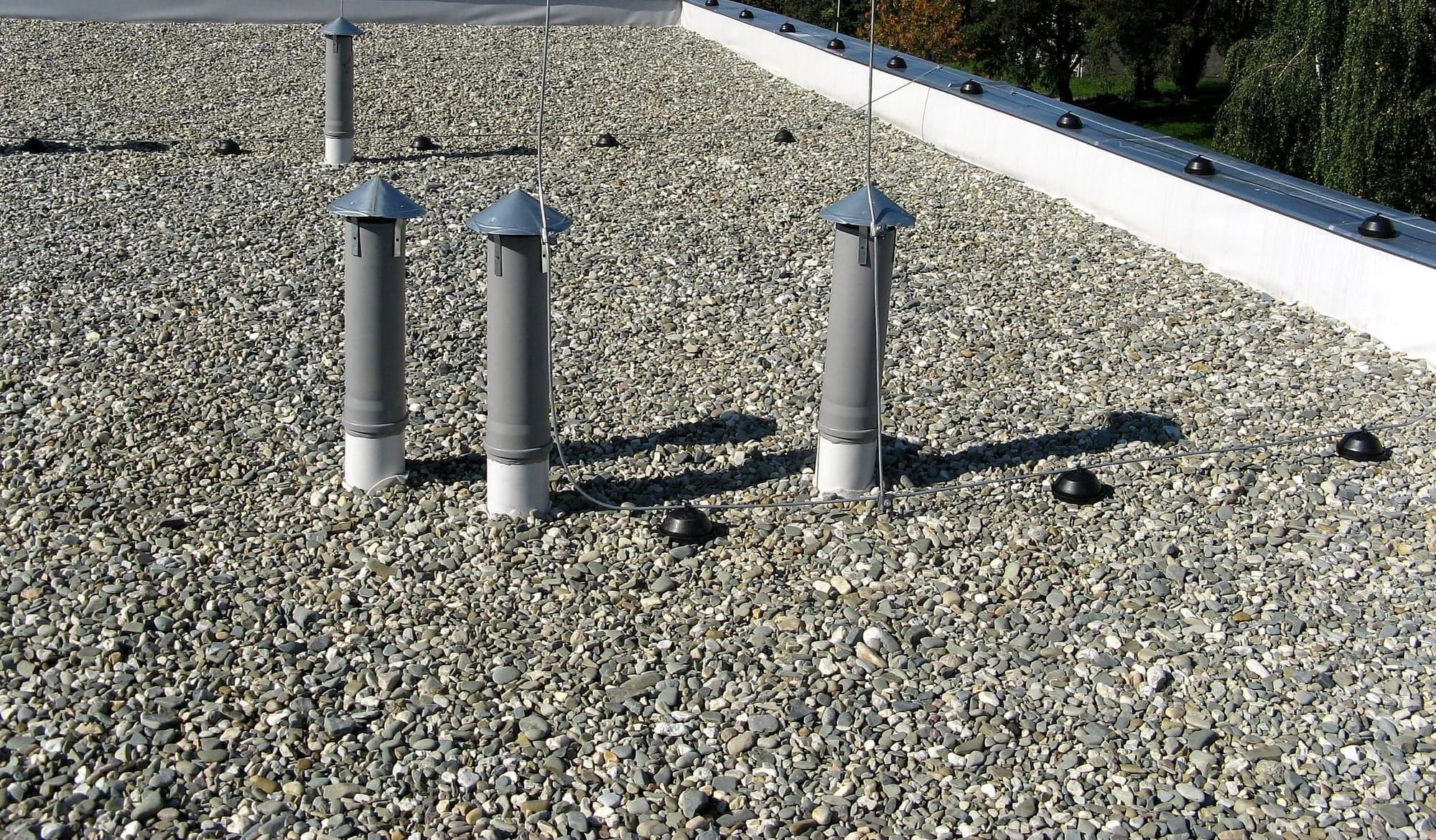
Black, slightly stretchy sheet with taped seams several feet apart is almost always EPDM rubber. White or light gray sheet with narrow welded seams is usually TPO. A granule surface like a heavy shingle, in strips about three feet wide, is modified bitumen. Loose gravel over black asphalt is a built-up roof. If you are not sure, text us a close photo of a seam and a wider one of the whole roof.
Can a flat roof be repaired in winter?
Often, on a dry day with the area cleared of snow and ice. Heat-welded TPO patches and heat-applied bitumen work in the cold. EPDM primers and tapes have minimum application temperatures set by their manufacturers, so a rubber repair made in deep cold may be a temporary one that we come back to finish when it warms up. We tell you which kind you are getting before we start.
Should I shovel the snow off my flat roof?
Usually not, and never down to the membrane. FEMA's Snow Load Safety Guide says removing snow from a roof is more often hazardous than helpful, and that when it is done, at least 2 inches should be left in place and plastic shovels used instead of metal ones. Membranes cut by a shovel are a common spring leak. If you are worried about the weight itself, that is a question for a structural engineer, not a roofer.
Will a roof coating stop my flat roof from leaking?
We do not install coatings, so take this as an outside opinion. A coating is a surface treatment. It does not close an open seam, reattach a flashing that has pulled off the wall or dry out wet insulation, and those are where flat roofs leak. A roof with those problems needs them repaired first whatever goes over the top afterward.
How long does a flat roof patch last?
It depends on what it is bonded to. A welded or properly primed patch on a membrane that is still sound should last as long as the roof around it. The same patch on brittle, shrunken or chalky membrane is buying time, and we will say so. Patches made with the wrong material for the membrane often fail within a winter or two.
Get a Flat Roof Leak Found and Fixed
Tell us what kind of building it is and where the water shows up. We will walk the roof and give you a written repair price.