Roof Tear-Off vs. Layover in Chippewa Falls, WI
Shingling over the old roof is sometimes legal and always cheaper on the day. Here is how to count your layers, what Wisconsin's two-layer rule says, and the few cases where we think a layover is fair.
Get a Tear-Off or Layover Answer
Tell us what's going on with your roof and we'll call you back.
- Free roof estimates
- Layers and deck checked before we price
- Both options priced when both are sound
Roof Tear-Off vs. Layover: What Each Leaves on Your Roof
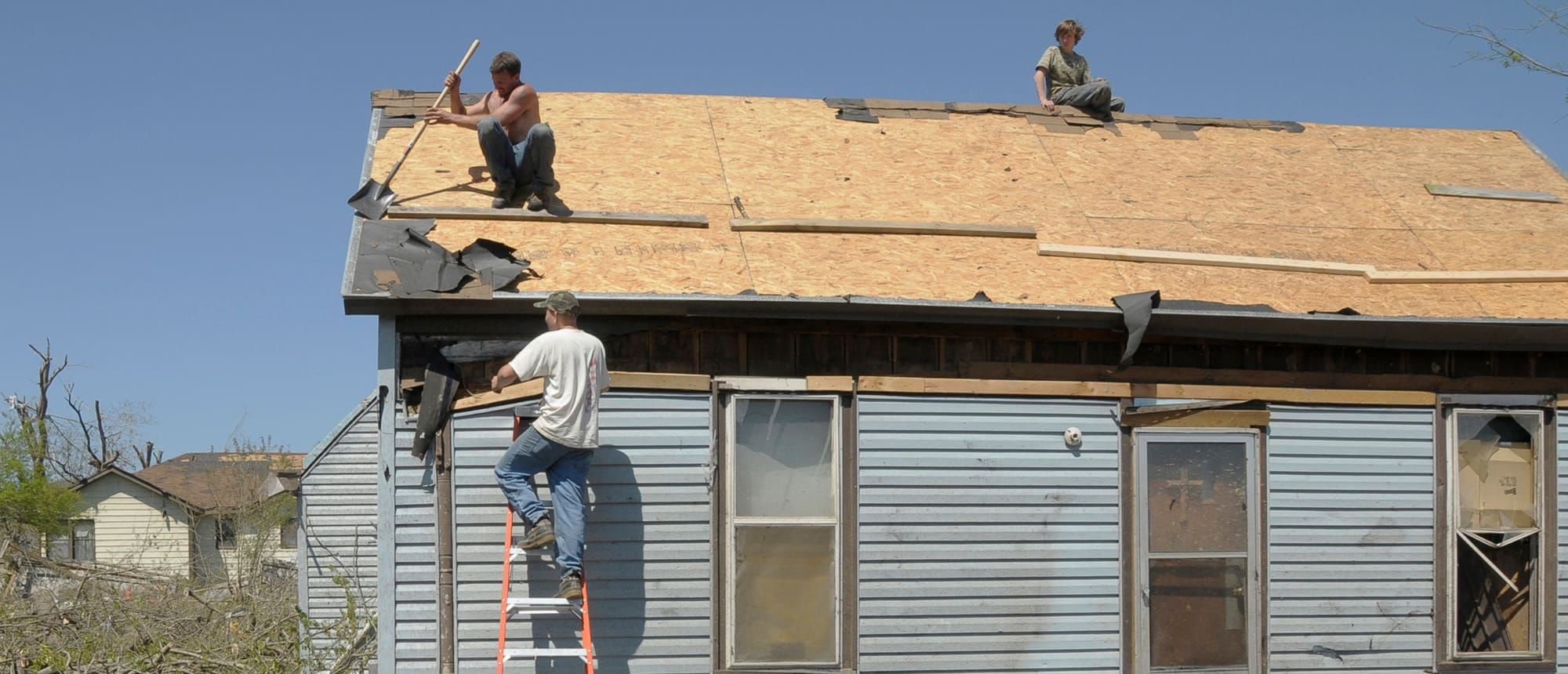
A tear-off strips the roof to the wood before anything new goes on. A layover, also called a roof-over or overlay, nails new shingles over the existing ones. From the driveway they look like the same job. Here is the same roof in section after each one.
- New shinglesLying flat on a clean surface
- New underlaymentCovers the deck, no old felt left
- Ice and water membraneBonded to the deck at eaves and valleys
- New flashing, drip edge, pipe bootsWorked in with the new courses
- Old roofing goneStripped, hauled away, loose nails picked up
- Deck you have seenWalked, re-nailed, bad boards replaced
- New shinglesFollow every dip and curl below
- Old shinglesStay on, with their nails and any trapped moisture
- Old felt or noneWhatever was laid decades ago
- No membrane at the deckIt cannot be slid under the old roof
- Reused or sealed flashingStep flashing stays woven into the old courses
- Deck nobody has seenSoft boards stay soft
Shaded rows are left in place. The dashed row is what a layover cannot add.
Can You Put a New Roof Over an Old One in Wisconsin? The Two-Layer Rule
Sometimes. Wisconsin's Uniform Dwelling Code handles it in one short subsection, SPS 321.28(6), under the title "Reroofing". It opens: "New roof coverings may not be installed over existing roof coverings where any of the following conditions exist." There are three.
- (a) The existing roof or covering "is water-soaked or has deteriorated such that it is inadequate as a base" for more roofing.
- (b) "The existing roof is wood shake, slate, clay, cement or asbestos-cement tile."
- (c) "The existing roof has 2 or more applications of any type of permanent roof covering."
Read together: one dry, sound layer of asphalt shingles can be covered once. The words "any type" matter: an old layer of roll roofing under the shingles reads as a covering too. After that, the next roof is a tear-off with two layers to remove.
Houses built before June 1, 1980
This part rarely gets mentioned. The Uniform Dwelling Code took effect June 1, 1980, and by its own terms (SPS 320.05) it does not reach dwellings started before that date, or alterations to them, though a municipality may adopt it for those. Much of the housing near downtown Chippewa Falls and along the river is older than that. We could not confirm how the city's Chapter 14 building code treats a re-roof on one of those houses, so ask the inspection office rather than take anyone's word, ours included.
It makes little difference on the roof. The national shingle trade group, the Asphalt Roofing Manufacturers Association (ARMA), says most codes do not allow more than two roof coverings, and a third layer would be a poor idea with or without a rule. We hold every house to the two-layer limit, whatever year it was built.
Layovers, tear-offs and the Chippewa Falls building permit
The City of Chippewa Falls Inspection and Zoning office says roofing replacements need a building permit unless the estimated project value is less than $2,000. Going over the old shingles does not change that wording, and a house roof clears the figure either way. Outside the city limits, the village, town or county office sets the rule, and we confirm it for your address.
How Many Layers of Shingles Does Your House Have? Count Them at the Edge
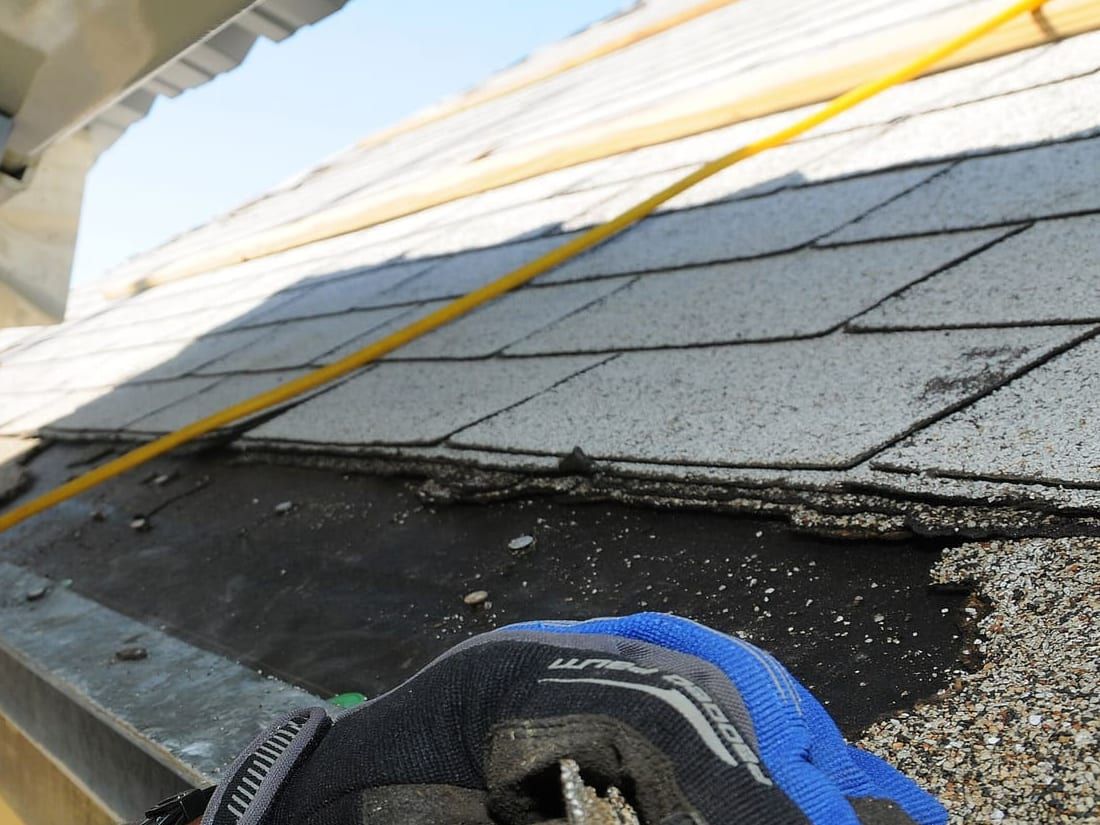
The roof's edge gives it away. You can usually read it from a ladder at the eave or a gable end, without stepping onto the roof.
- Start at a gable end or low eave. With a ladder footed on firm, level ground, look at the edge of the roof from the side, not from above. Stay off the roof itself, especially on a steep older house or in frost.
- Count the shingle edges in the stack. Each shingle layer shows a double thickness at the edge, because the courses overlap. Remember that a laminated shingle is thick on its own, so one layer of those can look like more.
- Look for a second drip edge, or none at all. A metal edge buried in the stack, or shingles that wrap down over an old one, points to a layover done in the past.
- Check a roof vent or pipe boot. Old flashing flanges often sit low and buried, with a raised stack of shingles built up around them.
- Stand back and look across the slope. From the street, a lumpy surface with rounded shingle edges, or a repeating ripple, usually means shingles over shingles.
Not sure what you are looking at? Send a photo of the edge, or we check it for free at the estimate.
Is a Layover Legal on My Roof? Seven Questions in Order
The first three are code. The next three are trade guidance and our judgment. If a question stops you, you have your answer.
-
Does the roof already have two layers, or more?Tear-off
Stop here. The Uniform Dwelling Code bars new roofing over a roof with two or more applications of permanent roof covering. Count the layers with the method above.
-
Is the old roof water-soaked or falling apart?Tear-off
Curled, cupped or brittle shingles, or a roof that has been leaking, fail the code's test of an adequate base. Shingles that are worn but dry and flat can pass it.
-
Is the bottom layer wood shake, slate or tile?Tear-off
The code rules out covering wood shake, slate, clay, cement and asbestos-cement tile. On an old house, look at the rake edge: cedar can sit under the asphalt. Asbestos-cement tile needs its own handling, so ask before anyone disturbs it.
-
Are the top shingles laminated architectural shingles?Usually a tear-off
The Asphalt Roofing Manufacturers Association says most manufacturers do not recommend new shingles over existing laminated shingles. The thick, uneven surface will not hold a new roof flat. Over a flat 3-tab it is at least possible.
-
Is the roof 4:12 or flatter over heated rooms?Lean to a tear-off
That is the slope Wisconsin's ice dam rule is written for, and the slope where ice and meltwater back up most. A layover cannot put membrane on the deck, so we would not cover a low-slope house roof.
-
Do the boards show gaps wider than ¼ inch from the attic?Lean to a tear-off
ARMA lists rotted or warped wood and gaps over ¼ inch between deck boards as reasons to strip the roof. It also suggests considering new sheathing over a plank deck. Nails need solid wood to land in.
-
Is the roofline straight and the attic dry?Possible layover
If you got this far, with one flat layer of 3-tab on a sound deck, a layover is legal and may be fair. Whether it suits your plans is the next question, and the columns further down cover it.
What a Second Layer of Shingles Hides on Older Chippewa Falls Houses
A layover's weakness is not the new shingles. It is everything a tear-off would have let someone see. That matters most on the older houses around downtown and along the Chippewa River, which are also the ones most likely to have been covered once already.
Plank decks with gaps
Those roofs were often built for wood shingles, on boards with air spaces between them. New nails can land in a gap or a split board. ARMA notes the wider gaps as a reason to strip the roof and says rotten or warped boards must be replaced before new shingles go on. Nobody can do that through two layers of asphalt.
No membrane at the eaves
Self-adhering ice and water membrane bonds to the wood. It cannot be added under a layover. A Chippewa Valley winter brings snowpack, a warm attic and ice at the eave, and that strip of membrane is what stops backed-up meltwater reaching the ceiling.
Old flashing, sealed over
Step flashing at walls and chimneys is woven into the shingle courses, so a layover usually leaves it in place and seals around it. Layer upon layer of roof cement around a chimney on an older house is often the record of that choice.
Leaks already started
A slow leak at a vent or valley gets covered, not repaired, and the wet wood goes on rotting out of sight. Adding intake at the eaves or cutting in a ridge vent is more awkward through two layers too.
Second Layer Weight vs. Chippewa County Snow Load: What the Numbers Say
You will hear that a second layer overloads a roof. On a sound, modern roof, the arithmetic says otherwise.
- Second layer, 3-tab 2.3 to 2.5 lb
- Second layer, architectural 4 to 4.3 lb
- One foot of fresh snow 3 to 21 lb
- Code minimum roof load, Chippewa County 40 lb
Published shingle weights put a layer at about 230 to 250 pounds per 100 square feet for 3-tab and 400 to 430 for architectural, though sources differ and old shingles weigh less. That is under 5 pounds per square foot. Chippewa County sits in the 40-pound zone on the Uniform Dwelling Code's roof load map, the higher of the state's two, and FEMA guidance puts a foot of fresh snow at 3 to 21 pounds per square foot, depending on how wet it is.
So a second layer is roughly a tenth of that code minimum at most. It is rarely what decides the matter on a house framed to the code. The catch is that a house older than the code was never checked against that map. Undersized or widely spaced rafters, a long-span garage, or a ridge that already dips have less margin, and a wet March snow is what finds it. We look at the framing from the attic before a layover comes up. If the ridge sags or the rafters bow, the conversation ends there.
What a Layover Skips Today and Leaves for the Next Tear-Off
The saving is real. A layover skips the labor of stripping the roof, the dumpster and the disposal. Our cost guide has published figures for that. What the saving buys you is a set of jobs moved to later, usually at a larger size.
- The next re-roof strips two layers, with more labor and more weight to haul than one. By then a third layer is off the table.
- Deck repairs wait. A few soft boards today can be a wider patch when the roof finally comes off, and you find out then.
- The roof may not last as long. How much shorter depends on the surface under it. Anyone quoting you a figure is guessing.
- A future buyer's inspector may note two layers. Some buyers will treat that as the next owner's bill and ask for it back.
Shingle warranties and impact ratings over a second layer
Shingle makers publish their own conditions for going over existing roofing, and terms vary by product and by how the installer registers the job. Product warranties generally do not cover trouble caused by the surface underneath. If coverage matters to you, read the instructions for that specific shingle, or ask us to show you the page, before you agree to a layover.
Impact ratings are a less obvious loss. ARMA warns that impact resistance ratings "may be affected when new shingles are installed over existing shingles." If you are paying extra for an impact-rated shingle, or expecting an insurance discount for one, a layover is the wrong base for it.
When We Will and Will Not Quote a Layover in Chippewa Falls
We recommend a tear-off on nearly every house. It is not a sales line, since a layover is less work for us. ARMA itself says that if a roof has one flat layer and the deck is in good condition, replacement may not be necessary, so we will not pretend a layover is never right.
We will quote a layover when
- There is one layer of 3-tab, lying flat, with no leak history.
- The deck is solid underfoot and clean from the attic side.
- The framing is straight.
- It is a detached garage or outbuilding, where ice dams and a shorter life matter less.
- You plan to sell or replace the building within a few years and understand the trade-offs. We will put them in writing.
We will not quote a layover when
- There are two layers. We hold that line on every house.
- The roof has leaked or gets ice dams.
- Shingles are curled, cupped, brittle, or laminated.
- The deck is soft anywhere or the roofline sags.
- Wood shingles or shakes are under the asphalt, which can turn up on older homes near downtown.
- It is a low-slope roof over heated rooms.
When the answer is a tear-off, the full job is laid out under roof replacement in Chippewa Falls. For repairs, steel, flat roofs and the rest of what we do, start with our home page for roofers in Chippewa Falls. Phone and text hours: Open 8am–6pm.
Tear-Off vs. Layover FAQ: Layer Limits, Garages, Membrane and Insurance
How many layers of shingles are allowed in Wisconsin?
Two is the working limit. SPS 321.28(6) of the Uniform Dwelling Code bars new roof coverings over a roof that already has two or more applications of permanent roof covering, so one layer can be covered once and two cannot. The code is written for dwellings begun on or after June 1, 1980. For an older house, ask the local inspector what applies. We hold every house to the same limit.
Does a layover last as long as a tear-off?
Generally not, and nobody can honestly give you a number for your roof. New shingles over old ones do not lie perfectly flat, and any leak starting under the old roof is still there. A layover on a flat, dry single layer can give good service. One over a tired, wavy layer will show it early.
Can architectural shingles go over old 3-tab shingles?
Yes, physically, and a thick laminated shingle hides small unevenness better than a thin one. The other trade-offs stay the same: no look at the deck, no membrane at the eaves, reused flashing. The reverse is the real problem. The Asphalt Roofing Manufacturers Association says most manufacturers do not recommend new shingles over existing laminated shingles.
Can ice and water shield go over old shingles?
It is made to go on a clean, dry deck, not over granules and old fasteners, so we do not count it as protection on a layover. That is the biggest thing a layover gives up on a Chippewa Valley roof, because the eave is where ice and backed-up meltwater get in.
Do I need a permit for a layover in Chippewa Falls?
Treat it the same as a tear-off. The City of Chippewa Falls says roofing replacements need a building permit unless the estimated project value is under $2,000, and it draws no line between the two methods on its page. A small garage may come in under that figure. Outside the city, we confirm the rule for your address.
Is a layover okay on a detached garage or shed?
Often, yes. With one flat layer, a sound deck and no heated space below, the case against it is much weaker: ice dams matter less, and a shorter life costs little on a small roof. We keep the same two-layer limit there, and we would still tell you if the deck felt soft.
Will insurance pay for a tear-off instead of a layover?
When a claim covers replacing a storm-damaged roof, removing the existing roofing is normally part of the insurer's estimate, and extra layers can be raised once they are documented. Your policy and adjuster decide. For a roof replaced because of age, the choice and the bill are yours either way.
Have Your Layers and Deck Checked Before You Choose
We count the layers, look at the deck from the attic, and tell you whether a layover is even on the table for your roof.