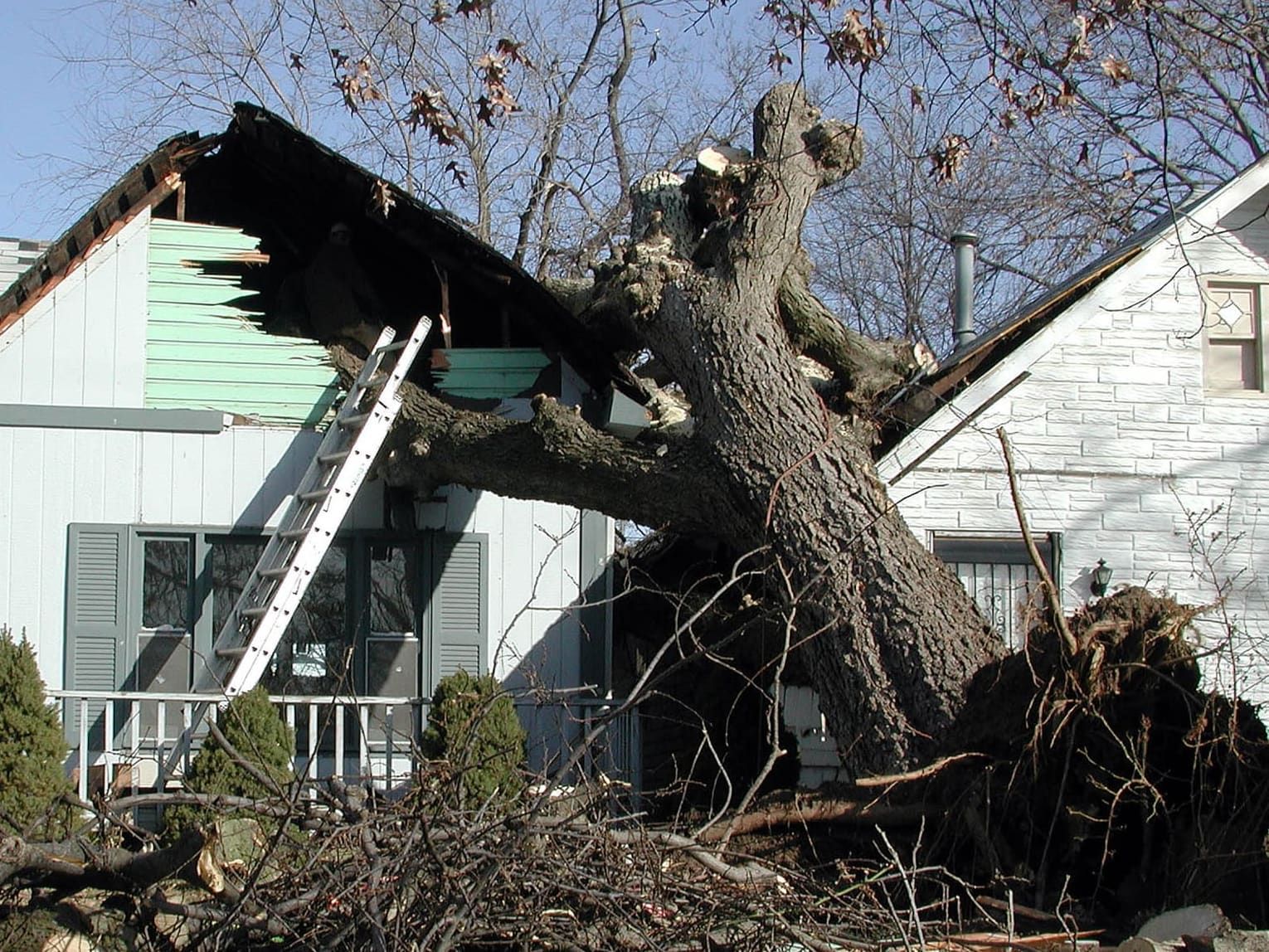
Tree Damage Roof Repair in Chippewa Falls, WI
When a tree or a big limb comes down on the house, there are two jobs: getting the tree off, and putting the roof and its framing back. A tree service does the first. We do the second, from covering the opening through rafters, decking and shingles, with photos your adjuster can use.
Tree or Limb on Your Roof?
Tell us what's going on with your roof and we'll call you back.
- Framing checked from the attic, not just the shingles
- Photos and cause-of-loss notes for your claim
- Open 8am–6pm
Tree Fell on the Roof? What to Do in the First Hour
A tree lying on a house is held up by whatever it broke. Nothing about it is stable yet, so the first hour is about people, not the roof.
- Get everyone out of the rooms under the impact. Assume the ceiling below is carrying the tree until someone has seen the framing.
- Look for wires before you go near it. If the tree has pulled down or is touching any line, including the service drop to the house, stay well back and call 911. Xcel Energy, which serves most of Chippewa Falls, tells people to treat every downed line as energized, never touch or move it, and leave the area. Some homes outside the city are on an electric cooperative; its number is on your bill.
- Check for gas. A falling trunk can shift a meter or snap a vent. If you smell gas, get out and call from outside.
- Stay off the roof and leave the chainsaw in the garage. A trunk resting on a roof is loaded like a spring. Cut limbs whip, trunks roll, and broken decking under it will not hold a person.
- Photograph before anything moves. From the ground: every side of the tree, where it broke or uprooted, where it landed, and the inside of any room it reached. Those pictures show the adjuster what happened better than anything taken after the cleanup.
- Call your insurer, a tree service and us, in whatever order you reach them. Put buckets under any drip and move what you can out of the way.
If it is raining and water is coming in, switch off any light or fan it runs through at the breaker. The tree comes off before anyone can cover the hole, so plan on catching water indoors for a while.
Tree Limb on the Shingles or Trunk Through the Deck: Sizing Up the Damage
How much work a tree leaves behind depends less on the size of the tree than on how it landed and what it hit. These are the patterns we see, roughly from smallest to largest:
| What you see from the yard | What is often underneath | What happens first |
|---|---|---|
| Small branches scattered on the roof | Scuffed granules, a lifted or torn shingle, a dented vent | Branches off, a walk of the roof, spot repairs |
| One large limb lying flat across a slope | A few punctures through the deck, sometimes a cracked rafter near where it struck | Limb removed, the attic checked under the impact, holes covered |
| A limb or trunk that came through, daylight in the attic | Broken decking, broken or pushed rafters, insulation and drywall below soaked | Tree service removes it, opening plated and covered the same day |
| A whole tree across the ridge | Damage on both slopes, a ridge knocked out of line, top plates shifted | Removal by crane, temporary bracing, then cover |
| A tree resting on the eave or a corner | Crushed overhang, bent fascia and drip edge, a wall top plate pushed out | Removal, then the edge framing assessed before anything is closed up |
The table is a guide, not a diagnosis. A limb that looks harmless from the driveway can hide a split rafter, which is why we always look from underneath.
Getting a Fallen Tree Off the Roof: Who Removes It and Who Rebuilds
People often expect one company to handle the whole thing. It goes better as two trades working in order, with you and your insurer alongside:
- The tree service takes the tree off. Lifting or sectioning a trunk off a building takes rigging, sometimes a crane, and insurance written for that work. Ask them to lift pieces clear rather than drag them across the shingles, and to leave the roof as it lies once the weight is off.
- We cover the opening as the weight comes off, or as soon after as we can be there. Broken decking gets plywood over it and a tarp over that, anchored with boards. How that cover goes on and how long it holds through wind and snow is covered on our emergency roof tarping page.
- We assess and rebuild. Once the roof is covered and dry, we open the damaged area, check the framing and write up the permanent repair.
- You and your insurer handle the claim. You report the loss and the adjuster inspects. We supply photos and a line-item estimate. Wisconsin law (Wis. Stat. 100.65) does not let a contractor negotiate a claim for you; with your consent we can talk with the adjuster about the damage and our estimate, and that is all.
An honest point about timing: the tree service is usually the bottleneck after a big storm, not the roofer. If you have a choice, book whoever can lift the tree off soonest. A roof cannot be covered while a trunk is lying on it.
Rafters, Trusses and Decking: Hidden Structural Damage When a Tree Hits the Roof
The hole you can see is rarely the whole story. A falling trunk delivers its force into the roof frame, and the frame spreads it to places that look fine from outside.
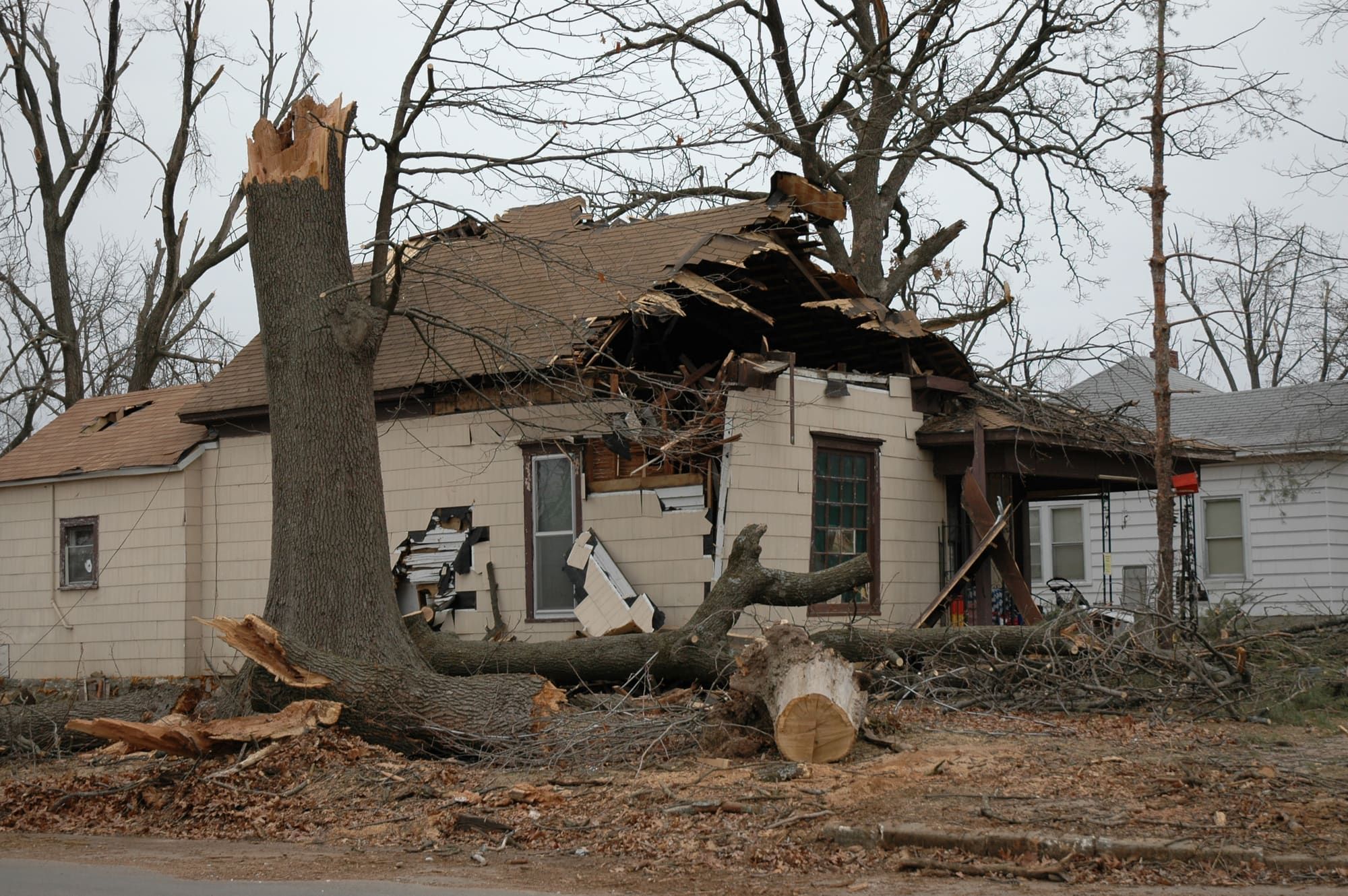
So the inspection happens from the attic as well as from the roof. What we look for:
- Rafters. Cracks and splits, often a few feet from the impact, and rafters shoved off their seat at the wall or the ridge board.
- Trusses. Broken chords or webs and loosened metal connector plates. A damaged truss is not simply patched with a board. It needs a repair designed by an engineer or the truss manufacturer, and we arrange for that before anyone touches it.
- Ridge and wall tops. A ridge knocked out of line, a wall top plate pushed outward, a cracked ceiling joist.
- Decking. Broken sheets around the hole, and sheets sprung loose from their nails across a wider area. Older homes with board sheathing instead of plywood crack along the boards.
- The rest of the roof. Limbs scrub granules off, puncture shingles and flatten vents and flashing well away from where the trunk landed. We walk the whole roof, not just the hole.
- Wet insulation. If rain got in before the cover went on, soaked insulation holds water against the ceiling drywall. It has to come out, or the ceiling stains and the drywall sags weeks later.
Where framing is broken, temporary bracing goes in before the cover. If the damage goes beyond rafters and decking into walls or floors, we say so and you will need a builder for that part.
Oaks, Maples, Lakeshore Pines and Dead Ash: Why Trees Land on Chippewa Falls Roofs
Trees and roofs sit close together in much of this area, and the weather here finds the weak ones.
Summer thunderstorms and straight-line wind
Most tree damage to roofs here comes from summer thunderstorms. On May 15, 2025, the National Weather Service reported significant straight-line wind damage in Chippewa County and three neighboring counties. Wind like that snaps limbs out of big oaks and maples in full leaf, when they are heaviest and catch the most air.
Ice storms and wet snow
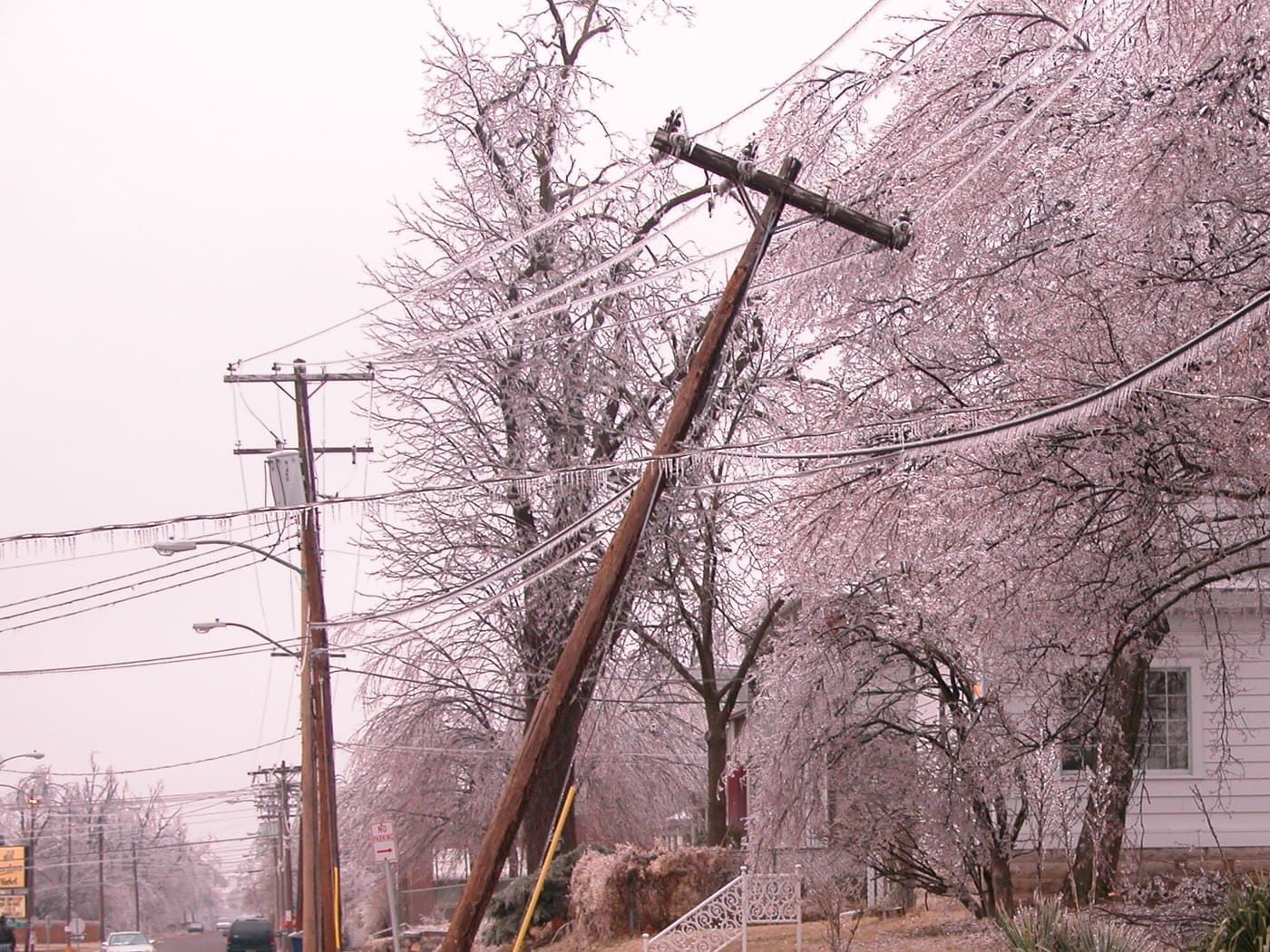
Freezing rain coats every twig, and the weight adds up across a crown until limbs let go, often over the house they shade. Heavy, wet snow in October or April does the same to trees that still have leaves or have not dropped dead wood yet. Those limbs tend to come straight down rather than blow over, so they land on the roof below.
Ash trees killed by emerald ash borer
Emerald ash borer was first confirmed in Chippewa County in 2017, after a Lake Wissota homeowner in the Town of Lafayette reported dying trees; state officials said that infestation looked several years old. Ash trees killed by the beetle dry out and turn brittle, and dead ash near a house is a common source of limbs on roofs. If a dead or leaning ash stands within reach of your roof, have a tree service look at it before the next storm. That advice costs us work, and it is still the right call.
Lake homes, river lots and steep older roofs
Lake homes around Lake Wissota sit under tall oaks and pines with wind coming straight off the water. Older lots along the Chippewa River and near downtown have maples and oaks planted, or left standing, a few feet from the house. Many of those older homes have steep pitches, where a limb hits hard and the repair has to be worked from roof brackets and ropes.
Snow Load on Tree-Cracked Rafters While the Repair Waits
A tree that comes down in an ice storm or a late-fall snow leaves a damaged roof heading into winter. Normal snowfall at the nearby Eau Claire station is 55.4 inches a year, and the snow does not wait for the repair.
- Cracked framing carries less. FEMA's snow load guide puts a foot of fresh snow at roughly 3 to 21 pounds per square foot, depending on how wet it is. A rafter cracked by a trunk was never meant to carry that. Until it is repaired, keep an eye on the ceiling below after heavy snow, and call if it starts to sag or crack.
- The cover has to shed snow too. Snow slides onto the tarp and piles at its lower edge. That edge gets heavier anchoring in winter, and the cover is checked after big snowfalls.
- Permanent work waits for workable days. New decking and shingles go on a clear, dry roof. In January that can mean waiting for a stretch above freezing, so the temporary cover has to be built to last longer than it would in July.
- Do not shovel or rake near the damage. Pulling snow off a broken section from the ground can tear the cover or drop loose decking.
Fallen Tree Insurance Claims: Photos, Cause of Loss and the Neighbor's Tree
A tree on the roof is one of the more straightforward claims, as long as it is documented before the evidence is cut up and hauled away.
- Cause of loss. Adjusters want to know what brought the tree down: wind, ice, lightning or snow. Note the date and the weather, keep any outage or storm notices, and photograph the broken trunk or the root plate. Our notes record what we saw on the roof and in the attic and when.
- Before and after the cover. We photograph the roof before the cover goes on and again after. Your own pictures of the rooms below belong with them, taken before you clean up.
- Keep the receipts and the pieces. Wisconsin's Office of the Commissioner of Insurance tells policyholders to make temporary repairs to prevent further damage, keep the receipts, hold off on permanent repairs until the adjuster has seen the damage, and not throw away damaged items before then. Broken decking we remove can be set aside.
- Tree removal is a separate line. Consumer Reports, citing the Insurance Information Institute, says insurers generally limit what they pay to remove a fallen tree to $500 or $1,000. Removing a large trunk from a house can cost more than that, so ask your insurer before you hire the tree service.
- A neighbor's tree. Consumer guidance says to claim through your own policy for damage to your house, wherever the tree grew.
Coverage itself is decided by your insurer under your policy, not by us. What we can do is make sure the roof side of the file is complete.
Rebuilding After the Tree Is Off: Framing, Decking, Shingles and Matching
Once the adjuster has been out and the scope is agreed, the permanent repair goes in this order:
- Framing. Cracked rafters are replaced or reinforced with new lumber of the same size alongside. Trusses are repaired to the engineered detail. The ridge is brought back into line.
- Decking. Broken and loosened sheets come out back to the nearest framing, and new sheathing of matching thickness goes in so the new shingles lie flat.
- Underlayment and ice barrier over the new deck, lapped into what is already there.
- Shingles or panels over the rebuilt area, woven into the existing roof.
- Flashing, vents and drip edge that were bent or torn are replaced, not hammered straight.
An honest note on matching. New shingles on a patched section will not match a weathered roof exactly, and some older shingles are no longer made. On a slope that shows from the street, that sometimes means redoing the whole slope for a uniform look. Whether insurance pays for that is the insurer's decision; we document the mismatch and give you both options.
Structural repairs can need a building permit. In the City of Chippewa Falls, roofing replacement needs one once the estimated value reaches $2,000, and we check with the right office for addresses outside the city before the permanent work begins. Drywall, paint and interior finishes are separate trades; we tell you what we saw so they can be scoped properly.
Roof open from wind or a failed flashing, with no tree in the picture? That is emergency roof repair in Chippewa Falls, and the page explains how those calls are sorted when a storm hits the whole area. Anything planned, like a new roof or a metal or flat roof, starts on the main page of our work as a roofing contractor in Chippewa Falls.
Tree Damage Roof Repair FAQ: Neighbors' Trees, Removal and Hidden Cracks
Does homeowners insurance cover a tree that falls on the roof?
Damage to the house from a tree brought down by wind, lightning or the weight of ice and snow is a common covered loss, but every policy has its own terms. Removal of the tree is usually limited: Consumer Reports, citing the Insurance Information Institute, says insurers generally cap what they pay to remove a fallen tree at $500 or $1,000. Report the loss promptly and let your insurer tell you what applies.
The tree was my neighbor's. Whose insurance pays for my roof?
Usually yours. Consumer guidance, including Consumer Reports, says to claim tree damage to your house through your own insurer, even when the tree grew in the neighbor's yard. Whether your insurer then goes after the neighbor is between the companies. We are not insurance advisers, so confirm it with your agent.
Is it safe to stay in the house with a tree on the roof?
Leave and call 911 if the tree has come through into a room, if a ceiling is cracked or sagging, if you smell gas or if a power line is down near the house. If a limb is lying on the roof with nothing showing inside, keep everyone out of the rooms directly under it until the framing has been looked at from the attic.
A branch hit the roof but nothing looks broken. Should I have it checked?
Yes. A falling limb can crack a rafter or punch a hole the size of a fist through shingles and decking and leave little to see from the yard. The usual first sign is a ceiling stain weeks later. Looking at the shingles around the impact and at the underside of the deck in the attic settles it in one visit.
Do you cut up and remove the tree?
No. Taking a tree off a house is work for a tree service with rigging, often a crane, and insurance for that specific job. We line up timing with them so the opening can be covered as soon as the weight is off, and we handle the roof and its framing from there.
Can you look at it while the tree is still on the house?
From the ground and from inside, yes, and it is often worth doing so you know what to ask the tree service for and what to tell your insurer. Nobody from our side climbs onto a roof that is still carrying a tree. The roof work starts once the weight is off.
After a tree hits the house, can the damaged section be fixed or does the whole slope need redoing?
Most of the time the damaged section is rebuilt and the rest of the slope stays. A whole slope comes into it when the shingles cannot be matched, when the old roof was near the end of its life anyway, or when the impact loosened decking well beyond the hole. You get photos of what we found and both options in writing.
Tree on the Roof? Get the Opening Covered and the Framing Checked.
Call and tell us what came down, where it hit and whether it is still on the house. If it is, we will tell you who to call first and what to ask for.