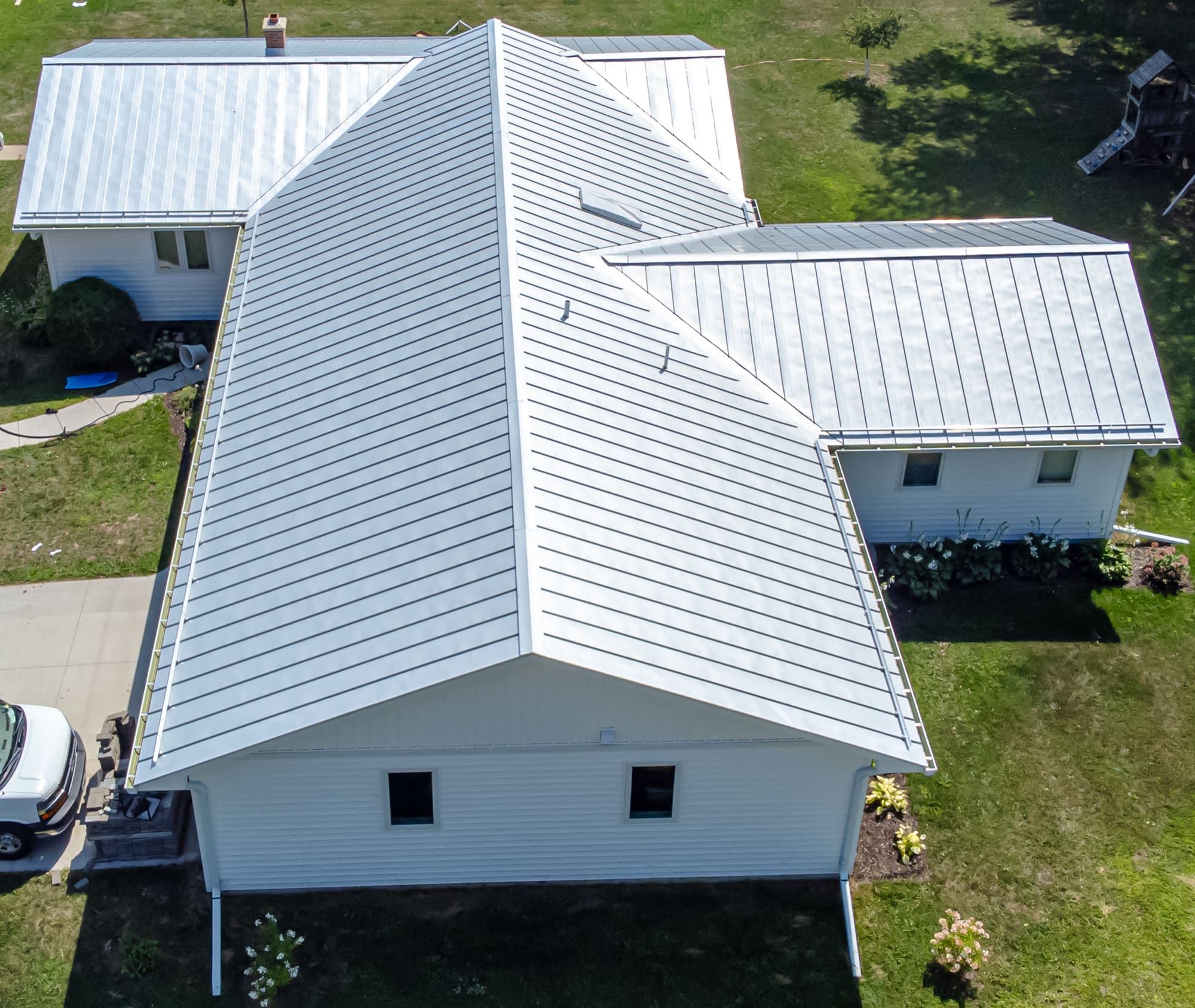
Metal Roof Over Shingles in Chippewa Falls, WI
Wisconsin's code lets steel go over one sound layer of shingles. Whether it should on your house comes down to the deck, the old flashings and the attic, which a layover never lets anyone see.
Ask About Steel Over Your Shingles
Tell us what's going on with your roof and we'll call you back.
- Free metal roof estimates
- Layover and tear-off written up side by side
- Deck, flashing and attic checked first
Can You Put a Metal Roof Over Shingles in Wisconsin? What SPS 321.28 Allows
Usually, over one layer. The reroofing section of Wisconsin's Uniform Dwelling Code, SPS 321.28(6), says new roofing may not go over an existing roof in three cases. If none of them applies, steel can legally go on top of the shingles.
- (a)
water-soaked or has deteriorated such that it is inadequate as a base for additional roofing
On a Chippewa Falls house: Curled, cupped or brittle shingles, a deck that gives underfoot, or a roof that has leaked for a season or two. Steel screws need solid wood to bite into.
- (b)
The existing roof is wood shake, slate, clay, cement or asbestos-cement tile.
On a Chippewa Falls house: Some older houses near downtown and along the river still carry cedar under the asphalt. If shake is anywhere in the stack, everything comes off.
- (c)
The existing roof has 2 or more applications of any type of permanent roof covering.
On a Chippewa Falls house: Two layers of shingles already means no steel on top. The steel would be the third application.
What "two applications" means once steel goes on
The code counts layers of roofing, not materials. One layer of shingles plus new steel is two applications, the limit. Nothing else can ever go over that steel, and the roof after it starts with a tear-off of both. A layover uses up the one re-cover the house gets.
The same section says roof coverings it does not list, which includes steel panels, go on according to the manufacturer's instructions or a recognized national standard. So the panel maker's installation guide is part of the rule too. Makers do not agree on going over shingles. McElroy Metal says its panels can go directly over a single layer with a barrier between them. Sheffield Metals says it always recommends removing the shingles.
Building permits for a steel layover in Chippewa Falls
The City of Chippewa Falls Inspection and Zoning office says roofing replacements need a building permit unless the estimated project value is under $2,000. A steel roof on a house is far over that line, with the shingles on or off. Outside the city, the village, town or county office decides, and we confirm it for your address.
Older Chippewa Falls houses and the 1980 code date
The Uniform Dwelling Code applies to homes begun on or after June 1, 1980, and a city can adopt it for older ones. We have not been able to confirm how the city applies it to pre-1980 houses, so for a house older than that, the inspection office has the final word. We hold every house to the same two-application limit either way.
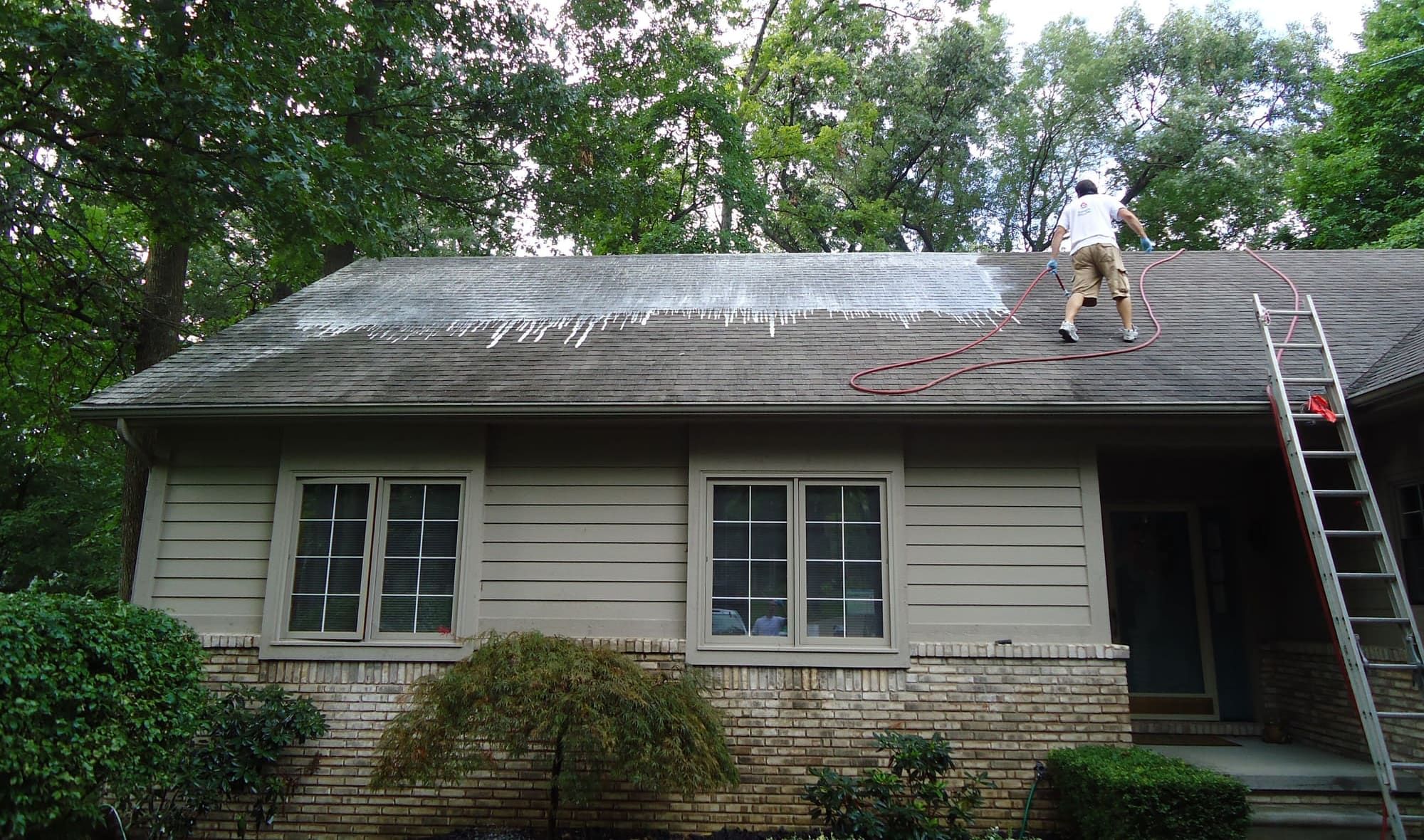
Will the Old Shingles Make a Sound Base for Steel? A Go/No-Go Check
Legal is the low bar. The real question is whether the roof under the steel is good enough to carry it for the next several decades, because nobody will see it again until the steel comes off.
We check three places before quoting a layover: the outside from the ground, the slope itself, and the attic. You can do the first and third yourself. One no-go sign is usually enough for us to recommend a tear-off instead.
Seen from the ground: roofline, eaves and chimney
- No-goThe ridge or the eave line dips between rafters.
- No-goSoft or stained fascia boards along the eaves, where ice dams sit each winter.
- No-goA thick, stepped edge at the eave, or two drip edges: a second layer is already on.
- GoStraight ridge and eaves, and one thin shingle edge.
Seen on the slope: the shingles and the deck
- No-goCurled, cupped or missing shingles, or bare mat with the granules gone.
- No-goSpongy spots underfoot, most often along the eaves and beside the chimney.
- No-goThick moss that keeps the shingles damp, common under the pines and oaks on shaded lots around Lake Wissota.
- GoShingles lie flat and the deck feels firm on every slope.
Seen in the attic: frost, stains and daylight
- No-goDark or water-stained sheathing, rusty nail tips, or damp insulation.
- No-goFrost on the nail tips and the underside of the deck on a January morning.
- No-goDaylight around the chimney or a plumbing vent.
- GoDry, clean wood and a clear air path from the soffit vents to the ridge.
On houses in Chippewa Falls we recommend a tear-off more often than not, and we lose some jobs to cheaper layover bids because of it. On a detached garage or shed with one flat layer and a dry deck, going over is often perfectly sensible.
Furring Strips vs. Direct to Deck: Two Ways to Fasten Steel Over Shingles
Either way, the shingles stay and the steel is screwed through them into wood. The difference is what sits between the shingles and the panel.
| Direct, over underlayment | Over furring strips | |
|---|---|---|
| Screws bite into | The roof deck, through the shingles and underlayment | Solid wood strips fastened through to the deck and framing |
| Flatness | Follows every hump in the old shingles | Strips can be shimmed to a flat plane |
| Between shingles and steel | Felt or synthetic underlayment, pressed tight | Underlayment plus an air space the depth of the strips |
| Edge and rake trim | New trim sized for the added thickness | Taller trim, and the eave and rake details rebuilt |
| Labor and material | Least of any method | More wood, more fasteners, more hours |
| Where it fits | Ribbed panels on a flat, simple roof | Uneven shingles, flat-pan panels, buildings where an air space helps |
Why bare steel should never sit on shingle granules
Steel moves a little every day as it heats and cools. Rubbing on granules wears through the coating on the back of the panel. Sheffield Metals warns that installing right over a shingle roof "could scratch the protective backside coating" and lead to corrosion from underneath. McElroy Metal calls for a barrier of #30 felt, synthetic underlayment or thin foil-faced insulation "so the shingles do not wear through the metal." Todd Miller, president of the metal roofing maker Isaiah Industries, says he always suggests a layer of underlayment over the shingles. We never put panels straight onto granules.
Screw length through two roofs
The panel maker's fastener schedule sets how far each screw must bite into the deck or strip. A layer of shingles and underlayment adds thickness the screw has to pass through before any of that bite begins, so a layover takes longer screws than the same panel on bare wood. A screw that only reaches into soft, damp sheathing will back out, which is one more reason the deck check above comes first.
Clips made for going over shingles
Some standing seam systems use raised clips instead of strips. McElroy's shingle recover clip, described in Roofing magazine, holds the panel 3/4 inch up so it does not touch the surface below, and McElroy says it creates a ventilated air space. Whether a clip like that exists for the panel you want, and what its maker requires, is a question for that maker's installation guide.
Old Shingles Telegraphing Through Steel: Which Panel Profiles Hide It
McElroy Metal notes that a layover "can telegraph bumps and inconsistencies in the deck or shingles through the finished panels." How much shows depends mostly on the panel.
- Ribbed, exposed-fastener steel
Tall ribs every 9 to 12 inches break up the surface. Small humps in the shingles rarely show.
- Stamped steel shingle or shake panels
The pressed pattern hides most unevenness, but the panels want a flat, firm base to lock together.
- Standing seam with stiffening ribs
Ribs rolled into the pan help. Curled shingle rows can still show as faint lines in low sun.
- Flat-pan standing seam
The least forgiving. Every bump and shingle edge underneath can read through as a ripple.
Our rule of thumb from how these panels behave, not a published rating.
The rippled look on flat steel is often called oil canning. It is usually cosmetic, and a layover makes it more likely because the panel follows whatever is under it. If you want flat-pan standing seam and the shingles are anything but flat, the answer is furring strips shimmed to a plane, or a tear-off. Both cost more than going direct, and both are cheaper than living with a wavy roof.
Seam types, panel widths and what reduces waviness on a new panel are on our standing seam metal roofing page.
Condensation Under a Steel Layover in a Chippewa Valley Winter
Eau Claire's normal January low is 5.8°F. On clear winter nights a roof gets colder still: Building Science Corporation describes night sky cooling that can drop roof deck temperatures well below the outdoor air, and McElroy Metal says the underside of a metal roof can dip below the dew point on clear, cool nights.
- Warm, damp air leaves the roomsthrough gaps around ceiling lights, the attic hatch, bath fans and plumbing stacks.
- It reaches the atticand rises to the coldest surfaces it can find: the deck, the nail tips and, in a layover, whatever is under the steel.
- It condenses or freezeson those cold surfaces, night after night through a cold spell.
- The first thaw lets it goas drips, stained sheathing and damp insulation that look like a roof leak but are not.
Why a layover makes it harder to fix
Building Science Corporation's guide to attics says that in cold climates the main purpose of roof ventilation is to keep the roof cold and control ice dams. McElroy Metal calls ventilation the most effective way to reduce condensation under a metal roof. A layover is built on top of the old ridge and eaves, so correcting a vent path means cutting into a roof you are trying to keep. Any moisture already in the old shingles is sealed in under the new steel.
What we sort out before steel goes over the shingles
- Air sealing at the ceiling, the attic hatch and the plumbing and wiring holes.
- Bath and kitchen fans ducted outdoors, not into the attic.
- Soffit intake that is open, not blocked by insulation.
- A ridge vent slot cut through the old shingles and deck, with a vented closure made for the panel.
- If the attic already shows frost in January, that is fixed first, and usually with the old roof off.
Eaves, Valleys and Chimneys on Chippewa Falls Houses: What a Steel Layover Rebuilds
Every flashing is redone. Old shingle flashing is never reused under steel, because it was made for a different roof at a different height.
| What it needs on a steel layover | Why | |
|---|---|---|
| Eaves | Self-adhering membrane on heated buildings. We prefer to cut the old shingles back along the eave so it bonds to wood. | Wisconsin's ice dam rule, SPS 321.28(4), is written for shingle and shake roofs, so it does not require membrane under steel. Eaves here still back up with ice. |
| Drip edge | New eave trim for the new surface height | The old drip edge is buried under the shingles and no longer at the edge of the roof. |
| Rakes and gable ends | Rake trim deep enough to cover the shingles, underlayment and any strips | Exposed shingle edges at the gable catch wind-driven snow. |
| Valleys | A new metal valley made for the panel system | A valley carries the water of two slopes; it is no place for an adapted shingle detail. |
| Chimney | New flashing and counter-flashing, and a cricket on the uphill side of a wide chimney | SPS 321.28(7) calls for a cricket where the upper side of a chimney is more than 30 inches wide. Old step flashing sealed over is a leak waiting under the steel. |
| Walls and dormers | New sidewall flashing, which can mean lifting siding | Water running down a wall has to land on top of the steel, not behind it. |
| Plumbing vents | Boots made for the panel, and pipe that stands high enough above the new surface | Sliding snow shears off short or weak pipe stacks. |
This is where a layover quietly gives back much of what it saves. Older houses near downtown Chippewa Falls and along the river tend to have chimneys, dormers and porch tie-ins, and each one is hand work either way. A plain ranch or a detached garage has few of them, which is why those are the buildings where steel over the shingles makes the most sense.
Layover or Tear-Off Under New Steel: What Each Path Saves and Risks
Same panels, same trim, same screws either way. The difference is what happens to the old roof first.
The typical published price ranges for metal roofs, and for tear-off, are in our roof replacement cost guide. What a layover saves on your roof is a line we write out on the estimate.
When we steer you to a tear-off even though the layover is cheaper
- Any no-go sign on the check above.
- A house you plan to keep for decades, with a roof over living space.
- Flat-pan standing seam over shingles that are not flat.
- A low slope over a heated room, or eaves that ice up most winters.
- A cut-up roof where the flashing work is the same either way and the saving shrinks to little.
When steel over the shingles makes sense
- One flat layer, a firm deck and a dry attic.
- A detached garage, shed or simple outbuilding. Farm buildings on purlins, with no deck to go over, are a different job.
- A plain gable or hip with few chimneys, dormers or walls to flash.
- Ribbed or stamped panels that hide minor unevenness.
Is steel too heavy to go over shingles?
Rarely. Englert puts most standing seam systems at 1 to 3 pounds per square foot and asphalt shingles at 2 to 3.5. Todd Miller puts steel at around a pound. On a sound house, the steel adds less than the shingles it covers, and Chippewa County roofs are already built for a 40-pound-per-square-foot snow load on the state's map. Weight is almost never why we say no. The deck, the moisture and the flashings are.
The choice between metal and shingles as roofing, and between concealed- and exposed-fastener panels, is on our metal roofing in Chippewa Falls page. If the steel is already on and leaking, that is metal roof repair. Shingle, flat and storm work start on the home page of our roofing company in Chippewa Falls. Phone and text hours: Open 8am–6pm.
Steel Over Shingles FAQ: Permits, Insulation, Moss and Warranties
Do I need a permit to put metal over shingles in Chippewa Falls?
Plan on one. The City of Chippewa Falls says roofing replacements need a building permit unless the estimated project value is under $2,000, and a steel roof on a house is well over that whether the shingles stay or go. Villages, towns and the county set their own rules outside the city, so we check with the office that covers your address before work is scheduled.
Does leaving the old shingles under the steel add insulation?
Not enough to count. A layer of asphalt shingles is thin and dense, and it adds very little to how warm the house stays. If a layover is sold to you on energy savings from the old shingles, be skeptical. Attic insulation and air sealing are where heating savings come from.
What happens to the old shingles when the steel is replaced someday?
Both come off together. Under Wisconsin's Uniform Dwelling Code, steel over one layer of shingles makes two applications of roofing, and nothing more can go on top. Whoever replaces that roof will remove the steel and the shingles in one tear-off, which is a bigger job than removing either one alone.
Can steel go over shingles that have moss or algae streaks?
Algae streaks are only stains and do not matter under steel. Thick moss is different: it holds water against the shingles, and a damp, soft roof is exactly what the code calls an inadequate base. On shaded lots we probe the deck where the moss is heaviest before saying yes, and the moss has to be gone and the shingles dry before anything covers them.
Does a metal layover affect the panel maker's warranty?
It can, and the panel maker decides, not the installer. Some makers allow their panels over one layer of shingles with a specific underlayment or clip, and Sheffield Metals says it always recommends removing the shingles. Ask for the maker's written installation instructions for the exact panel on your estimate, and make sure the bid follows them.
Can steel go over the shingles on a low-slope porch or addition?
Sometimes, but it is the riskiest place to try it. A low slope drains slowly and holds snow and meltwater against the panel laps, and the panel itself has a minimum pitch set by its maker. On a low porch roof over a heated room we usually take the shingles off, so membrane can go onto the deck under the steel.
Will a home buyer care that the steel is over shingles?
Some will. A buyer's inspector may note that there are two layers, and the next roof will cost more to remove because of it. Keep the estimate, the permit and photos of the deck and attic from before the steel went on. That record answers most of the questions a buyer will ask.
Get Both Paths Written Up: Steel Over the Shingles or Down to the Deck
We walk the roof, look in the attic and write up the layover and the tear-off on one estimate, so you can see the difference before you decide.