
Roof Leak Repair in Chippewa Falls, WI
A ceiling stain tells you where the water ended up, not where it got in. We trace the leak to its source on the roof and in the attic, show you photos, and price the repair in writing.
Have a Roof Leak Looked At
Tell us what's going on with your roof and we'll call you back.
- Free leak inspections
- Photos of the entry point
- Shingle, metal and flat roofs
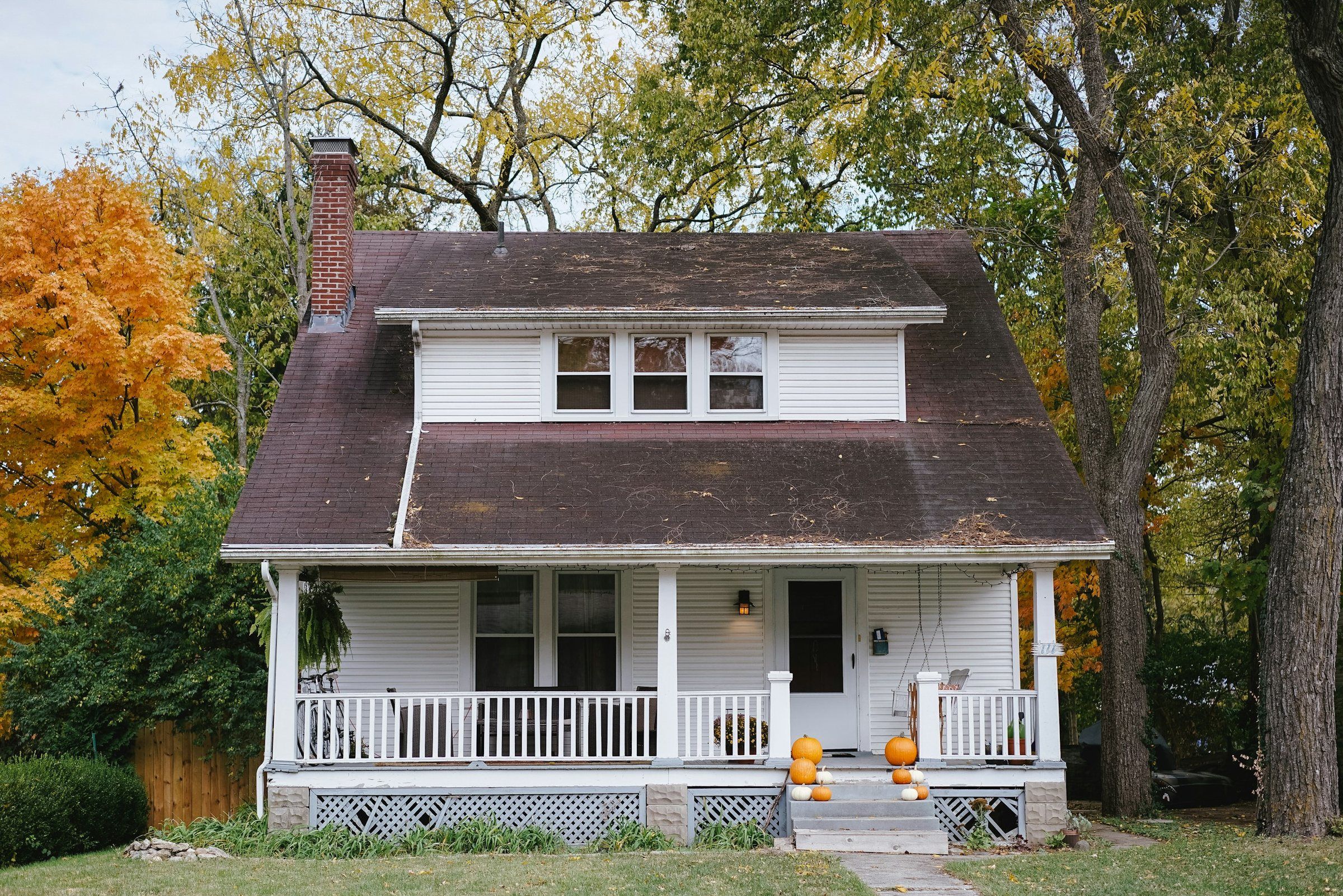
Where Roof Leaks Start on Chippewa Falls Homes
The open field of a shingle roof rarely leaks. Water gets in where the roof is interrupted or where two surfaces meet, and the list of those places is short:
- Plumbing vent boots. The rubber collar splits where it grips the pipe.
- Chimney flashing. Counter flashing lets go of old mortar, or the uphill side holds snow and leaves. See chimney flashing repair.
- Wall and dormer flashing. Step flashing that was reused, skipped or caulked over at the last reroof.
- Valleys. Debris dams, worn valley metal, or nails set too close to the centerline.
- Skylights and roof vents. Aged flashing kits and cracked plastic vent hoods.
- Eaves. Ice dam backup on the first few feet of roof. See ice dam leak repair.
- Fasteners. Nail pops through shingles, and backed-out screws on steel roofs.
Which one we suspect first depends on the house. Older homes near downtown and along the Chippewa River have steep, cut-up roofs with several valleys and brick chimneys that have been flashed more than once. Mid-century ranches tend to leak at low-pitch sections and at the eaves. In newer subdivisions the pipe boots are often the first part to wear out, years ahead of the shingles. Around Lake Wissota, tree cover fills valleys with needles and leaves.
Chimneys deserve a note. Wisconsin's dwelling code now calls for chimney flashing and counter flashing at least 6 inches up the masonry, and a cricket behind any chimney more than 30 inches wide. That code applies to houses built since 1980. Many chimneys in town are far older, and a wide one with no cricket behind it is a place we check every time.
What the Stain and the Weather Say About a Leaking Roof
Before anyone climbs a ladder, where the water shows and when it shows narrow the search. This is the first-pass reading we make from a phone call or a texted photo. It is a starting point, not a diagnosis.
| What you see | Where we look first |
|---|---|
| Round stain near a bathroom or kitchen, any steady rain | The plumbing vent boot above it |
| Stain beside a chimney or on the wall below it | Counter flashing, the uphill side of the chimney, then the masonry itself |
| Water at an outside wall in winter, no rain | Ice backing up at the eave |
| Drips only in storms from one direction | Wall flashing, ridge vent or siding above a lower roof on that side |
| Line of stains running down a ceiling slope | The valley above it |
| Many small spots across a ceiling in a thaw | Attic frost, not the roof |
| Stain in a room with a flat or low-slope roof over it | Seams, drains and the edge where it meets the wall |
Roof Leak Detection: How We Trace Water Back to Its Source
Water runs downhill along whatever it touches first. It can enter at a chimney, follow the underlayment, drop onto a rafter and drip off a nail six feet away. So we work backward from the stain.
- Your account of it. Which storms, which wind direction, how long after the rain started. A leak that needs an east wind is a different leak from one that drips in every shower.
- The attic side. Where there is access, we look for staining on the deck, rusted nail tips, wet insulation and daylight. This usually narrows it to a few square feet.
- The roof side. We check every penetration and flashing uphill of that area, lifting shingles where needed to see the metal underneath.
- A water test if needed. One section at a time, lowest first, with someone watching inside. It is slow, and it is the only honest way to settle a leak that hides.
You see photos of what we found before any price is discussed. If we cannot find the source on the first visit, we say so. We do not sell a repair aimed at a guess.
Leaky Roof Repairs That Last, and Patches That Do Not
A lasting repair replaces the part that failed and laps the new material the way water flows. A patch covers the symptom.
Leak repairs we make
- A new pipe boot woven into the shingle courses.
- New step or counter flashing, with the surrounding shingles lifted and relaid.
- A valley opened, lined and reshingled.
- Soft decking cut out and replaced before the roofing goes back.
- Popped nails pulled, the hole sealed and the shingle refastened or replaced.
- On steel roofs, worn fasteners replaced. On flat roofs, the open seam or puncture patched with matching membrane.
Patches we will not sell you
- Roof cement troweled over flashing. It cracks within a few freeze-thaw seasons and hides the real gap.
- Caulk around an old pipe boot.
- A coating over worn shingles.
- New shingles laid over wet or soft decking.
- A repair to the roof when the water is coming through siding, a window or the chimney's brick and crown. We will tell you which trade it belongs to.
What Roof Leak Repair Costs in Chippewa Falls
We do not have a price list, because the same stain can be a pipe boot or a rebuilt chimney flashing. As a national reference only, the cost guide HomeAdvisor reports roof leak repairs typically running about $360 to $1,550, with flashing repairs alone around $200 to $500. Treat those as a sense of scale, not a quote.
Three things move the number on a given house: how much roofing has to come apart to do the repair properly, how steep and high the work is, and whether the wood underneath is still sound.
That last one is the honest unknown. A leak that has run for two winters has usually damaged more decking than the stain suggests, and we cannot see all of it until the shingles are up. If we find more than the written scope covers, we stop and show you before going further.
On permits: the City of Chippewa Falls requires a building permit for roofing replacement work unless the estimated value of the project is under $2,000. Most single-source leak repairs fall below that. When a repair is large enough to come close, we check with the city's inspection office before work starts.
Until the Roof Leak Is Repaired: Catch It, Photograph It, Stay Off the Roof
- Catch it and move things. A bucket under the drip, furniture and electronics out of the way.
- Relieve a bulging ceiling. Poke a small hole at the lowest point and let it drain into a pail. A controlled hole is a smaller repair than a ceiling that lets go.
- Mind the wiring. A drip through a ceiling light means that breaker goes off and stays off until the leak is fixed.
- Write down the weather each time. The stain, the drip, the hour, the wind direction. That log is the best tracing tool there is, and the dated pictures are what an insurer will ask for if the cause turns out to be a covered one.
- Stay off the roof. Wet shingles and frosted steel are how people get hurt.
Water running in, or part of the roof open after a storm, is an emergency call and not a leak appointment. Call instead of sending a form. We are open 8am–6pm, and the first job in that case is a temporary cover to stop the water. The permanent repair follows once things are dry.
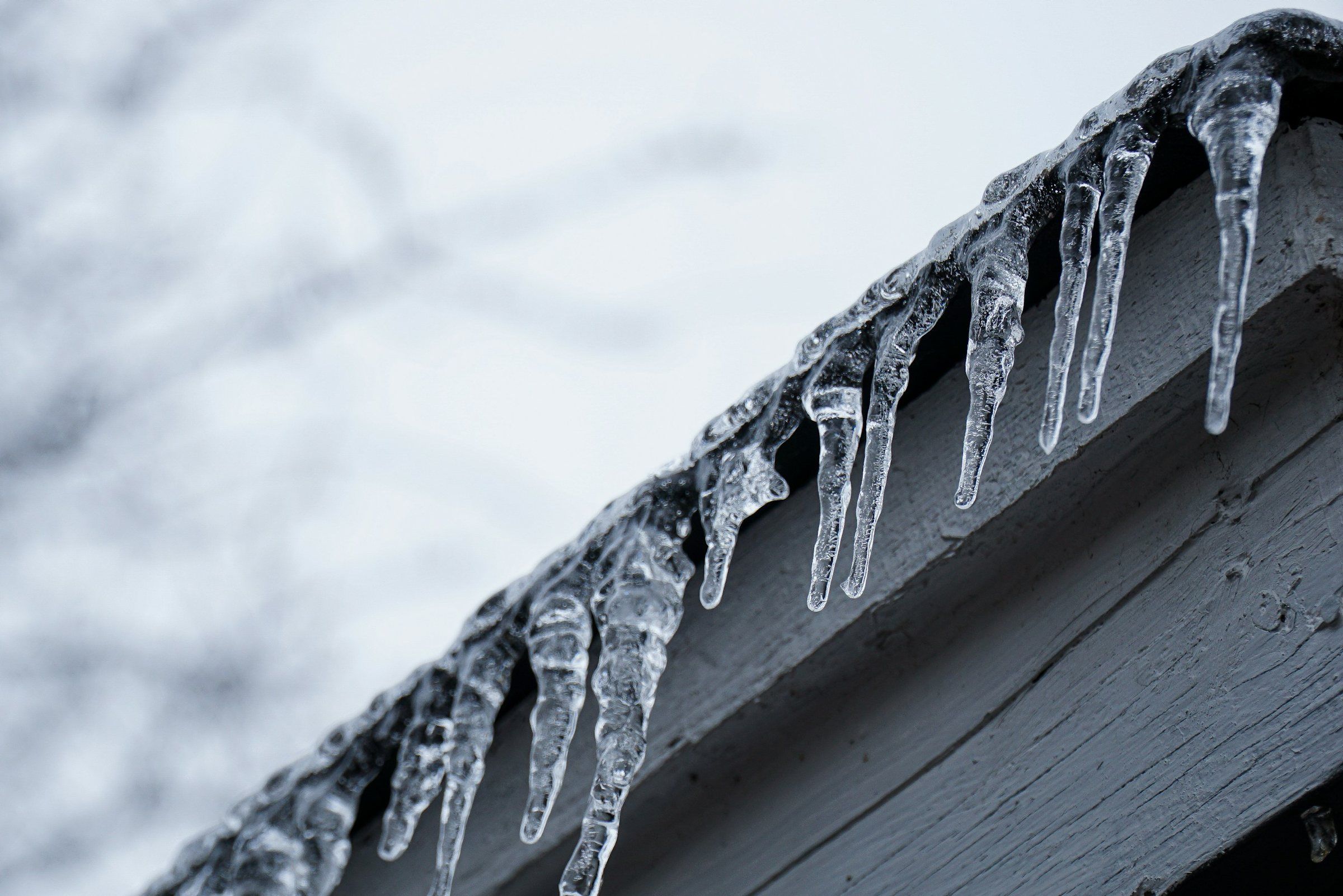
Leaks That Only Show in Winter or Wind-Driven Rain
Intermittent leaks are the ones that get patched three times. The pattern usually gives the cause away.
Roof leaks on a mild day after a cold spell
No rain, snow on the roof, water at an outside wall. Meltwater is pooling behind ice at the eave and getting under shingles that are otherwise sound. The nearby Eau Claire station averages 55.4 inches of snow a year in the Wisconsin State Climatology Office's normals, and it often sits on a roof for weeks.
Do not assume there is a waterproof membrane under those shingles. Wisconsin's dwelling code requires ice dam protection at the eave only on roofs with a slope of 4-in-12 or less, so a steeper roof, especially an older one, may have nothing there but felt.
Storms from one direction
Rain pushed sideways gets behind siding above a roofline, under ridge vents and past flashing that sheds ordinary rain. Summer thunderstorms with straight-line winds are the usual trigger. The National Weather Service recorded significant straight-line wind damage in Chippewa County on May 15, 2025, and storms like that one expose flashing that had been getting by for years.
Ceiling drips in the first warm days of March
Dozens of small drips across a ceiling at once, in a thaw. That is usually not a roof leak. See the next section.
Attic Condensation That Looks Like a Roof Leak
Warm, moist house air that escapes into a cold attic freezes on the underside of the roof deck and on nail tips. With January lows that average in the single digits at the Eau Claire station, frost can build for weeks. When the weather turns, it melts all at once and rains onto the insulation.
The signs are different from a roof leak: many small spots, not one stain; rusty rings around nail tips across a whole slope; damp insulation with no trail leading uphill; a bath fan duct that ends in the attic.
We will tell you when this is what you have, even though the fix is mostly not roofing. Sealing air leaks in the ceiling and venting bath fans outdoors does more than anything we can do on top of the roof. Where the roof's intake and exhaust vents are short or blocked, that part is ours.
When a Leak Means the Roof Is Finished
One leak with one cause is a repair. Several leaks in different places, shingles too brittle to lift without breaking, or granules gone across whole slopes mean you would be paying to patch a roof that will leak somewhere else next season. In that case we will say so and explain what a replacement involves.
Leaks are one part of the repair work we do. Missing shingles, storm damage and the repair-or-replace decision are covered on our roof repair in Chippewa Falls page, and everything else we do as a roofing contractor in Chippewa Falls starts from the home page.
Roof Leak Repair FAQ: Dry-Weather Tracing, Sealant, Skylights, Ceilings
Can you find a roof leak when it is not raining?
Usually, yes. A leak leaves a trail: stained or darkened decking, rusty nail tips, matted insulation, water marks down a rafter. We follow that trail in the attic and then check the roof directly uphill from it. When the trail is unclear, a controlled hose test on one section at a time settles it. What helps most is your memory of the weather each time it leaked.
Is a roof leak an emergency?
It is when water is running rather than dripping, when it is coming through a light fixture or near wiring, when a ceiling is sagging, or when part of the roof is open after a storm. Call in those cases instead of sending a form. A slow stain that grows a little with each rain is not an emergency, but it should be looked at within days, not left for the season.
Should I put sealant on it myself until someone can come out?
Inside the house, do what you like: a bucket, a tarp over the insulation, a small hole in a bulging ceiling to let the water drain into a pail. On the roof, we would rather you did not. Roof cement smeared over shingles or flashing hides the entry point, traps water behind it and has to be scraped off before a proper repair can be made.
The leak stopped. Do I still need it looked at?
Yes. Leaks that need wind-driven rain or melting snow can go quiet for months and then return. In the meantime the wood that got wet stays damp under the insulation. A dry spell is the easiest time to trace the leak and the cheapest time to fix it.
Why is there water around my skylight when the roof looks fine?
There are three usual causes and only one is the roof. The flashing around the skylight curb can fail, which leaks in rain. The seal between the glass and its frame can fail, which also leaks in rain but is a skylight problem. And in cold weather, indoor moisture condenses on the glass and runs down the shaft, which is not a leak at all. When it happens tells us which one you have.
Do you repair the ceiling and drywall too?
Our work is the roof: the entry point, the decking and the underlayment and roofing over it. We will show you what got wet inside the attic so you know what a drywall or painting contractor needs to deal with, and we suggest waiting until the repair has been through a good rain before the ceiling is patched.
Roof Leak Repair in Chippewa Falls: Have the Source Traced First
Call, text a photo of the stain, or send the form. Tell us what the weather was doing when it leaked.