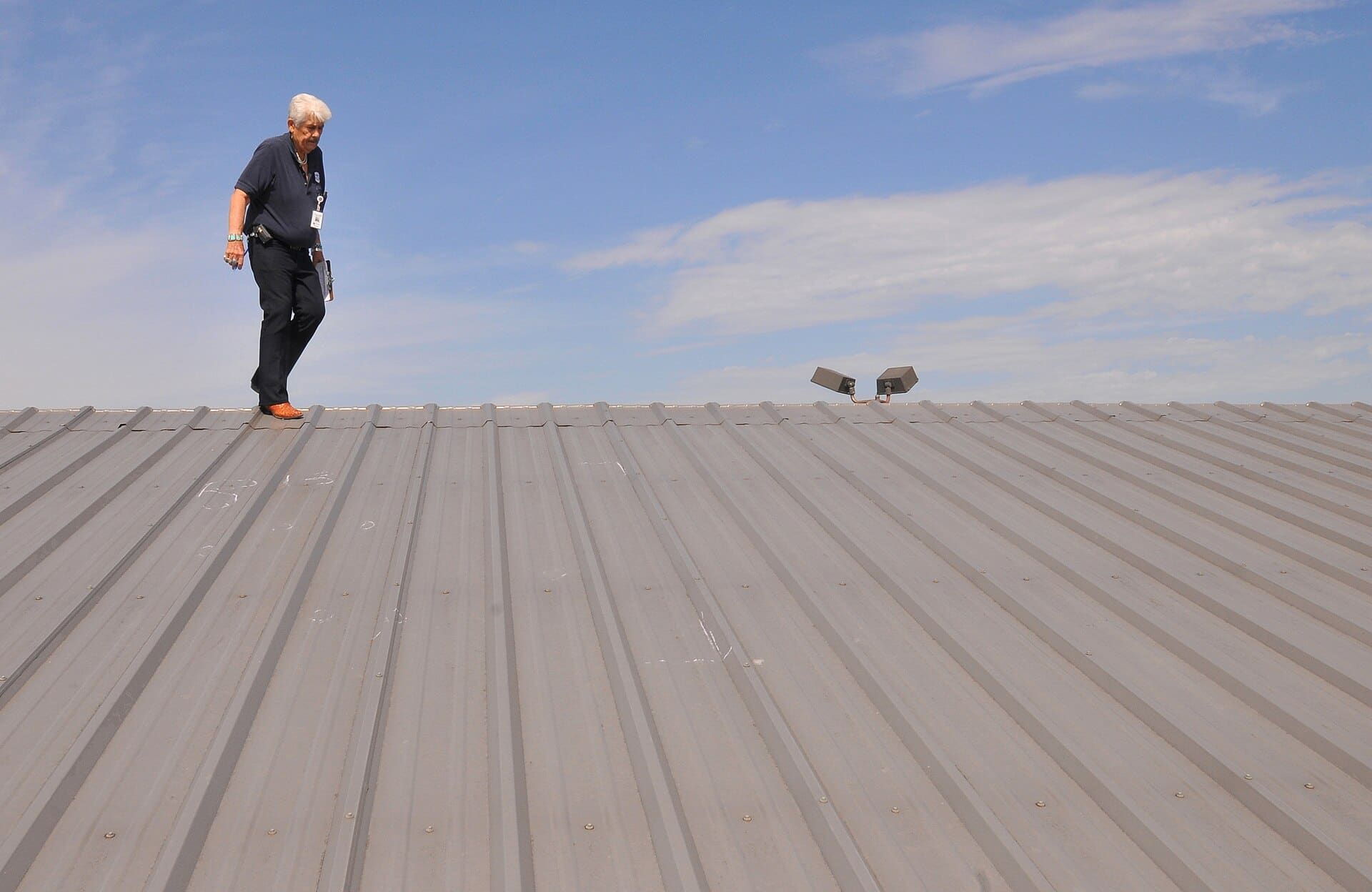
Hail Damage Roof Inspection in Chippewa Falls, WI
Not every hailstorm damages a roof, and not every roofer will tell you that. We check the shingles, the steel and the soft metals up close, count the hits on every slope, and give you a straight answer with photos you keep.
Request a Free Hail Damage Inspection
Tell us what's going on with your roof and we'll call you back.
- Free hail damage roof inspections
- Hits counted and photographed slope by slope
- No obligation to file a claim or sign
How to Tell if Your Roof Has Hail Damage, Starting From the Ground
You cannot see a hail bruise on a shingle from the driveway. You can see what the same hail did to everything around the roof. Walk the property the day after the storm and check these, ideally with your phone out to photograph each one where it is.
Clear dents in two or three of these places, on the same side of the house, make a close look at the roof worthwhile. A ding in one soft spot on its own usually means small hail.
Please leave the roof itself to us. Loose granules on a hail-hit slope roll underfoot, and nothing on this list needs a ladder.
Hail Size and Roof Damage: From Pea to Golf Ball
The National Weather Service counts a thunderstorm as severe when it produces hail one inch across or larger, about the size of a quarter. That line is a fair rule of thumb for roofs too. Below it, a sound roof usually shrugs hail off. Above it, damage depends on the roof.
| Hail | Diameter | Asphalt shingles | Steel panels | Vents and soft metals |
|---|---|---|---|---|
| Pea | 1/4 in. | No harm to a sound shingle roof. | None. | Faint marks at most. |
| Penny | 3/4 in. | Seldom any functional damage, but repeated storms wear granules off (see the IBHS study below). | Usually none. | Small dings in thin vent caps and air conditioner fins. |
| Quarter | 1 in. | Damage becomes possible on older, brittle or thin shingles, more so with wind behind it. | Small dents are possible, almost always cosmetic. | Clear dents on vents, flashing and condenser fins. |
| Ping pong ball | 1 1/2 in. | Bruises and granule loss on many roofs, especially on the slopes facing the storm. | Visible dents, usually cosmetic. | Dented vent caps, torn screens. |
| Golf ball | 1 3/4 in. | Expect bruising, mat fractures and cracked ridge caps on most shingle roofs in the path. | Dents across the panels; seams, laps and paint need a close look. | Heavy denting, cracked plastic vents. |
| Hen egg and larger | 2 in. + | Broken and punctured shingles. | Deep dents, possible cracked paint, flattened ribs and bent laps. | Crushed vents, broken skylight domes. |
Size names and diameters follow the Weather Service's hail size chart. The damage columns are rules of thumb from roof work, not a standard: a given storm can do more or less. Four things move it:
- Wind behind the hail. Wind-driven stones hit the slopes facing the storm at an angle and much harder. The far side of the same roof may be clean.
- Age of the shingles. A fifteen-year-old roof has lost oils and granules and marks far more easily than a new one.
- Where the stone lands. Ridge caps, the edges of a slope and shingles over a gap in the deck give less support underneath and mark more easily than the middle of a sound slope.
- Small hail, more than once. Researchers at the Insurance Institute for Business and Home Safety reported in 2025 that repeated hits from hail under an inch knocked off more granules, in total, than a single 2-inch stone, and left weathered shingles far more likely to be damaged by the next big hail. Small hail is not nothing on an old roof.
What Hail Damage Looks Like on Shingles, Steel and Soft Metals
Each roofing material records hail differently, and each has look-alikes that get called hail damage every summer. Pick the one on your house.
Hail-damaged asphalt shingles: bruises, granule loss and mat fractures
A hit that matters is a bruise. The stone crushes the granules into the asphalt or knocks them off, and on a harder hit cracks the fiberglass mat inside the shingle. Up close it shows as:
- A dark, roughly round spot where granules are missing and black asphalt shows, often with a crushed ring at the edge.
- A soft spot that gives under a thumb, like a bruise on an apple. That is the fractured mat.
- Hits scattered at random across a slope, heavier on the side the storm came from, and on the ridge caps.
- On older, brittle shingles, a crack or a broken corner at the hit.
Not hail: blisters (small pits with sharp edges from manufacturing or heat), scuffs from foot traffic, granule loss in lines where water runs, nail pops, and the even thinning of an old roof. A hail inspection is only worth something if it separates those honestly.
Hail damage on a metal roof: cosmetic dents or functional damage
Steel dents before it breaks, so almost every hailstorm big enough to matter leaves marks on a steel roof. Most of them are cosmetic: the panel looks pocked but still sheds water. Hail becomes a roofing problem on steel when:
- The paint has cracked at the dents, which lets rust start on the exposed edge.
- A seam, lap or rib was flattened or bent open, which lets wind-driven rain in.
- Screws were knocked loose or their washers cracked on an exposed-fastener roof.
- Plastic skylight panels on a shed or barn roof cracked or shattered.
Around Bloomer, Cadott and Jim Falls, that usually means a pole barn or machine shed as much as the house. We check both on the same visit. Whether a policy pays for dents that do not leak depends on its wording; some limit or exclude cosmetic damage to metal roofing.
Vents, flashing and other soft metals: where hail leaves its record
Aluminum vent caps, pipe flashing, valley metal, chimney caps and drip edge are softer than anything else on the roof. They take a mark from almost any hail, and they hold it. That makes them the witness on every inspection:
- The size of the dents tells us the size of the stones that fell on this roof, not the one across town.
- Dents on one face of a vent tell us the direction.
- Clear dents on the metal with no bruises on the shingles usually means the hail was too small to hurt the shingles. That is a real answer, and a common one.
Dented metal that still sheds water does not always need replacing. A cracked plastic vent hood or a split pipe boot does, because it will leak.
Why Hail Bruising Hides Until a Winter or Two Later
A bruised shingle does not leak the day after the storm. It looks almost the same as the shingles around it, and from the ground it looks like nothing at all. Then it ages fast.
The granules are what protect asphalt from sunlight. Where a hit knocked them off, the asphalt dries and hardens. Where the mat cracked, water gets into the shingle. Chippewa Falls winters do the rest: water that soaks into a cracked spot freezes and thaws over and over between November and April, and the crack opens a little more each time. The spot sheds the rest of its granules, the crack reaches through, and a leak shows up a winter or two later, long after anyone remembers the storm.
That is why the inspection belongs in the weeks after the hail, not after the first stain on the ceiling. By then it is harder to show which storm did it, and a second hailstorm in the same season can muddy the answer completely.
Hail Roof Inspection Step by Step: Test Squares, Chalk Circles and Photos
The same six steps on every roof, in the same order, so the answer is something you can check rather than something you have to take on trust.
- In the yard Walk the property before the ladder goes up
Air conditioner, siding, screens, the deck, the mailbox, the downspout outlets. This tells us the direction the hail came from and roughly how big it was, so we know which slopes to expect the most from.
- On the roof Soft metals first
Vent caps, pipe flashing, valley metal, the chimney cap and any metal edge. Dents here confirm hail fell on this roof, and their size tells us what to look for on the shingles.
- Every slope A test square on each slope, hits circled in chalk
We mark a 10-by-10-foot square on each slope, run a hand over every shingle inside it, and circle each hit we can feel and see: a soft spot, granules crushed or gone, a crack. The circles are counted and the count is written down for that slope. Adjusters commonly use the same method, so your numbers and theirs are measured the same way.
- High points Ridge caps, skylights and plastic vents
Ridge caps are bent over the peak and take hail head-on, so they often crack first. Plastic vent hoods and skylight domes crack or shatter. Each one is checked and photographed.
- Under the deck The attic, where we can get in
Daylight through the deck or wet spots after the storm mean the hail did more than bruise. On most roofs we find nothing here, and we say so.
- Afterward Photos by slope and a written summary
You get the photos labeled by slope, the count from each test square, and a short written summary: what we found, where, and what we think it means. It is yours whether you file a claim, hire us, hire someone else or do nothing.
On a roof too steep or too fragile to walk safely, we work from a ladder at the eaves and from the ground with a zoom lens, and we tell you what that view can and cannot show.
Hail Reports From Chippewa and Eau Claire Counties, 2023 to 2026
Damaging hail is not a once-in-a-generation event here. A few recent storms from the public record:
- July 28, 2023, near Bloomer. Reports to the Storm Prediction Center list hail of 1.75 inches about three miles northeast of Bloomer, with a note that most stones were 2 inches across and the largest 3 inches "from spike to spike."
- May 15, 2025, Eau Claire, Altoona and Chippewa Falls. The National Weather Service summary says very large hail fell near Eau Claire and Altoona, with the largest report up to 4 inches in diameter from Altoona. The preliminary storm reports for that afternoon also list golf ball hail in Chippewa Falls and 2-inch hail about three miles southwest of the city, both from public reports through the mPING app. The same storms brought straight-line wind damage to Chippewa County.
- June 19, 2026, Eau Claire County. The Weather Service noted a storm that produced hail up to ping pong size, 1.5 inches.
Look at the May 2025 reports side by side. Within about fifteen minutes, stones of 3 to 4 inches were reported around Altoona, while the largest reports near Chippewa Falls were 2 inches. Hail falls in swaths, and a few miles can be the difference between a roof that needs replacing and one that needs nothing. A news report of baseball-size hail in Eau Claire tells you to check. It does not tell you what your roof took, whether you are in Lake Hallie, along the Chippewa River or out on a farm off Highway 124.
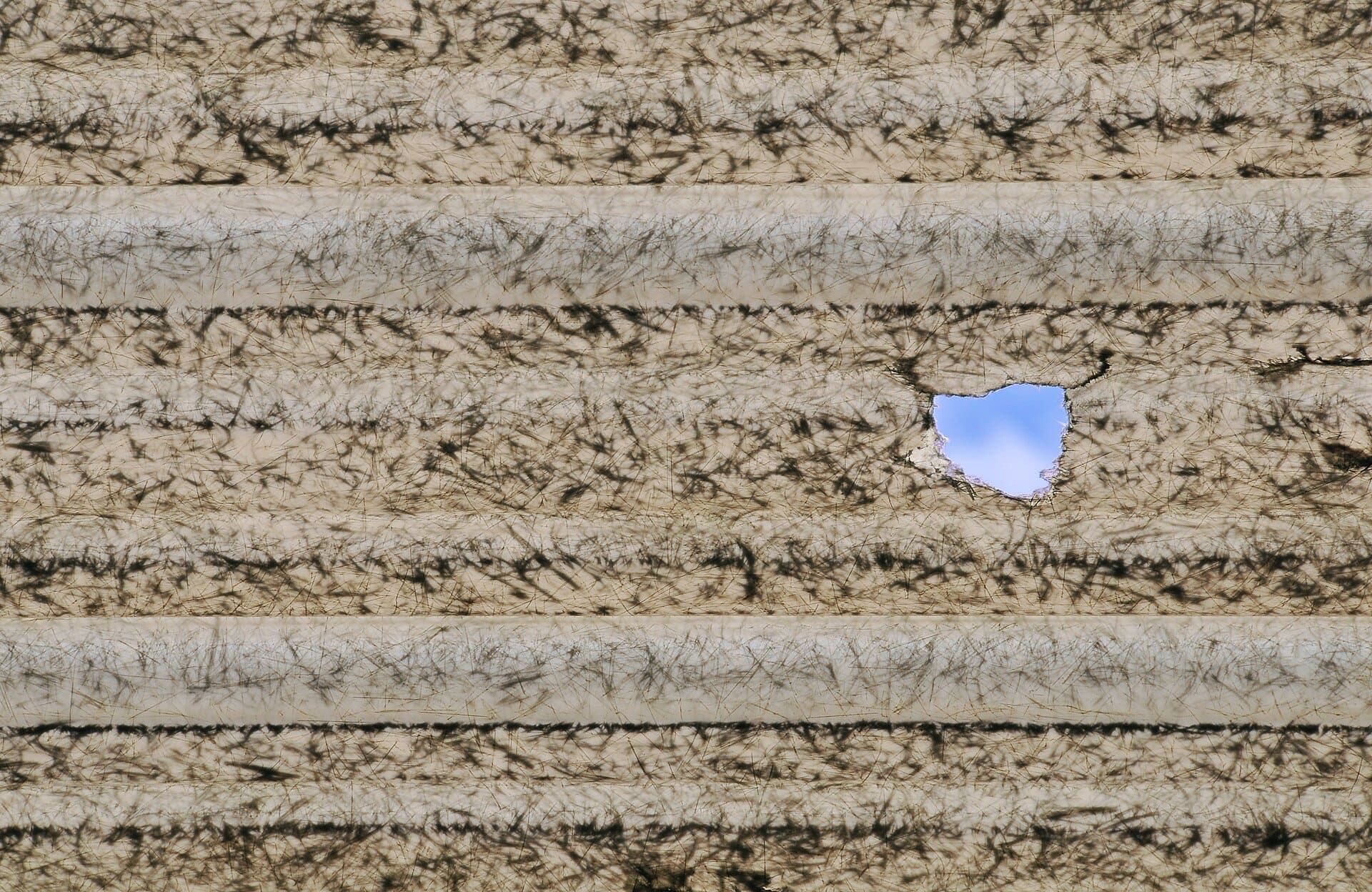
Stones of 2 inches and up do more than bruise. They punch through the plastic skylight panels on pole barns and machine sheds, crack vent hoods and break shingles outright, and that kind of damage can let water in with the next rain.
Reporting Hail Damage in Wisconsin: Insurer Notice and Door-Knockers
Wisconsin's Office of the Commissioner of Insurance tells policyholders to notify their agent or insurer right away after a loss and to photograph the damage. Your policy sets the actual deadline for reporting it. State law (Wis. Stat. 631.81) gives some protection when notice comes late but as soon as reasonably possible, but that is a safety net, not a plan. Have the roof inspected that season, while the marks are fresh and the storm date is easy to tie to them.
Finding hail damage does not oblige you to file. A cracked vent and a few bruised ridge caps can cost less to repair than the deductible. You get the photos and counts either way, and the decision stays with you. How the claim itself runs, from the adjuster's visit to the final payment, is on our roof insurance claim help page.
Storm chasers after a Chippewa Valley hailstorm
Big hail brings out-of-town crews knocking on doors within days. Wisconsin's consumer protection agency, DATCP, warns homeowners to be leery of storm chasers with aggressive sales tactics, and the state's storm chaser law (Wis. Stat. 100.65) sets clear lines:
- A contractor cannot promise to pay or rebate any part of your insurance deductible.
- A contractor cannot represent you or negotiate with your insurer. With your consent, they may discuss the damage and their estimate with the insurer.
- If your insurer denies all or part of the claim, you can cancel the roofing contract within three business days of receiving the written denial, and the contractor must tell you about that right in writing before you sign.
Two simple habits protect you: ask anyone who says your roof is damaged to show you photos of the specific hits, and do not sign anything on the day of the knock. Our inspection does not come with a contract to sign.
When the Honest Answer Is No Hail Damage
Every inspection ends in one of three places. The last one is the most common, and we say it as plainly as the first.
Widespread hail damage
Consistent bruising across slopes, high counts in the test squares, matching dents in the soft metals. This is what insurance is for. You contact your insurer, and with your consent we can meet the adjuster on the roof and show what we documented.
Limited hail damage
A cracked vent hood, a few broken ridge caps, a split pipe boot. Often cheaper to repair outright than to claim. We price the repair, and you compare it with your deductible.
No functional hail damage
Small hail, or the storm missed you. Dented vents, but no bruises on the shingles. We tell you so, and you keep dated photos of the roof's condition in case a bigger storm comes later.
Hail inspections are one part of our storm damage roof repair work in Chippewa Falls, which covers the repair or replacement once you know what the storm did. If the same storm brought more wind than hail, with shingles missing or creased, see wind damage roof repair. For a new roof, metal or flat roofing, start on the main page of our work as a Chippewa Falls roofing contractor.
Hail Inspection FAQ: Ground Clues, Swaths, Steel and Door-Knockers
Can I see hail damage from the ground?
Rarely on the shingles themselves. From the ground you see the clues: dents in the air conditioner fins, the mailbox and the downspouts, torn window screens, fresh marks on siding or a deck, and dark shingle granules washed out at the downspout outlets. If several of those are there on the same side of the house, the roof is worth a close look. If none of them are, the roof was probably not hit hard enough to matter.
Is a hail damage roof inspection really free?
Yes. We look at the roof, count the hits on every slope, take photos and tell you what we found. There is no charge and nothing to sign to get the inspection. If the roof is fine, that is what you will hear.
My neighbors are getting new roofs after the hail. Does that mean mine is damaged too?
Not necessarily. Hail falls in swaths, so two streets can see different stones from the same storm. Roofs also differ: an older, brittle roof marks far more easily than a newer one, and a steel roof can dent without leaking. Your roof gets its own count, slope by slope.
Are hail dents in a steel roof a problem?
Usually not a leak problem. Most hail dents in steel are cosmetic: the panel still sheds water. What matters is whether the paint has cracked at the dents, whether seams, laps or ribs were bent open, and whether any fasteners were knocked loose. Some homeowners policies limit or exclude cosmetic damage to metal roofs, so read yours or ask your agent before assuming either way.
How soon after a hailstorm should the roof be checked?
Within the first few weeks is sensible. Fresh hits are easier to tell apart from old wear, and a second storm later in the season makes it harder to say which one did the damage. Wisconsin's insurance commissioner advises notifying your insurer right away after a loss, and your policy sets the actual deadline, so check it or ask your agent.
A contractor at my door says I have hail damage. What should I do?
Ask to see photos of the specific marks, then get a second opinion before signing anything. Under Wisconsin law a residential contractor cannot offer to pay or rebate your insurance deductible and cannot negotiate the claim for you. An offer to do either is a reason to end the conversation.
If you find hail damage, do I have to file a claim?
No. That is your decision. Sometimes the damage is real but small enough that a repair costs less than the deductible. We give you the photos, the counts and our honest read, and you decide whether to call your insurer.
Hail Came Through? Find Out Whether It Actually Hurt Your Roof.
Call, text or send the form with your address and the date of the storm. We will count the hits, photograph what we find and tell you plainly.