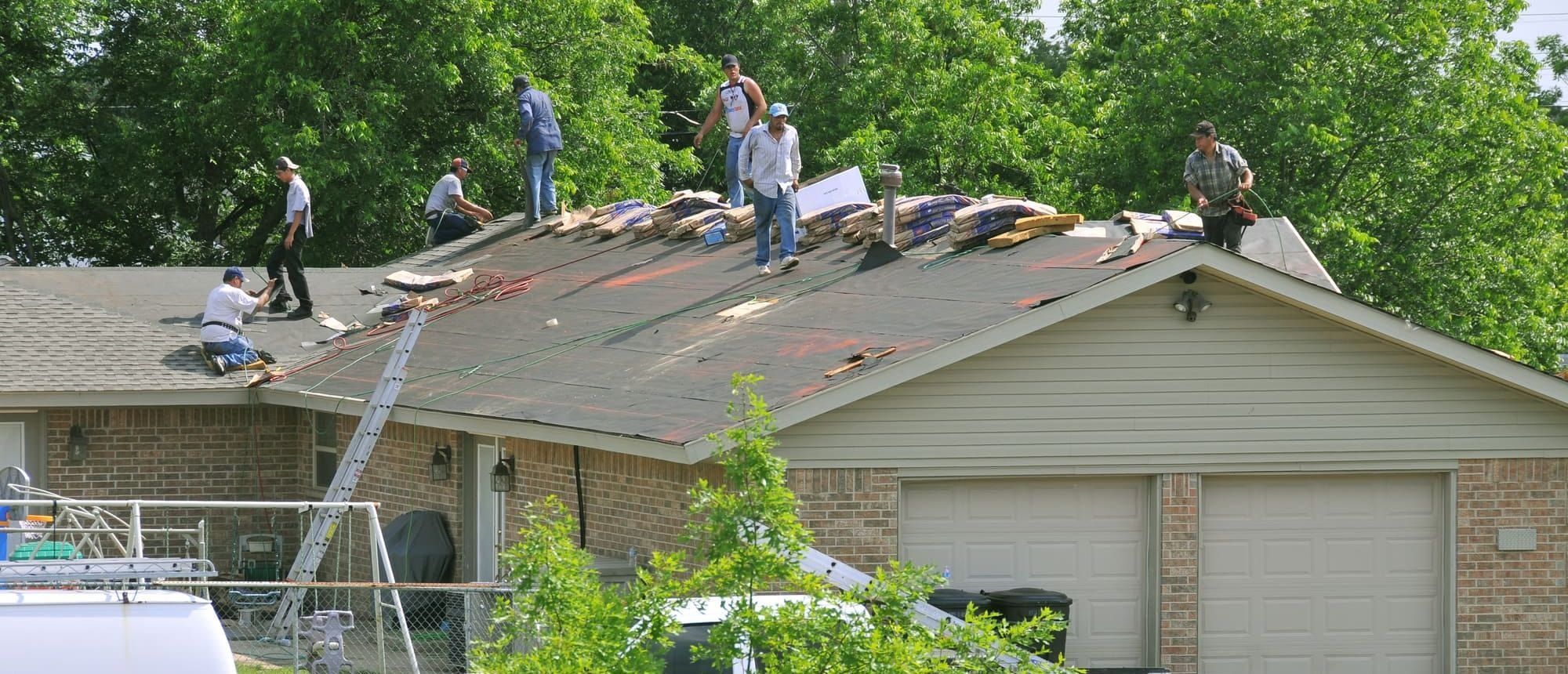
Wind Damage Roof Repair in Chippewa Falls, WI
Shingles in the yard, a tab flapping on the ridge, a strip of bare roof you can see from the driveway. We repair wind-damaged roofs and tell you plainly how far the damage goes: a handful of shingles, one slope, or the whole roof.
Shingles Blown Off? Request a Wind Damage Inspection
Tell us what's going on with your roof and we'll call you back.
- Every slope photographed, not just the bare spot
- Shingle count per slope before any price
- Open 8am–6pm
Shingles Blown Off the Roof? Creased, Lifted and Torn Shingles After Wind
Missing shingles are the obvious part. They are rarely the whole of it. The shingles that lifted in the gusts and dropped back into place are the ones that get missed, and they are the ones that go next.
Missing shingles and bare spots
Whole tabs or shingles torn away, with black underlayment, an older layer of shingles or bare wood showing. Look for torn edges left behind under the course above, exposed nail heads, and pieces hanging in a valley or caught at the eave.
Creased shingles
Wind folds the shingle back and lets it fall. The fold leaves a faint straight line across the shingle where the mat cracked and granules came loose. From the yard it looks fine. In a later storm it tears off along that line.
Lifted, unsealed shingles
The adhesive strip has let go and the shingle lifts with a finger. Grit and pollen get onto the adhesive, so many never reseal on their own. Unsealed shingles let wind-driven rain run underneath and are the first to blow off.
From the ground, without a ladder, check for: shingle pieces in the yard or the street, a ridge line with gaps in it, dark patches on a slope that was uniform before, metal bent up at the roof edge, and soffit panels hanging on the same side of the house. Then look in the attic on the next rainy day for drips or wet spots on the underside of the deck.
Wind Damage Roof Repair: A Few Shingles, One Slope or All of It
This is the decision every wind-damaged roof comes down to, and the one where homeowners most often get either too little or too much. We walk the roof, lift-test shingles on every slope, count what is damaged, and match the repair to what we find:
| What we find | What it usually means | The repair we would quote |
|---|---|---|
| A handful of missing or torn shingles in one spot, the rest sealed and flexible | A gust found one weak point, often an edge or a ridge | Spot repair: new shingles woven in and hand-sealed |
| Ridge caps gone along part of the peak | The most exposed pieces on the house failed first | Ridge rebuilt with new caps, vent checked or replaced |
| Creased or unsealed shingles scattered across one slope | The whole plane lifted in the storm, even where nothing came off | That slope replaced, ridge to eave and rake to rake |
| Damage on several slopes, shingles cracking when lifted | An aging roof that the storm finished off | Replacement priced alongside a short-term repair, so you can compare |
| A slope that already has two layers of shingles | Nothing new can go over it under Wisconsin's dwelling code | Both layers torn off before that slope is redone |
The honest version: a spot repair is the cheapest bill and the right call when the roof around it is sound. Twenty creased shingles spread over a slope is a different job. Replacing them one at a time disturbs as many shingles as it fixes, and the next storm takes the ones in between. You get the photos and the count per slope, so the recommendation is something you can check, not something you have to take on trust.
How a wind-damaged shingle is replaced so it holds
- Break the seal above. The shingles over the damaged ones are lifted carefully, which is why brittle old shingles limit what can be repaired.
- Pull the old nails. Torn pieces and every nail are removed, including the nails from the course above that pass through the damaged shingle.
- Slide in and nail on the line. The new shingle goes in with the number of nails the manufacturer calls for, in the nailing strip, not above it.
- Renail the course above through the new shingle, so both are held.
- Hand-seal every tab with roofing cement, whatever the season. A repair shingle has no warm weeks on the roof to seal itself before the next storm.
Matching discontinued shingles after wind damage
New shingles never match a weathered roof exactly. Sun fades the granules, manufacturers retire colors, and three-tab shingles get harder to find every year as most product lines move to architectural styles. We bring samples onto the roof and hold them against the old shingles before ordering. If the closest match will stand out on a slope that faces the street, we tell you before the work starts, not after. Two common answers are to take matching shingles from a hidden slope for the visible repair, or to redo the whole slope so it is uniform. Whether insurance pays for more than the damaged area when no match exists depends on your policy, so it is a question for your agent or adjuster.
Why Unsealed Shingles Blow Off First: Late-Fall Installs and Winter Sealing in Chippewa Falls
Asphalt shingles are held down by more than nails. Each one has a strip of heat-activated sealant that bonds it to the shingle below once the sun warms the roof. Until that happens, the shingle is only nailed, and its lower edge is free to lift.
The Asphalt Roofing Manufacturers Association says sealing time depends on the roof's slope, which way it faces and how much sun and heat it gets. That matters here. At the Eau Claire weather station, the normal January low is under 6°F. A roof put on in late October or November can go into winter with shingles that have barely sealed, especially on a north slope or under trees, and the first strong spring or summer storm finds them.
- What it looks like: shingles lifting in rows on one shaded slope, or along the eaves, while the sunny side of the same roof is fine.
- What the trade does about it: the association's guidance is to hand-seal shingles with an approved asphalt roofing cement for better protection from wind in very cold weather. We hand-seal late-season work and every repair shingle.
- When it is a warranty question: some manufacturers say a shingle that failed to seal because there was not enough heat is not a product defect. On a newer roof, read the installer's and the manufacturer's terms before anyone else works on it.
Shingles that lift by hand but have not torn can often be sealed down with roofing cement instead of replaced, if they are still flexible and uncreased. That is a smaller bill, and we will tell you when it is enough.
Ridge Caps, Drip Edge, Flashing, Soffit and Fascia: Where Wind Gets Under the Shingles
Wind does not pull shingles straight up from the middle of a slope. It gets under an edge or into an opening and peels from there. These are the places we check on every wind call, and what the repair is at each one.
Ridge caps
The caps along the peak sit higher than anything else on the house and take wind from both sides. They crack across the bend, lose their seal and slide off, often in a row. With the caps gone, the ridge vent or the top course of shingles is open to rain.
The repair: New caps nailed into the ridge with nails long enough to reach solid wood through the vent, each one sealed. Where a plastic ridge vent has cracked or pulled loose, it is replaced at the same time.
Rake edges and the starter course
The sloped edges at the gable ends are where shingles peel first. If the roof was laid without a starter strip with its own sealant at the rakes and eaves, the first course has nothing holding its edge down.
The repair: Rebuild the edge with a sealed starter course and new shingles, set to the drip edge. A peeled rake usually means a strip several feet wide, not a single shingle.
Drip edge and eave metal
Bent or lifted metal at the roof edge lets wind push under the first course and drives rain onto the fascia board. On older houses there is sometimes no drip edge at all.
The repair: Lifted metal is renailed if it is straight. Bent or kinked pieces are replaced, because a hammered-flat edge never sits tight again.
Flashing at walls and chimneys
Step flashing where a roof meets a dormer wall or a second story, and counterflashing on a chimney, can be pried loose by wind or by a neighboring shingle tearing away. The leak usually shows up inside, at the wall, later.
The repair: Loose step flashing is reset as the shingles around it are rebuilt. Counterflashing that has pulled out of a mortar joint is refastened and sealed into the joint.
Vents, pipe boots and roof jacks
Box vents and exhaust caps catch wind like a sail and can tear loose or split. A shingle blowing past can rip the rubber collar of a pipe boot.
The repair: Damaged vents and boots are replaced and flashed into the shingles, not caulked around.
Soffit and fascia
Wind that gets under the eave can pull vented soffit panels out of their channel and loosen the fascia cover. Gaps there let rain and birds into the eave and, in winter, can push snow into the attic.
The repair: We refasten or replace soffit and fascia trim where it is part of the roof edge repair, and say so in the estimate. Rotted fascia boards found behind the trim are priced separately before anything is closed up.
Straight-Line Wind Roof Damage Around Chippewa Falls: Open Fields, Lakeshores and Steep Older Homes
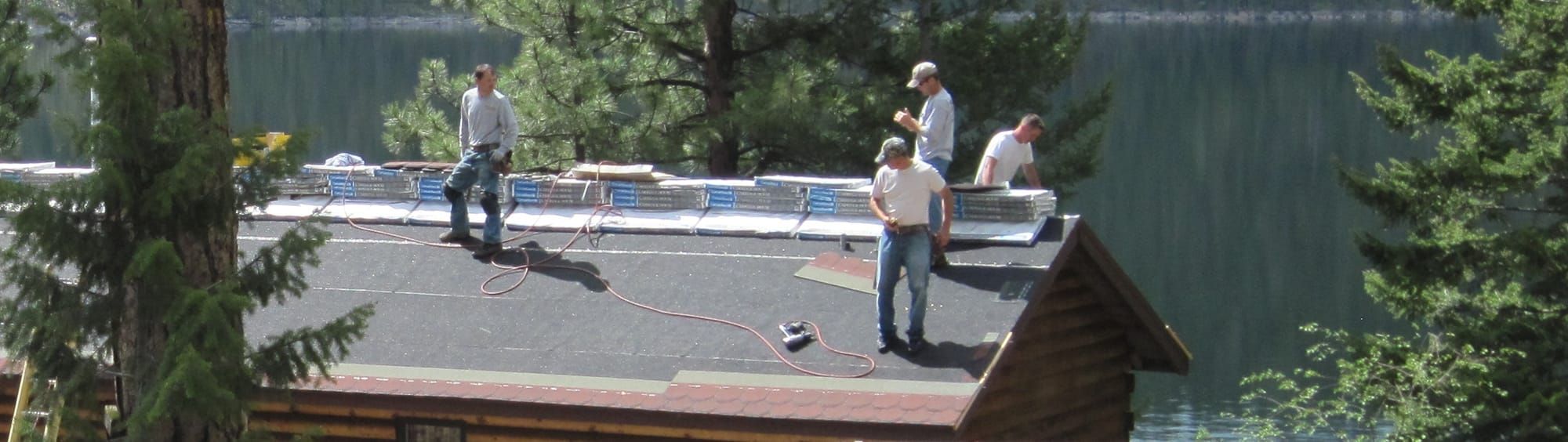
Most wind damage to roofs here comes from summer thunderstorms, not tornadoes: the burst of straight-line wind that runs ahead of a line of storms and pushes in one direction across a wide area. The National Weather Service calls a thunderstorm severe once its winds reach 58 miles per hour.
The area gets these regularly. In late May 2012, Wisconsin Public Radio reported straight-line winds of up to 60 miles per hour in Eau Claire and Chippewa Falls, bringing down trees and cutting power to thousands. On May 15, 2025, the Weather Service reported significant straight-line wind damage in Chippewa, Dunn, Barron and Rusk counties, and estimated winds near 100 miles per hour from the damage around Ladysmith, in Rusk County to the north.
Because the wind comes from one direction, the damage follows the exposure of the house:
Farms and acreages in open country
Houses and outbuildings out toward Bloomer, Cadott and Jim Falls often stand with nothing between them and a mile of field. The windward slope and the gable ends take the full force. A missing row of trees on the west side of a farmyard shows up in the roof.
Wind off the water: Lake Wissota and river frontage
Lake Wissota is about 6,000 acres of open water, and wind picks up speed across it before it reaches the first row of homes on the shore. Lake homes also tend to sit under tall pines and oaks, so the same storm can strip shingles on the lake side and drop limbs on the other.
Steep older roofs near downtown and the river
Many older houses near downtown Chippewa Falls and along the Chippewa River have tall, steep roofs with long rakes and exposed ridges. Their shingles are often old enough to crack when lifted, and repairs there are worked from roof brackets and ropes. They are also the roofs most likely to already carry two layers.
The pattern is useful. Damage concentrated on the side that faced the storm, with fresh tears, is wind. That distinction matters when an insurer is involved.
Wind on Steel Panels: Peeled Edges, Lifted Sheets and Loose Trim
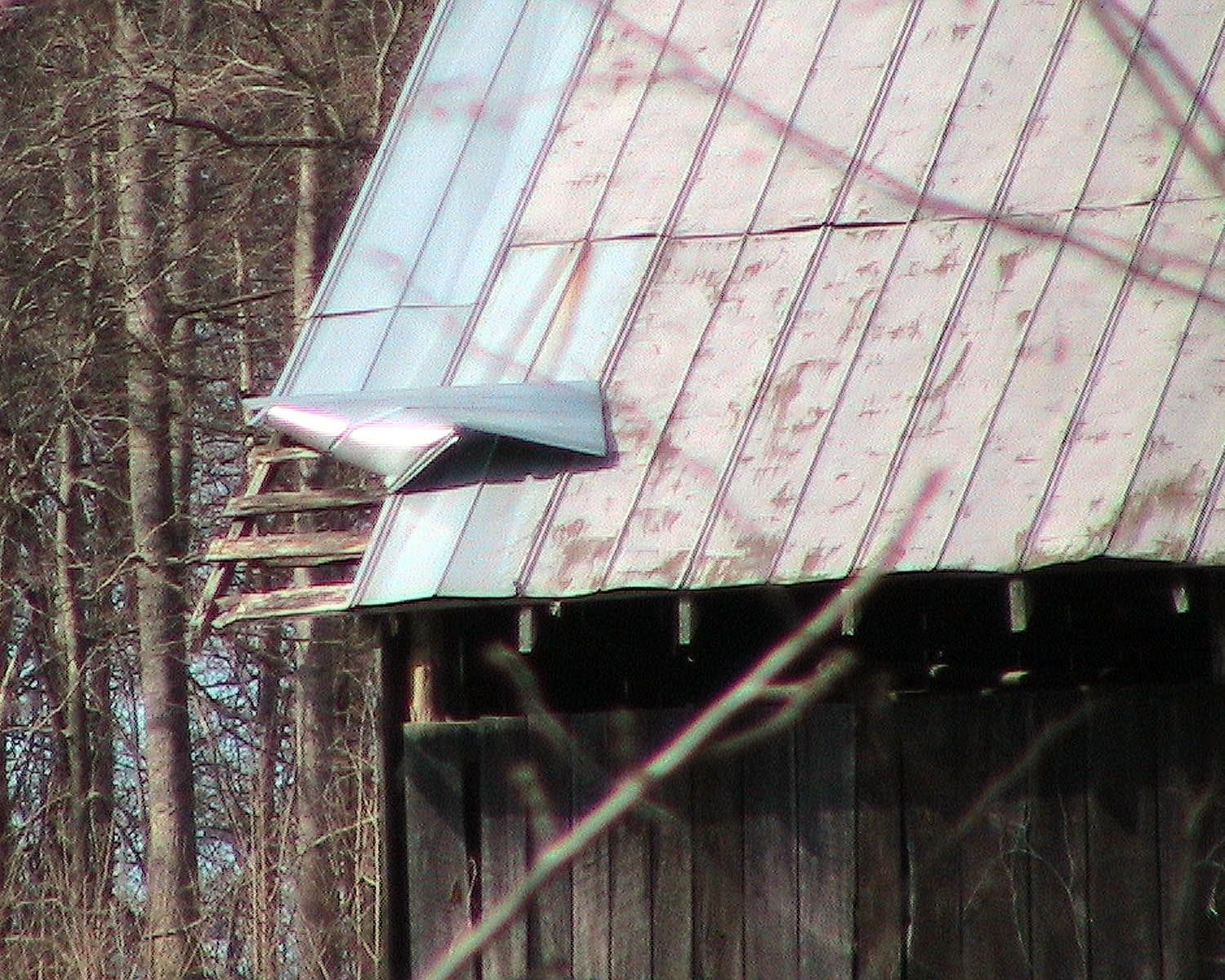
A well-fastened steel roof handles wind better than most shingle roofs. When one fails, it fails at an edge. The gable trim or eave trim pulls loose first, the wind gets under the end of a panel, and the panel starts to lift and work its fasteners loose.
- Peeled or curled panel ends at the gable or eave, the classic barn-roof failure in open country.
- Screws backed out along the eave and the first purlin, where uplift is strongest.
- Ridge cap shifted and closure strips blown out, leaving the panel ribs open to wind-driven rain and snow.
- Trim missing at rakes, corners and around doors on machine sheds.
A lifted panel needs to be refastened into sound wood promptly. A loose sheet flexes in every wind after that, tears its own screw holes wider and pulls the panels next to it loose too. A panel that has been folded back usually has to be replaced, because a creased rib never seals at the lap again.
Wind Damage or Worn-Out Shingles: How an Inspection Tells Them Apart
We are asked this on most wind inspections, and sometimes the honest answer is "both". The roof tells you which, if you know what to look for:
- Wind damage has a direction. Creases, lifted tabs and missing shingles cluster on the side that faced the storm, at edges and ridges.
- Wind damage has a date. Tears are clean and the exposed surfaces are fresh, not weathered. Shingle pieces in the yard line up with a storm you can name.
- Wear is even. Curling, cracking and granule loss across every slope, worst on the south and west faces where the sun is hardest, built up over years.
An old roof that sheds shingles in an ordinary breeze has reached the end of its life, and no storm is to blame for that. We will tell you which one we are looking at, even when it is not the answer that leads to a claim. If hail came with the wind, our hail damage roof inspection page explains what we check for on the shingles and the soft metals.
Documenting Wind Damage for an Insurance Claim
Wind claims are usually decided on photos and dates, so the record is worth getting right from the first day:
- Write down the date and time of the storm, and keep any warning or outage notice. The adjuster will want to tie the damage to an event.
- Photograph from the ground before anything is cleaned up: each side of the house, the bare spots, the pieces in the yard where they landed, bent edge metal, and any stain inside.
- Protect the roof and keep the receipts. Wisconsin's Office of the Commissioner of Insurance tells policyholders to make temporary repairs to prevent further damage, keep the receipts, and wait for the adjuster before permanent repairs.
- Get the roof inspected. Our photos cover every slope, with a count of damaged shingles per slope and close-ups of creases and lifted tabs, which do not show from the ground.
- Compare the repair price with your deductible before you decide to file. A handful of shingles often costs less than the deductible.
The claim is between you and your insurer. Wisconsin law (Wis. Stat. 100.65) does not let a contractor negotiate it for you or promise to cover your deductible; with your consent we can go over the damage and our estimate with the adjuster, and we are glad to meet them on the roof. The full process is on our roof insurance claim help page.
What Wind Damage Roof Repair Costs in Chippewa Falls
For scale, HomeAdvisor's national figures put minor roof repairs at about $100 to $1,000 and the average roof repair at about $1,174. Those are national averages, not our prices. What moves a wind repair up or down is mostly how many shingles are involved, how steep and tall the roof is, whether ridge caps or edge metal go with them, and whether the shingles can be matched.
Slope and full replacements are a different scale of job. When a repair turns into one, the City of Chippewa Falls requires a building permit for roofing replacement once the estimated value reaches $2,000, and outside the city we check with the town, village or county before work starts. A spot repair of a few shingles is normally well under that line; that is our reading, not the city's wording.
Wind repairs are one part of our storm damage roof repair work in Chippewa Falls, which also covers hail and free storm inspections. For anything else, from a new roof to metal or flat roofing, start on the main page of our work as a roofing contractor in Chippewa Falls.
Wind Damage Roof Repair FAQ: Sealing, Nailing, Young Roofs and Yard Debris
A few shingles blew off. How soon does that need fixing?
Not usually the same day, but within days, not weeks. Underlayment and the older shingles beneath give short-term protection. The bare spot will take water in the next hard rain, and the shingles around it have lost their neighbors and go easier in the next wind. If you can see bare wood from the ground or water is coming in, have it covered now.
Can I nail the loose shingles back down myself?
Please do not. A storm-damaged roof is a poor place to learn to walk on one, and nails driven through the face of a shingle make a new leak. A shingle that folded back is cracked across the top and will not hold even if it lies flat again. Take photos from the ground and let someone look at it from the roof.
My shingles are only a few years old. Why did they blow off?
The usual reasons on a young roof are shingles that never sealed (often because the roof went on late in the fall or the tabs filled with dust), nails placed too high or driven crooked, or a missing starter strip at the edges. Find your installer's paperwork and the shingle manufacturer's warranty before anyone repairs it, because the terms may say who has to do the work.
How strong does the wind have to be to damage shingles?
There is no single number. The National Weather Service calls a thunderstorm severe at 58 miles per hour. Shingles are sold with a wind rating; ASTM D3161 Class F, for example, is tested at 110 miles per hour. But a rating assumes the shingles are sealed and nailed correctly, and an old roof whose seal has let go can lose tabs in far less.
Can wind damage be repaired in winter?
Yes, with care. Cold shingles crack when they are bent back, and the factory sealant will not bond until warm sun reaches it, so each new shingle is sealed by hand with roofing cement. If the roof is covered in snow or ice, we make it watertight and come back to finish when the surface is clear.
Should I keep the shingle pieces that landed in the yard?
Yes, until your insurer says otherwise. They show the color and type of the shingle, which helps with matching, and they are part of the record of the storm. Photograph them where they landed, then put them in the garage. A bundle left over from the original installation is even more useful for a repair.
Does homeowners insurance pay for wind damage to a roof?
Wind is a covered cause of loss on most homeowners policies, but what yours pays depends on its terms: the deductible (some policies carry a separate, larger one for wind and hail) and whether an older roof is paid at replacement cost or actual cash value. Your agent can tell you. We document what we find and give you a written estimate either way.
Shingles Blown Off in the Last Storm? Get Every Slope Checked.
Call or text a photo from the ground. We will look at the whole roof, photograph what the wind did and price the repair it actually needs.