Roof Insurance Claim Help in Chippewa Falls, WI
A roof claim is between you and your insurer. Our part is narrower and still useful: photograph the damage, put a line-item price on it, tell you honestly whether filing makes sense, and build the roof. Here is how a Wisconsin roof claim runs, and where it usually goes wrong.
Request a Storm Damage Inspection
Tell us what's going on with your roof and we'll call you back.
- Free storm damage inspections with photos by slope
- Line-item estimates you can hand to your adjuster
- We meet the adjuster with your consent, and never negotiate
How a Roof Insurance Claim Works in Wisconsin, From Notice to Final Payment
Eight stages, in the order they usually happen. The label under each one says who does the work at that stage, which is often the clearest way to see where a contractor fits and where one does not.
- Storm day Protect the roof, then photograph it
If the roof is open, get it covered and keep the receipt. Photograph the roof, the yard, dented metal and any ceiling stains before anything is cleaned up or thrown out.
You - First days Find out what is actually there
A free inspection gives you photos by slope and a written repair or replacement price. That number is what you weigh against your deductible before you decide to file.
You, with us if you like - Notice Report the loss to your agent or insurer
You get a claim number and an adjuster. Report promptly: your policy sets the deadlines, and a fresh claim is easier to tie to one storm.
You - Adjuster visit The adjuster inspects and measures
The adjuster walks or views the roof, measures it, records the damage and writes the insurer's own estimate, often called the scope of loss.
Insurer, and us with your consent - Estimate The scope of loss and the first check
On a replacement cost policy the first payment is the actual cash value: the repair cost minus depreciation and your deductible. The rest follows the work. If you have a mortgage, the lender may be named on the check.
Insurer - Compare Line up the scope against a contractor's estimate
Missed slopes, wrong measurements or skipped code items show up here. With your consent we send our photos and line items to the insurer. The insurer decides.
You, with our estimate - The work The roof is repaired or replaced
You choose who does the work. Anything hidden that tear-off uncovers, such as rotted decking or an extra layer, is photographed and sent as a supplement.
Your contractor - Closing out Collect the held-back depreciation
On a replacement cost policy the insurer pays the difference between actual cash value and replacement cost once the work is done, up to the policy limits.
You, with our invoice
These stages follow the Wisconsin Office of the Commissioner of Insurance's guide to settling property insurance claims, which tells policyholders to make temporary repairs and keep the receipts, to hold off on permanent repairs until the adjuster has assessed the damage, and to get written bids with materials and prices line by line. Stages two and six are where a roofer's paperwork helps most. Stages four through eight are the insurer's process, run on the insurer's schedule.
File a Roof Insurance Claim or Pay for the Repair Yourself? A Deductible Worksheet
The first decision is not about the adjuster. It is whether the damage is worth a claim at all, and that comes down to two numbers: the price of the repair and your deductible.
Some policies carry a separate deductible for wind and hail, and some state it as a percentage of the dwelling coverage rather than a flat dollar figure. A 1 percent deductible on a house insured for $250,000 is $2,500, which is more than plenty of storm repairs cost. Find yours on the declarations page before you call anyone.
Put a written estimate into the worksheet. It does the subtraction and tells you which side of the line you are on. It is arithmetic, not a coverage decision: only your insurer decides what the policy pays.
Worn, not storm-damaged: when we tell you not to file
Some roofs we inspect after a storm are simply old. Curled tabs, bare granules across whole slopes and cracked shingles on the south face are years of sun and freeze-thaw, and policies do not cover wear. Filing on a roof like that usually ends in a denial, and a denied claim can still count on your claim history; your agent can tell you how your insurer treats it.
When that is what we find, we say so, and we price the replacement as what it is: a planned project. It costs us the easy sale. It saves you a claim that was never going to pay.
Wisconsin's Roof Claim Law: Deductible Rebates, Negotiating and Your Right to Cancel
Wisconsin has a statute written for exactly this situation. Since 2013, Wis. Stat. 100.65 has governed any contractor who repairs or replaces a roof system, or does other exterior work, on a one- or two-family home. Here is what it says, row by row.
| On an insurance-paid job, a contractor... | The law | Details and subsection |
|---|---|---|
| Offers to pay, rebate or "take care of" any part of your deductible | Not allowed | Covers allowances, discounts, gifts, prizes, coupons, credits and referral fees, in advertising too. (2) |
| Hands you a contract to sign | Must ask first | A boldface statement asking whether the work relates to an insurance claim, plus a detachable Notice of Cancellation form in duplicate. (3), (4) |
| Talks to your insurer about the damage and sends a repair estimate | Allowed, with your consent | Your express consent is required. The contractor may also discuss repair options. (8) |
| Represents you or negotiates the claim | Not allowed | Not even as an offer. (8) |
| Holds you to the contract after the insurer denies the claim | You may cancel | Before the end of the third business day after you receive written notice that all or part of the claim is denied, by hand delivery or first-class mail. (5) |
| Keeps your deposit after you cancel | Must refund | Within 10 days, less the reasonable value of emergency work you acknowledged in writing. Any cancellation fee is unenforceable. (6), (7) |
Each violation carries a forfeiture of 500 to 1,000 dollars. The statute text is short and worth reading in full. What it means in practice: a roofer can be useful to your claim by documenting and pricing, but the moment one offers to absorb your deductible or "handle the insurance company," they are offering something the law forbids. We work inside those lines, and we will never tell you a claim is certain or that your roof will be "free." Nobody but your insurer knows what it will pay.
Door-knockers after a Chippewa Valley storm
Big hail and wind bring crews from out of state within days. Wisconsin's Department of Agriculture, Trade and Consumer Protection warns homeowners to be leery of storm chasers with aggressive sales tactics. Two more protections apply when the sale happens at your door: the 100.65 cancellation right above, and the Federal Trade Commission's Cooling-Off Rule, which generally lets you cancel a sale of 25 dollars or more made at your home until midnight of the third business day, with two copies of a cancellation form given to you at the time of sale.
The simplest test: ask for a written, line-item estimate and a local address, then take a day. A contractor worth hiring will still be there.
The Adjuster's Visit: What Gets Measured on the Roof and Who Should Be There
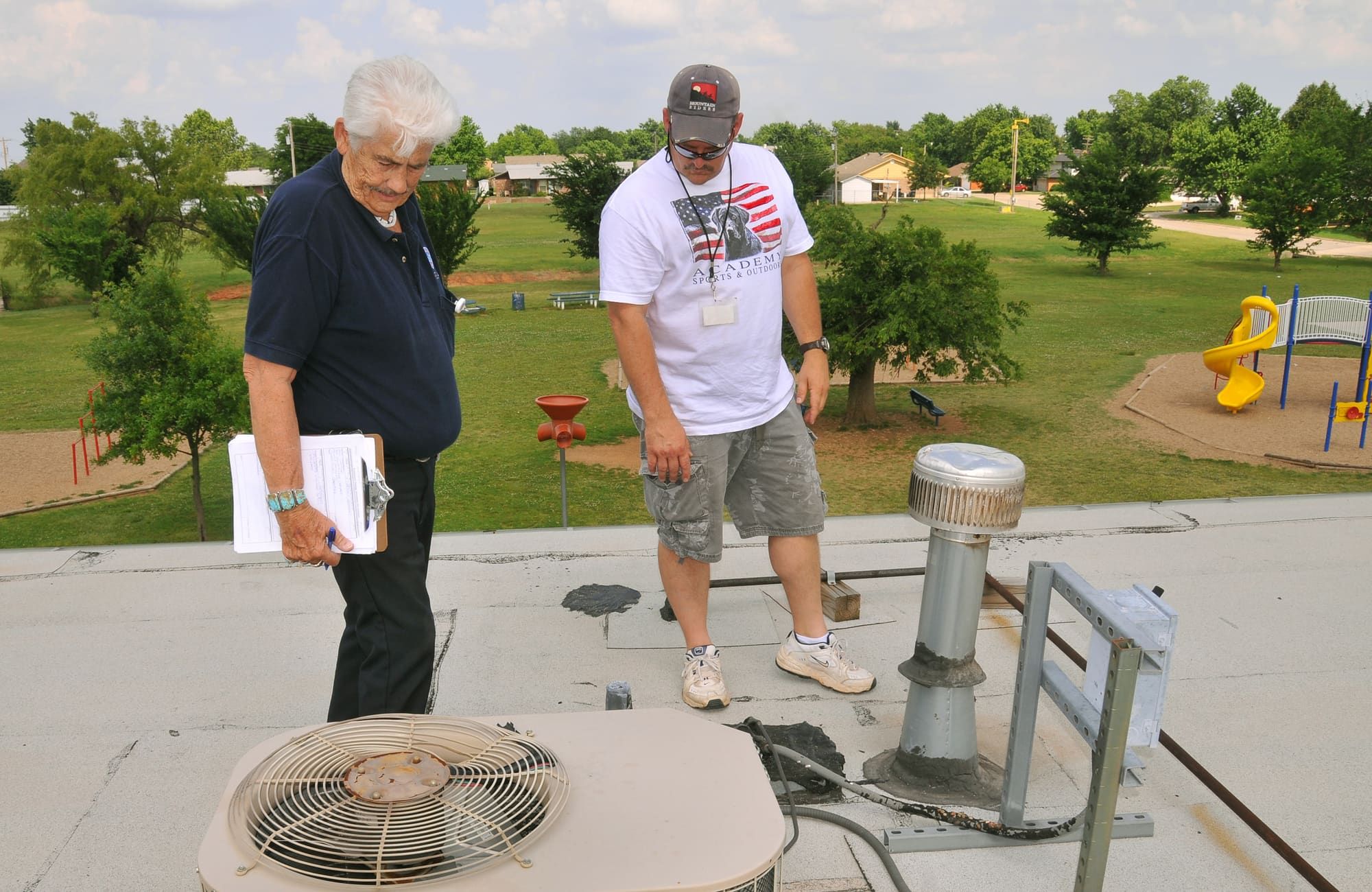
Your insurer may start with a proof of loss form or send an adjuster first; the state's guide says either can open the claim. On a roof claim it is almost always the visit that matters. The adjuster is building the insurer's estimate, and anything not recorded that day has to be argued back in later.
What a roof adjuster typically records:
- The roof's size in squares, its pitch and how many layers it carries.
- Storm damage slope by slope: hail hits in a test area, creased or missing shingles, broken ridge caps.
- Vents, pipe boots, flashing and other metal, which often show hail plainly.
- Interior stains and wet attic decking, if you show them.
- Signs of age and wear, which become depreciation or a reason to exclude.
If you want us there, we bring the photos from our inspection and point to what we documented. We answer questions about how the roof is built and what a proper repair needs. We do not argue coverage; by law that is between you and your insurer. Be there yourself if you can, and ask the adjuster to walk every slope that is safe to walk. Steep two-story roofs do not always get a full look.
Snow on the roof before the adjuster gets there
Around Chippewa Falls a fall storm can be followed by snow that sits on the roof until March; the Eau Claire station averages about 55 inches a season. An adjuster cannot count hail hits under snow. Report the storm anyway, keep your photos from before the snow, and ask in writing for the roof to be re-inspected once it is clear.
Reading the Insurer's Scope of Loss: A Roof Claim Paperwork Glossary
An insurance roof estimate can run to several pages of codes and line items. These are the terms that decide what you are actually paid. Open any of them.
Scope of loss the insurer's estimate
The adjuster's list of what was damaged and what the insurer will pay to repair it, line by line. If a slope, a vent or a piece of flashing is not on it, it is not being paid for yet.
Squares and waste how the roof is measured
A square is 100 square feet of roof. Estimates add a waste allowance for cutting at hips, valleys and edges, so the shingle quantity runs higher than the bare area. A wrong measurement here carries through every other line.
Replacement cost value (RCV) today's price
What the insurer calculates it costs to repair or replace the damage at current prices, before anything is taken off.
Depreciation the age deduction
An amount subtracted for the age and condition of the old roof. On a replacement cost policy most of it is recoverable: held back now, paid once the work is done. On an actual cash value policy it is not.
Actual cash value (ACV) the first check
RCV minus depreciation. The state's guide is blunt about ACV-only coverage: you should not expect to be reimbursed for the full amount of repairs.
Deductible your share
Subtracted from what the insurer pays. It may be a flat amount or, for wind and hail, a percentage of the dwelling coverage. No contractor may pay or rebate it for you in Wisconsin.
Code upgrade ordinance or law coverage
Work the building code requires on a new roof that the old one never had. The state's guide notes that most homeowners policies do not pay to bring a house up to code unless you have a building code endorsement. Ask your agent which you have.
Supplement items added later
A request, with photos, to add items the first scope missed or that only showed up at tear-off. The insurer reviews it and decides. More on supplements in the next section.
Mortgage holder on the check a second endorsement
The check for the house may be made out to you and your mortgage lender together. Call the lender's claims or loss-draft department early; on a larger claim it may release the money in stages after the work is checked.
"Final payment" on a check what Wisconsin says
According to the state's guide, Wisconsin law does not let a check say it is final payment or a release of the claim unless the policy limits have been paid or the claim is in dispute. Cashing a first check does not close your roof claim.
Roof Claim Supplements: Soft Sheathing, Hidden Layers and Code Items
An adjuster sees the top of the roof. The bottom only shows up when the shingles come off, and that is where most supplements come from. On older houses near downtown and along the river, where roofs have been redone two or three times, we expect them.
- Rotted or soft decking. Each damaged sheet or run of boards is photographed before it is replaced and counted on the invoice.
- A second or third layer. Wisconsin's dwelling code (SPS 321.28(6)) does not allow new roofing over two or more existing layers, so an extra layer found under the top one has to come off, and the scope has to grow with it.
- Ice protection at the eaves. The same code section requires ice dam protection on shingle roofs of 4-in-12 pitch or less over heated space. If the adjuster priced the roof without it, that is a code item.
- Flashing that cannot be reused. Step flashing rusted to the wall, or a chimney with no counter flashing at all.
- The permit. The City of Chippewa Falls requires a building permit for roofing replacement unless the estimated project value is under $2,000. Outside the city, permits run through the town, village or Chippewa County, so we check with the right office before work starts.
We send supplements with your consent, as photos and line items, not as argument. Code items are paid only if your policy covers them, which is why the code endorsement question matters before the storm, not after.
Color matching when only part of the roof was hit
Shingle colors fade and product lines get discontinued, so a repair on one slope may not match the rest. How your policy treats a mismatch is a coverage question, and policies differ. Ask the adjuster for the insurer's answer in writing before the repair is ordered, and we will put a sample shingle on the roof so everyone is looking at the same thing.
Underpaid or Denied Roof Claim? Accept, Push Back, or Bring In Help
Most disagreements are about scope, not coverage: a missed slope, a wrong measurement, a skipped code item. Those are usually settled with paperwork. A denial, or a fight over what the policy covers, is a different problem with different help.
| Route | When it fits | Good to know |
|---|---|---|
| Accept the estimate | The scope matches the damage | Plenty of roof claims are written correctly the first time. If the line items match what you were shown on the roof, take it. |
| Ask the insurer to review | Scope or measurement gaps | Send the contractor's photos and line items, with your consent, and ask for a re-inspection if needed. Keep copies of everything you send and everything you receive. |
| Complain to the insurance commissioner | No straight answer, or a stalled claim | OCI asks you to go to the company or agent first, then file at oci.wi.gov/complaints. It costs nothing. |
| Hire a public adjuster | Large or complicated losses | Works for you, for a fee. Wisconsin rules in Wis. Stat. ch. 629 apply; see below. |
| Talk to an attorney | Coverage denied or a serious dispute | When the question is what the policy means, not what the roof needs, that is legal advice, and we do not give it. |
When a public adjuster or an attorney is the right call
A public adjuster negotiates the claim for you, which is exactly what a roofer may not do. Under Wis. Stat. 629.04 and 629.05, the contract has to be titled "Public Adjuster Contract," has to disclose the fee, and can be voided within 5 business days of signing. The public adjuster may not demand payment before you are paid, and after a declared state of emergency the fee is capped at 10 percent of your recovery. Under 629.09 they may not require you to use a particular contractor. Nonresidents must register with the state; residents may, and OCI keeps a public list.
Our honest view: on a straightforward hail or wind claim, a percentage fee often costs more than it recovers. On a large loss with interior damage, or a claim stuck on scope you cannot untangle yourself, it can be worth it. A denial on coverage grounds belongs with an attorney.
How long the insurer has to pay a roof claim
Under Wis. Stat. 628.46, a claim is generally overdue if it is not paid within 30 days after the insurer receives written notice of the covered loss and its amount, and overdue payments carry 7.5 percent simple interest a year. The exception is when the insurer has reasonable proof it is not responsible. That is the payment clock. The rest of the timeline, from adjuster scheduling to supplement review, is the insurer's, and after a storm that hits the whole Chippewa Valley it runs slower.
Chippewa Valley Hail and Wind Seasons: When to File a Roof Claim
Most roof claims here start between late spring and early fall, when thunderstorms track across the valley. These are storms on the public record, and what each means for timing.
- May 2012Straight-line wind
Wisconsin Public Radio reported on May 28, 2012 that winds up to 60 mph through Eau Claire and Chippewa Falls. Wind damage shows the same day, so it is the easiest kind to date.
- July 28, 2023Hail near Bloomer
Storm reports list 1.75 and 3 inch hail three miles northeast of Bloomer. Hail that size marks farm buildings as well as houses, and outbuildings may sit on a separate farm policy.
- May 15, 2025Hail and wind, one afternoon
The Weather Service recorded hail up to 4 inches at Altoona and straight-line wind damage in Chippewa County; preliminary reports put golf ball hail in Chippewa Falls. When one storm brings both, make sure the adjuster records both kinds of damage.
- June 19, 2026Ping pong size hail
The Weather Service noted hail up to 1.5 inches in Eau Claire County. Bruising from hail that size can take a season or two to show from the ground.
Wisconsin's insurance commissioner advises reporting a loss promptly, and your policy sets the actual deadline. State law, Wis. Stat. 631.81, can excuse late notice furnished as soon as reasonably possible and within one year after it was due, but that is a safety net, not a plan. The practical reasons to move quickly are local ones: a second storm later in the summer makes it hard to say which one did the damage, and by November the roof may be under snow until spring.
Seasonal owners on Lake Wissota and summer places up the river often find storm damage weeks late, when they next open the house. Note the date you discovered it, photograph it before anything is moved, and report it then.
Claim work is one part of our storm damage roof repair in Chippewa Falls, which covers the free inspection and the repair itself. If you are still not sure the roof was hit, start with a hail damage roof inspection. Shingles creased or torn off in a blow are covered under wind damage roof repair. Everything else we do, from new roofs to metal and flat roofs, is on the home page of our roofing company in Chippewa Falls. Phone and text hours: Open 8am–6pm.
Roof Insurance Claim FAQ: Premiums, Old Roofs, Cancelling and Keeping the Payout
Should I call my insurance company first, or get the roof inspected first?
Either order works. Many homeowners have the roof inspected first, so they know whether there is storm damage and roughly what the repair costs before they report anything. Wisconsin's Office of the Commissioner of Insurance advises notifying your agent or insurer as soon as possible after a loss, so do not let the inspection wait weeks. If water is coming in, cover the opening first and keep the receipt.
Will filing a roof claim raise my premium?
No roofer can honestly answer that, and we will not guess. It depends on your insurer, your claim history and how the company treats weather claims. Ask your agent before you file, and ask too whether a claim that ends up paying nothing still counts. It is a fair question and agents hear it often.
Will you talk to my insurance company for me?
With your express consent we can discuss the damage with your insurer or adjuster, submit our repair estimate and explain the repair options. That is what Wisconsin law allows a contractor to do. We cannot represent you, negotiate the claim or argue coverage. If you want someone to negotiate for you, that is a public adjuster or an attorney.
Can I cancel a roofing contract if my claim is denied?
Yes. Under Wis. Stat. 100.65, if the work was to be paid by insurance and the insurer denies all or part of the claim, you may cancel before the end of the third business day after you receive the written denial. The contractor must give you a cancellation form with the contract and return your payments within 10 days of your notice, less the reasonable value of any emergency work you agreed to in writing.
My roof is old. Will the insurer still pay for storm damage?
Age alone does not rule out a claim, but it changes the math. Depreciation on an old roof can take a large share of the first payment, some policies pay roofs on a schedule or at actual cash value only, and wear that was there before the storm is not covered. Your declarations page and any roof endorsement tell you which applies. We will tell you plainly if the roof is worn out rather than storm-damaged.
I already signed with a contractor who knocked on my door. What can I do?
Read what you signed. A contract for insurance-paid work must come with a cancellation notice under Wisconsin law, and the federal Cooling-Off Rule generally lets you cancel a sale of 25 dollars or more made at your home until midnight of the third business day. If the contractor offered to cover your deductible, that offer itself breaks Wis. Stat. 100.65. Wisconsin's consumer protection agency, DATCP, takes complaints about home improvement contractors.
Can I keep the insurance money and not fix the roof?
It depends on your mortgage and your policy, and it usually costs you. The state's claims guide says that if you choose not to repair or rebuild, the insurer owes only the actual cash value, so the held-back depreciation is never paid. If the check names your mortgage lender, the lender has a say in how the money is used. And the next claim on a roof that was never fixed is much harder to make.
A Free Inspection Before Your Roof Insurance Claim
We inspect for free, photograph every slope and give you a written estimate. Whether you file is up to you.